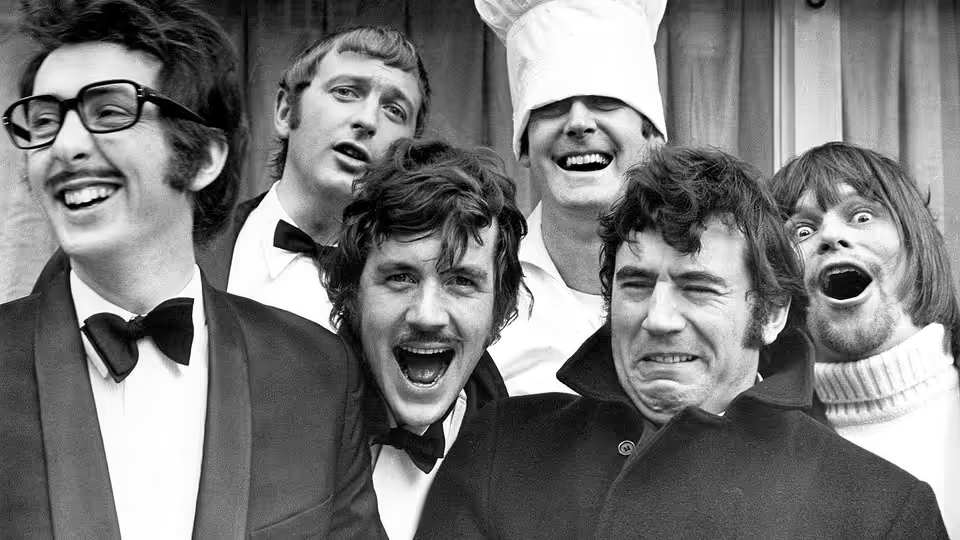
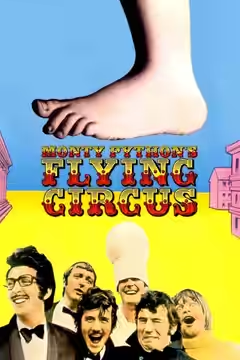
This is unruly comedy performed with exacting care, and we recommend it with one caution: the weaker stretches can be stubbornly long. The cast’s command of pompous speech remains a reliable reason to keep watching.
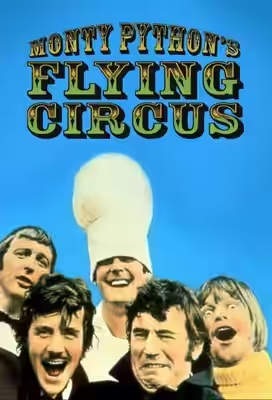
Monty Python’s Flying Circus is funny enough to justify putting up with its failures, though there are evenings when that arrangement requires patience. The comedy depends on people treating foolishness with the seriousness usually reserved for a formal complaint. It takes care over the words, the pauses and the certainty with which a person can be wrong. We recommend it warmly, without pretending that every prolonged exchange deserves the time it gets.
John Cleese makes that certainty particularly enjoyable. His clipped delivery seems to demand agreement before anybody has had a chance to consider what he is saying, and irritation makes his speech more exact. We laughed hardest at the way he keeps that officious tone intact as the talk becomes ridiculous. Graham Chapman is an essential counterweight: his composure gives the silliness time to register, and he rarely seems anxious to help us find the joke.
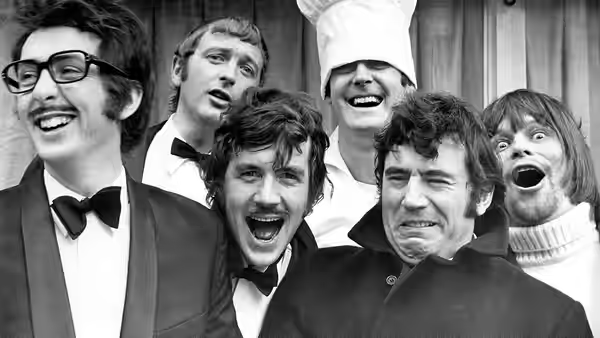
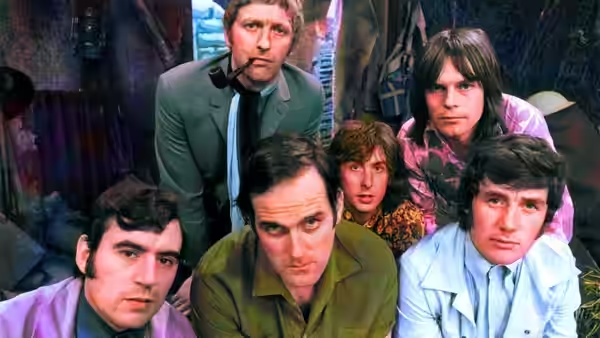
Michael Palin supplies a different pleasure, making unreasonable people sound approachable enough that we almost accept what they say. Terry Jones is more forceful, and the contrast gives these encounters a useful change of pace. Eric Idle makes smooth speech suspect; there is something funny in how easily he seems able to keep talking. All five are also credited as writers, alongside Terry Gilliam.
Directors Ian MacNaughton and John Howard Davies give the performances room without making every hesitation feel precious. The staging is most effective when it lets us watch somebody persist in being unreasonable, instead of hurrying us towards the next laugh. Robert Berk’s production design works best when it stays unobtrusive, leaving the actors’ faces and bearing to establish how seriously these people take themselves. There is craft in making such behaviour easy to follow, even when the conversation is going nowhere sensible.
The writing is less dependable about stopping. Some exchanges keep repeating an attitude after the performer has exhausted what is funny about it, and confidence begins to look like indulgence. There are stretches when the next variation produces no fresh surprise, only another opportunity to recognise the voice. The actors remain skilful through these passages, but that does not make them shorter.
Across four series, the programme offers enough changes of character to make those dull patches forgivable. Against the ordinary demands of ensemble comedy, its distinction is how little the performers ask to be liked: charm is useful here, but so are stiffness, self-importance and an unwillingness to listen. The humour rewards attention to delivery as much as attention to the words. Knowing roughly where a joke is heading does not always spoil it, because the performance can still make the familiar absurdity funny.
We would start with an episode rather than settle in for a long run. Taken in smaller helpings, the insistence is less wearing, and the differences between the performers have more chance to register. Give it your attention, but there is no obligation to treat a joke that has stopped amusing you as an examination you have failed.