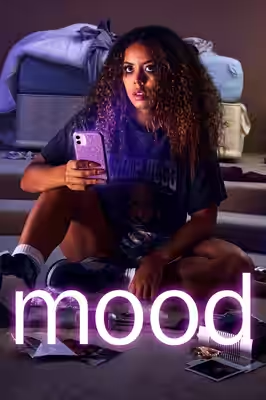
Nicôle Lecky writes, stars and sings in a six-part drama about a would-be singer who drifts from her mother’s spare room into influencing and then into selling herself online. It is honest, funny and tense for most of its length; some of the songs let it down.
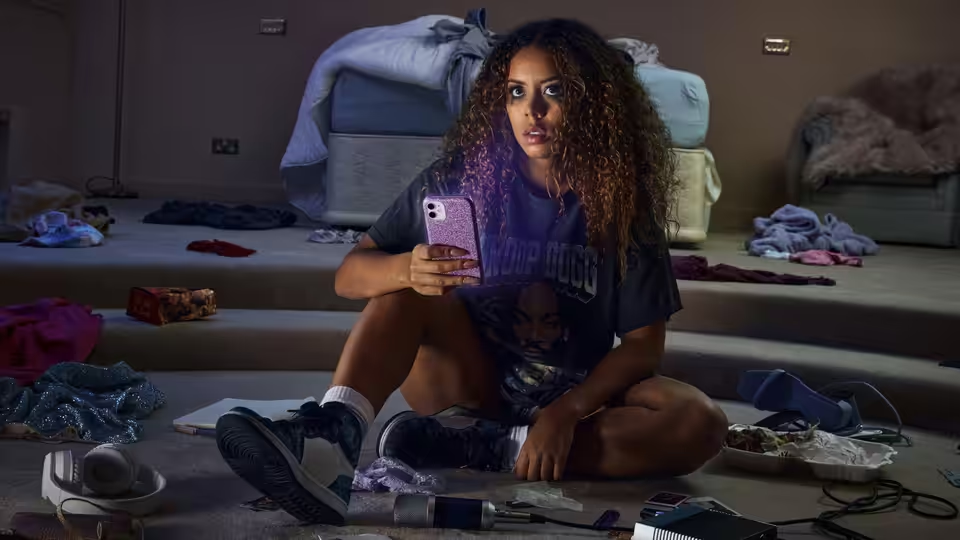
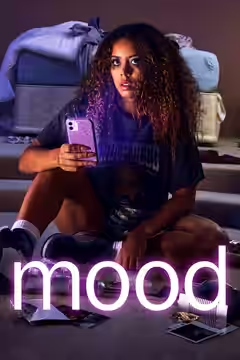
Mood is built on a trick that should not work. Sasha Clayton (Nicôle Lecky), a twenty-five-year-old Londoner with a voice and nowhere to use it, breaks into song when the scene can no longer hold what she feels. Not a montage over a track: a full number, lit and choreographed, in a kitchen or a club or a stranger’s bedroom, after which the plot picks up where it left off. Lecky created the series, wrote all six episodes and plays the lead, and the numbers are hers.
The first episode is the best. Sasha is living at home with her mother Laura (Jessica Hynes), her stepfather Kevin (Paul Kaye), who has had enough, and her half-sister Megan (Mia Jenkins), who keeps out of the way. She is still fixed on an ex, Anton (Jordan Duvigneau), who has moved on. One drunk night ends with the police at the door and Sasha on the pavement with a bag. Lecky writes the family argument the way families argue, everyone talking about something other than what they mean, and Hynes plays Laura as a woman who has chosen her second family over her first child and will not apologise for it.
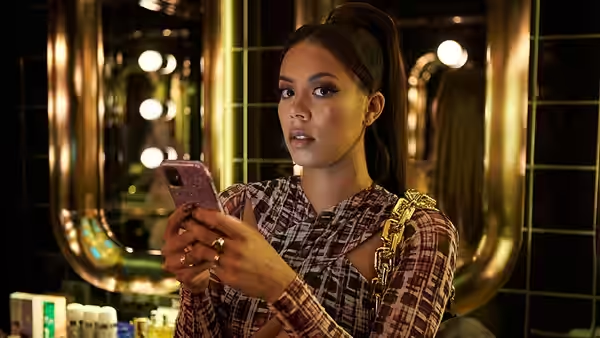
Then Sasha meets Carly (Lara Peake), and the series finds its subject. Carly is an influencer with a white flat, a ring light and an income from people who pay to see more of her than her followers do. Peake is the find here. She plays Carly as generous and mercenary in the same breath, a girl who will lend you her clothes and sell you something while you are wearing them. The scenes of the two of them in that flat, filming each other, counting likes, are the sharpest the series has about why anyone says yes to this. Nobody is forced. Somebody is simply kind to Sasha for the first time in a while.
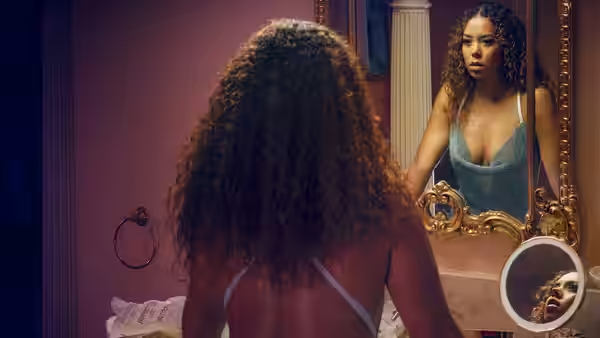
Nick Morris and Molly Manning Walker shoot the two worlds differently. Laura’s house is daylight through net curtains and the orange of a kitchen at night. Carly’s flat is pink, white and lit from below by phones, and Sarah Jenneson has furnished it with mirrors and almost nothing else, so Sasha is always looking at a version of herself. Verity May Lane and Charlie Knight dress her in hoodies and borrowed dresses, and you can read the series by which she is wearing. Directors Stroma Cairns and Dawn Shadforth stage the numbers with commitment; the best, early on, has Sasha singing to an empty room with the lights changing round her, and it told us more about her than any speech could.
What got us, and we had not expected it, was a doorstep scene in the second half that we will not describe. It is Sasha asking her mother for something small and being told no, in a tone that means it is final, and Lecky’s face as she takes it. We were angrier at Laura than at any man in the series, and we think that is what Lecky intended.
The flaws are plain. Some of the songs sound finished and some sound like demos, and the weaker ones arrive when the drama has just earned silence. The middle episodes jump around, and the editing by Alastair Reid, Anil Griffin and Eve Doherty cannot always hide that scenes have been dropped. Once Sasha moves from filming herself to meeting clients, the story goes where every version of this story goes. Bryan Senti’s score holds back and lets the songs carry it, which is right.
It is an 18 and earns it, for the sex and the language rather than anything lurid; the series never makes the work look like fun. At six episodes of 45 minutes it is not a large commitment. Watch it for Peake, for Hynes, and for the first hour. The rest is good enough to keep you on the sofa.