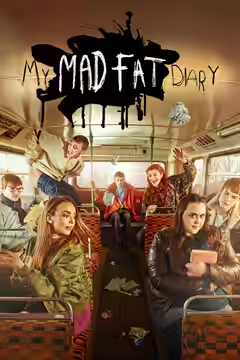
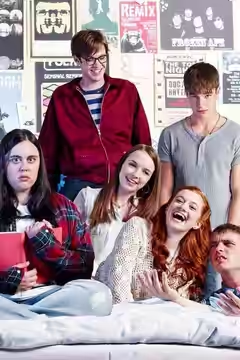
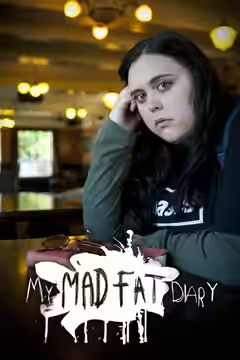
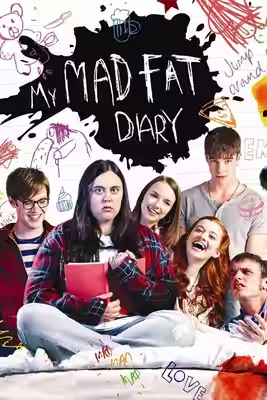
Sharon Rooney makes this funny, frank teenage drama worth the discomfort. Its account of mental illness and body image is unusually humane, though the urge to offer reassurance sometimes gets ahead of the writing.
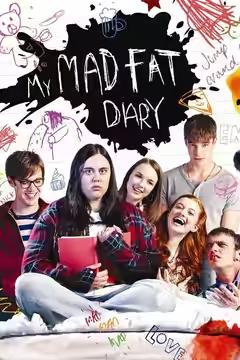
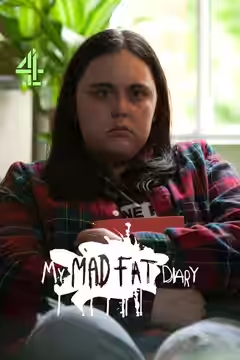
My Mad Fat Diary is funny, painful television, and we recommend it with a reservation about its occasional eagerness to reassure. Created by Rae Earl, it treats a teenager’s mental illness and distress about her body as part of a life that still has to be lived. There is room for awkwardness, bad judgement and a sense of humour. That last quality matters: Rae gets to be funny without having to be fine.
Sharon Rooney plays Rachel ‘Rae’ Earl with a naturalness that makes the more demonstrative storytelling worth accepting. Her performance keeps the jokes close to the self-consciousness that produces them, so laughing never feels quite uncomplicated. We laughed at Rae’s unfiltered account of herself, then felt uneasy about how readily we had joined in. The lead performance makes clear how much distress can sit inside a funny observation about one’s own body.
Tom Bidwell’s writing allows the humour to remain sharp without making Rae’s mental health into an easy explanation for everything she says. She has a personality, including thoughts that are unfair or unhelpful, and the programme does not need us to approve of each one. This is where it improves on the tidier sort of teenage drama. The comedy remains part of how Rae thinks about herself and other people.
The voiceover is central to that closeness, and it is also where the programme risks overdoing things. With Tim Kirkby and Benjamin Caron among its directors, the series uses its conspicuous visual style to keep us inside Rae’s account rather than watching her from a comfortable distance. We occasionally wanted it to trust Sharon Rooney’s performance without so much help. She can make the turmoil believable without every thought needing further emphasis.
Jodie Comer plays Chloe Gemell, and the series benefits from allowing Chloe to be more than someone seen through Rae’s anxiety. Giving her a perspective of her own makes the teenage world feel less conveniently arranged around its lead. It also challenges the temptation to take every judgement in a diary as settled fact. The second series is particularly good at making room for that complication while keeping the humour alive.
Our reservation is that the reassurance can become too easy, particularly in the second series. A programme this alert to confused feelings ought to be able to leave us with more of them unresolved; occasionally the wish to comfort takes precedence. The warmth is welcome, but there are moments when it seems to arrive before the difficult work has been done. This does not undo the performances, though it makes the writing feel less exact.
Across three series and 16 episodes, with episodes running 45 minutes, this is a manageable commitment rather than an endless one. Its frankness about mental illness and body image makes it more demanding than those numbers suggest, and the comedy is no guarantee of a comfortable evening. We would recommend it most strongly to anyone tired of teenage characters whose troubles exist chiefly to teach a lesson. Start with an episode rather than treating all 16 as a weekend assignment.