Series review

In a sentenceThe end of the world comes with people insisting that we cheer up

DramaSci-Fi & Fantasy

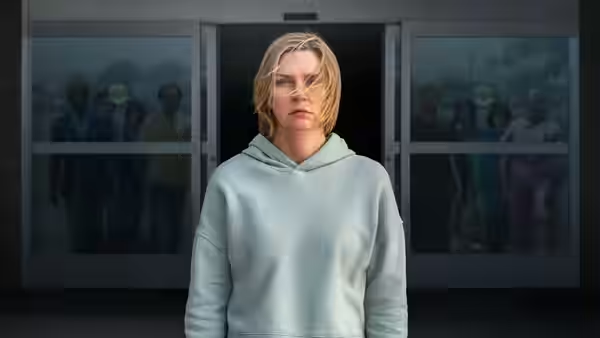
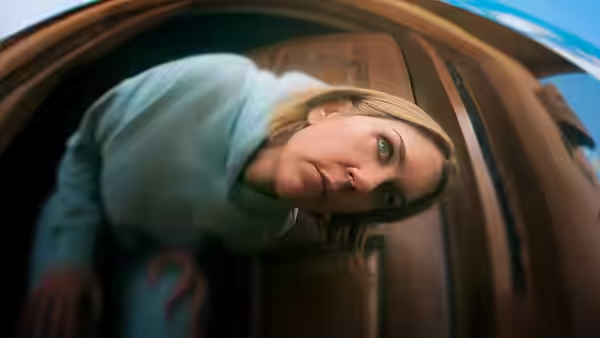
A virus joins humanity in a shared consciousness, creating a peaceful collective whose members share a state of happiness. Carol Sturka, a romance novelist who is immune, resists a change that others accept as an improvement. The collective wants her to be happy too, but Carol has other ideas about what constitutes a life worth living. Her refusal puts her at odds with people who see no reason to remain unhappy. Rhea Seehorn plays Carol in this science-fiction drama, alongside Karolina Wydra as Zosia and Carlos-Manuel Vesga as Manousos Oviedo.

Plays from YouTube when you press play; nothing loads from them until then.

Fi1m review

Vince Gilligan’s science-fiction series makes compulsory happiness an unsettling prospect, with Rhea Seehorn giving its questions a stubborn human centre. We recommend it, though the slow pace sometimes outlasts the pleasure of thinking things through.

Pluribus is worth the patience it asks for, though it asks for more than it needs. Vince Gilligan’s science-fiction series imagines a virus joining humanity into a peaceful shared mind, then puts a miserable novelist outside it. Carol Sturka is immune, and the collective would like to make her happy. There is plenty to dislike about that prospect without deciding that misery is a virtue. The series makes a persuasive case for taking Carol’s objections seriously even when she is difficult company.

Rhea Seehorn makes Carol’s resistance funny, exhausting and painful, often within the same stretch of performance. She can give the anger enough force to dominate our attention, then let the unhappiness behind it become harder to ignore. The humour does not tidy her up into a lovable grump, and Seehorn lets her be abrasive without asking us to approve of every objection. That movement between comedy and distress gives us a reason to care about what might otherwise become a lengthy discussion of personal freedom.

The collective is unsettling because its wish to please Carol seems so reasonable to those making the offer. We felt hemmed in by that eagerness to make her happy: even her discontent becomes something for other people to put right. Gilligan and fellow writer Gordon Smith get useful drama from the possibility that help can be unwanted. They also leave us with an awkward question about Carol, whose immunity does not automatically make her a sound judge of everyone else.

Paul Donachie and Marshall Adams’s cinematography gives this premise the patience it needs. We have time to consider the changed world and Carol’s place in it, which matters when the threat is so difficult to point at. Denise Pizzini’s production design makes the promised utopia credible enough to be troubling. Dave Porter’s music helps sustain the unease without becoming the main reason for it. The wish to please is already disturbing, and the craft works best when it lets that remain the thing we notice.

The pace is the reservation. Editors Skip Macdonald, Chris McCaleb and Joey Liew allow the story to develop slowly, sometimes too slowly. Once we have understood the disagreement between Carol and the collective, further time spent weighing it does not always deepen it. The early episodes can leave us waiting for the story to develop while the central idea receives another patient inspection. We wanted a firmer cut in those stretches, without losing the time Seehorn needs to make Carol more than a position in a debate.

As science fiction, the series benefits from refusing the comfort of an easily identifiable villain. A peaceful collective presents a harder problem than an enemy whose bad intentions announce themselves. The premise invites us to weigh what people might gain from belonging, as well as what Carol stands to lose. The writing occasionally struggles to find enough for its characters to do while those questions remain open.

We recommend it for Seehorn and for the uncomfortable seriousness with which it considers a supposedly happy outcome. The slowness will test anyone looking for regular jolts or swift answers. There is black humour here, but little interest in making Carol easy company. Start it when there is no need to hurry.


Critical consensus AI synthesised

83
Positive
13
Mixed
1
Negative
0

Most critics respond warmly to Pluribus, with praise clustering around Rhea Seehorn’s performance as Carol, the unhappy outsider resisting a blissful collective consciousness. The reviews repeatedly credit her handling of humour, anger and sadness with making the philosophical premise emotionally convincing. Gilligan’s writing and direction also draw praise for finding satire and unease in questions about individuality, free will and collective happiness.

The main reservation is pace: some critics find the slow unfolding rewarding, while others note stretches where the story struggles to move forward. Vulture explicitly values that deliberateness as a counter to hyperstimulated modern life; The Telegraph, the sole mixed review, admires Seehorn but finds too little momentum in the early episodes. The spread runs from qualified approval to considerable enthusiasm, though most assessments cluster firmly on the positive side. Even the principal dissent shares the wider admiration for the lead performance.

Radio Times
7 November 2025 · ★★★★★ · David Opie
100

Gilligan imagines a world without bad guys after a virus melds humanity into a peaceful collective mind, creating a different kind of horror for the lone immune cynic. The critic praises Seehorn's magnificent performance as Carol and calls the premiere a perfect hour of television.

Read the full review →
The Times
7 November 2025
85*

The critic celebrates Vince Gilligan's return with a thought-provoking sci-fi series centered on a miserable author resisting a hive-mind virus. They single out Rhea Seehorn's exceptional lead performance and the show's blend of black humor, questions about individuality, and addictive world-building.

Read the full review →
Variety
6 November 2025 · Alison Herman
85*

Gilligan's ambitious sci-fi drama returns to the genre with a deliberate pace and philosophical bent centered on a collective consciousness. The critic singles out Seehorn's magnetic, versatile performance as the misanthropic immune Carol for making the concept work.

Read the full review →
Vulture
6 November 2025 · Nicholas Quah
85*

The critic praises the deliberate slow pace of the series as an argument against hyperstimulated modern life and highlights Rhea Seehorn's remarkable performance as the key element that makes the show work.

Read the full review →
IndieWire
6 November 2025 · B+ · Ben Travers
83

The series bucks convention with its premise and structure, delivering a potent season of big ideas and strong performances from Rhea Seehorn that reward attention despite some fitful pacing.

Read the full review →
Empire
7 November 2025 · Dan Jolin
80*

Gilligan delivers a fresh, satirical spin on the apocalypse via an alien virus creating a blissful collective hive mind that most embrace as utopia. The critic singles out Rhea Seehorn's deeply resonant, powerhouse performance as the cynical immune survivor Carol for praise.

Read the full review →

Cast

Stills

If you liked this, try…

Invasion of the Body Snatchers poster

Invasion of the Body Snatchers

1978 · An altered humanity makes familiar faces frightening, with suspicion spreading through ordinary encounters.

The Prisoner poster

The Prisoner

1967 · A stubborn dissenter meets a community determined to manage his life for him.

The Bothersome Man poster

The Bothersome Man

2006 · A comfortable society becomes unbearable when nobody seems capable of wanting anything else.

After Yang poster

After Yang

2021 · Quieter science fiction about personhood, with grief giving its questions human weight.

Little Joe poster

Little Joe

2019 · Manufactured happiness proves difficult to trust in this chilly, carefully controlled science-fiction drama.