Julia Davis makes cruelty funny with considerable precision, and Catherine Shepherd’s exhausted Sally gives the laughter an uncomfortable cost. We recommend it to those with an appetite for embarrassment, though the relentless unpleasantness sometimes outlasts the jokes.
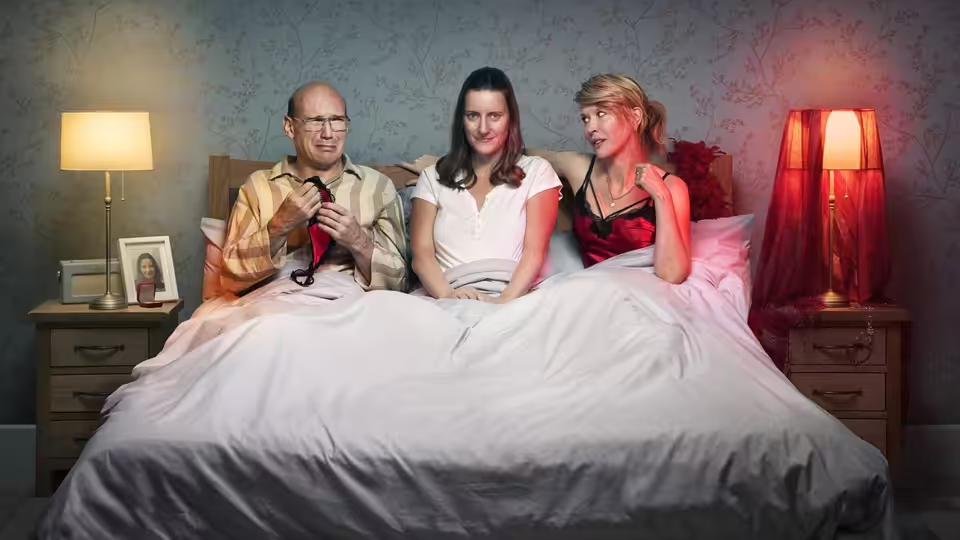
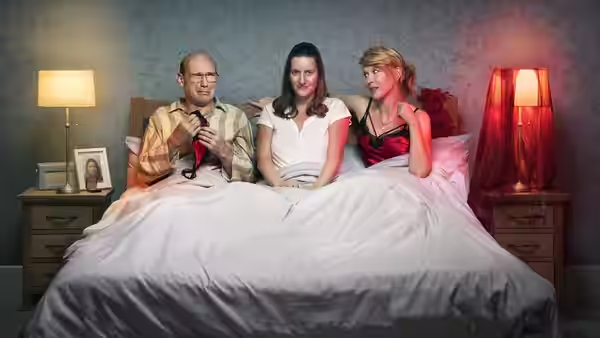
Sally4Ever is funny enough to justify its unpleasantness, though not every escalation earns its keep. Julia Davis, who writes, directs and plays Emma, asks how long we can stay amused by people we would take some trouble to avoid. Our answer is longer than we expected, chiefly because Catherine Shepherd gives us someone worth watching while the others behave appallingly. This is a good comedy for those who enjoy embarrassment, with a habit of pressing a joke after the discomfort has stopped changing.
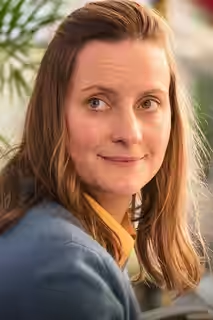
Shepherd makes Sally’s exhaustion readable without turning every reaction into a request for sympathy. Her subdued expressions give the comedy somewhere to land, and she does not have to compete with the louder performances to hold our attention. We laughed at those worn-down looks, then felt slightly ashamed of ourselves. It is the sense that Sally barely has the energy for another reaction that makes them funny, and also makes the laughter feel a little mean.
As Emma, Davis supplies much of the pressure, with a performance whose comic precision keeps objectionable behaviour from becoming merely tiresome. She understands that an awful character still needs to be interesting from one moment to the next. Her writing gives the actors permission to be difficult company without constantly asking us to forgive them. That is welcome, although the determination to avoid softening anyone can become restrictive: another turn towards nastiness is sometimes the most predictable choice available.
Andy Hollis’s cinematography gives us room to attend to the faces, where much of the comedy happens. David Ferris’s production design is less central to the pleasure; the surroundings make less impression than the people occupying them. Editor Robin Peters has the difficult job of allowing an uncomfortable reaction time to register without exhausting the joke. The pauses often work, particularly around Shepherd, but the longer stretches of unpleasantness do not always repay the time spent in them.
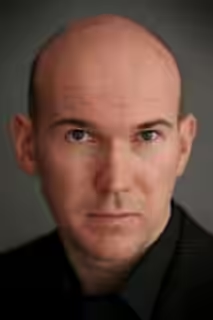
Alex Macqueen’s David provides a noisier form of discomfort, making animal sounds do work that dialogue might only complicate. The performance is funny because Macqueen commits to the noises without seeming anxious to make David appealing. Beside Shepherd’s restraint, that willingness to be ridiculous gives the programme a useful difference in pace. The cast’s assurance matters: material this abrasive would become exhausting much sooner if everyone appeared to be competing for the most outrageous moment.
The limitation is how persistently the programme returns to the same kind of punishment. Once we expect each encounter to become more uncomfortable, it takes increasingly exact timing to surprise us, and the writing does not always manage that. There are stretches when Sally’s muted responses remain interesting after the behaviour provoking them has become familiar. Seven half-hour episodes are not an extravagant commitment, but the comedy can still feel crowded with variations on a joke we have already understood.
Embarrassment comedy needs some reason for us to remain with people we would otherwise leave to it, and Shepherd provides that reason here. Her patience gives the excesses something to work against, without making Sally a cheerful guide through them. We would choose this for an evening when laughter is the aim and reassurance is not required. Anyone hoping for pleasant company should make other arrangements.