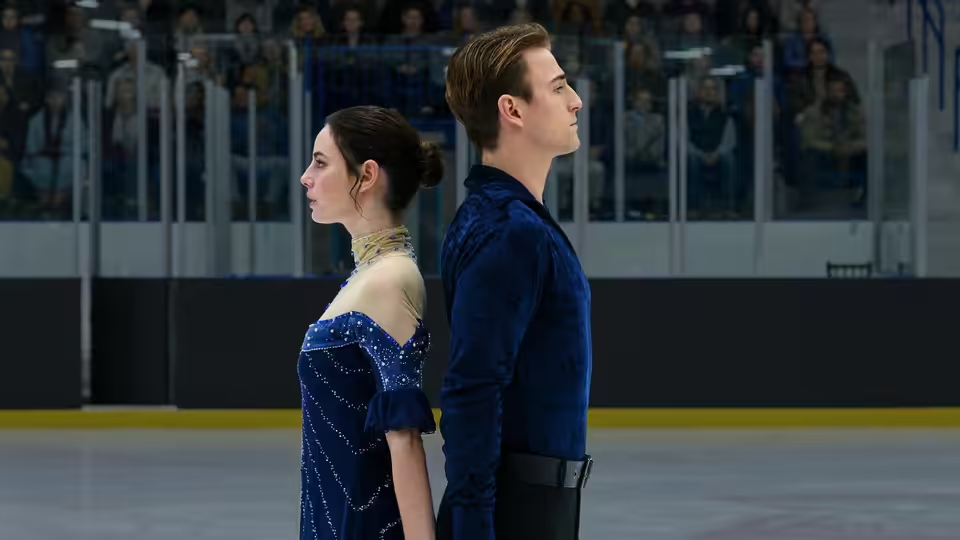
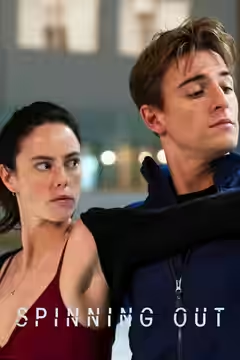
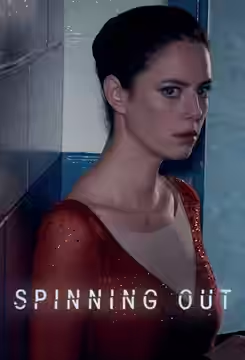
Samantha Stratton’s skating drama begins as a serious, well-acted account of two women managing bipolar disorder in a sport that punishes any wobble. By its sixth episode it has become a soap with ice in it, and the ice was the point.
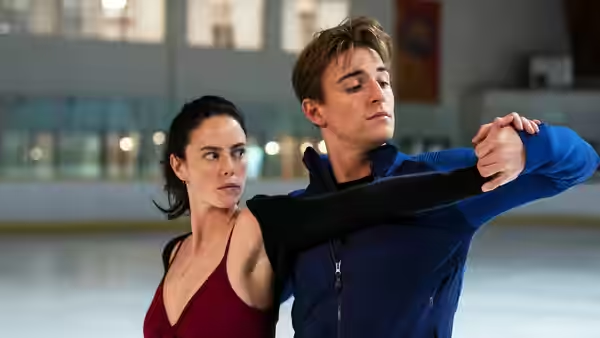
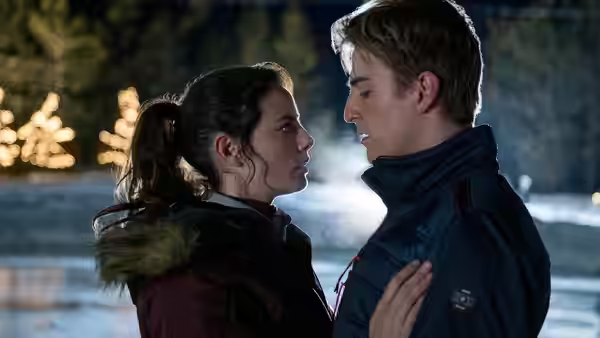
Samantha Stratton has created and written a ten-part drama about a figure skater who fell on her head and has not jumped properly since. Kat Baker (Kaya Scodelario) is working at the rink in Sun Valley, Idaho, when a coach proposes she give up singles and skate pairs with Justin Davis (Evan Roderick), the rich, careless son of James Davis (David James Elliott), who has money and a new wife, Mandy (Sarah Wright). Kat also has bipolar disorder, as does her mother Carol (January Jones), and the two of them manage it with pills, lies and a shared talent for disaster. That is a good set-up, and for about four episodes the series knows it.
The two women are the reason to watch. Scodelario plays Kat tight and watchful, somebody who has learned to check her own mood the way other people check the weather, and when the mood does turn she lets the performance go loud without asking us to admire it. Jones is better still. Her Carol is a former skater who gave the sport up and has never forgiven anyone, least of all her daughters, and Jones plays her with a flat charm that keeps curdling. There is a stretch in the early episodes where Carol comes off her medication and gets brighter, funnier and more generous by the scene, buying things, flirting, promising her younger daughter Serena (Willow Shields) the world, and we felt the dread arrive a full episode before Serena did. That is good acting and good writing working together, and the series does not manage it often enough.
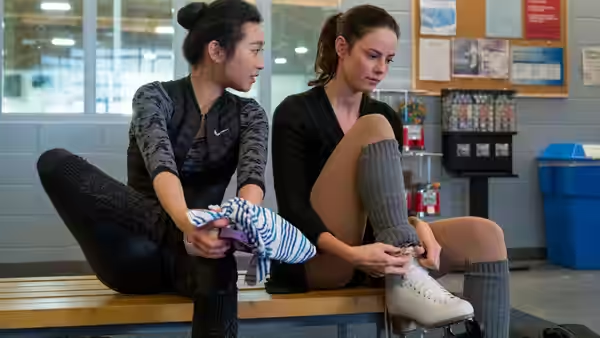
The skating is a problem the production never solves. Mirosław Baszak shoots the rink in a cold blue-white that suits it, but the jumps are plainly done by doubles, and Don Cassidy has to cut away on every take-off and come back on a face after every landing, so the one thing a skating drama ought to be able to show us, a body in the air, is the one thing it keeps hiding. Suzanne McCabe’s competition dresses and Gordon Barnes’s rink, with its hoardings and tired changing rooms, are convincing; the thing happening on the ice between them is a magic trick we can see the wires on. Ohad Benchetrit’s score swells in those moments, doing the work the camera cannot.
Around the fifth episode the series starts adding plots as if afraid of the one it has. Justin’s friends and lovers multiply. Kat’s friend Jenn Yu (Amanda Zhou) is given a hip injury she hides. Marcus Holmes (Mitchell Edwards), a skier and the most decent man in town, is kept around chiefly to be let down. Serena’s coach Mitch Saunders (Will Kemp) is the centre of a strand we will not describe, except to say it belongs in a different and nastier programme. Each of these might have carried an hour on its own. Piled together they turn a drama about illness into a soap about secrets, and the two do not mix, because a soap needs its characters to be stupid on cue and a drama about bipolar disorder needs us to believe they are not.
We were absorbed for four hours and by the eighth we were checking how many were left, which for a series that runs to ten is not where you want to be. Svetlana Efremova’s Dasha, the Russian coach with a past and no patience for feelings, is the one late pleasure. She gets the dry lines, and she treats the romances with the contempt they earn.
As television about sport goes, this sits closer to the teen melodramas than to anything with the discipline of its subject. Figure skating is a sport of repetition, of doing the same six things ten thousand times, and a programme that understood that would have been slower and harder and better. Stratton clearly knows the world; the rink politics, the costs, the way a coach’s favour is traded, all ring true, and the series would have been better for staying inside it.
Watch the first four episodes for Jones and Scodelario, who deserve a steadier vehicle. If you are still interested after that, the 15 certificate is a fair warning of what the back half gets up to, and the skating will not get any more convincing.