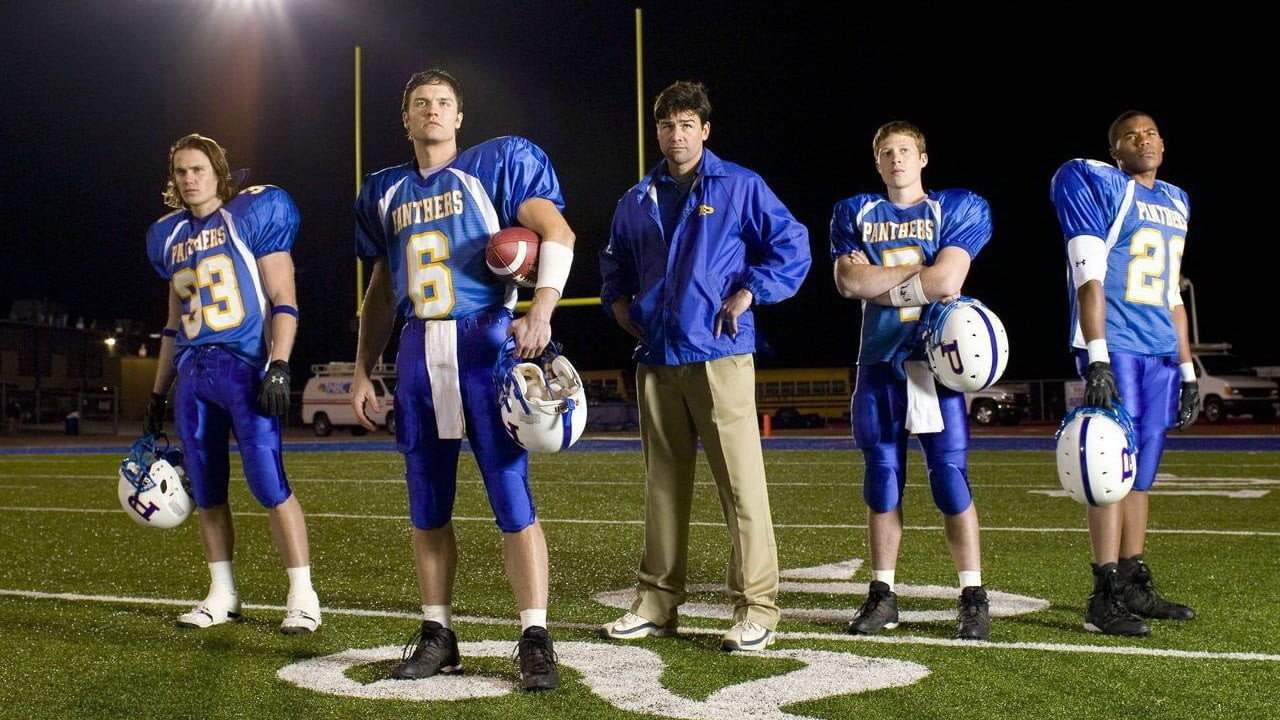
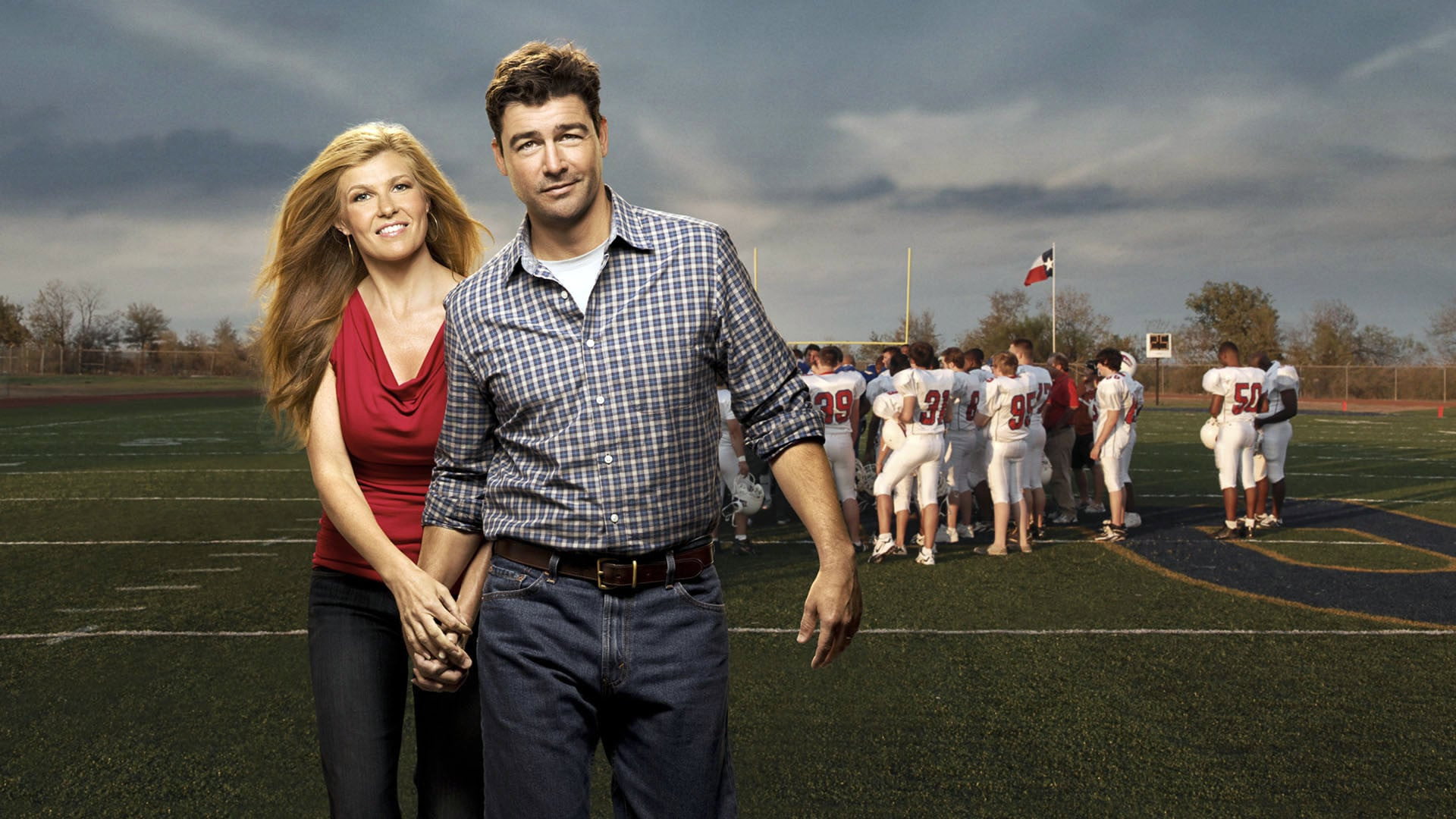
We recommend Friday Night Lights for Kyle Chandler’s patient authority and the care it takes with people under pressure. Its earnestness occasionally slows the drama, but the performances make that a forgivable fault.
Friday Night Lights understands how unreasonable it is to ask a school team to give a town something to believe in, and how easily adults make that request. Its high school American football players have enough to manage without becoming somebody else’s reassurance. The series takes that pressure seriously, and the care it gives the people around the game makes it an unusually rewarding drama. We recommend it with one caveat: its determination to be sincere occasionally leaves it labouring a point we have already understood.
Kyle Chandler plays coach Eric Taylor with an authority that does not require every exchange to become a speech. He suggests the effort involved in staying steady while other people look to him for confidence. We were moved by his watchfulness around the players, because their dependence on him makes even his restraint feel like work. He makes coaching seem like a responsibility that continues after the instruction has been given.
Connie Britton’s Tami Taylor is important to that balance: her presence prevents Chandler from becoming the only adult worth attending to. Britton’s directness is welcome in a series that can become a little solemn about the burdens of growing up. Taylor Kitsch, as Tim Riggins, brings a less settled energy to the ensemble. The cast make these competing generations feel as though they belong in the same community, even when they are asking different things of it.
Peter Berg’s direction benefits from the handheld, docudrama approach, which makes the pressures around the team feel close and persistent. The camera’s restlessness suits a drama about people being watched and judged. The setting feels inhabited by people with business beyond supporting the team, which helps us believe in the lives away from the pitch.
Angela M. Catanzaro’s editing lets conversations settle, allowing the actors time to make a hesitation count. W.G. Snuffy Walden’s music is sympathetic to the same mood, although its encouragement can make an already earnest scene feel more solemn than it needs to be. The performances usually need less help. The quieter exchanges are often absorbing enough to justify the space they take.
The weakness is that patience sometimes becomes a lack of urgency. Jason Katims and his fellow writers occasionally spell out feelings that the performances have already made clear. There are stretches when the concern with doing right by everyone takes precedence over making something happen. That will matter more to viewers looking for a tightly driven sports story, and the handheld style cannot disguise it.
Sports drama often makes it too easy to measure a person’s worth by a result. Here, the stories across generations keep the adults accountable and give the young people lives beyond their usefulness to a team. An interest in American football is not a prerequisite, though a tolerance for its surrounding solemnity will help. Give it a little time, especially if the football is the part you expect to endure.