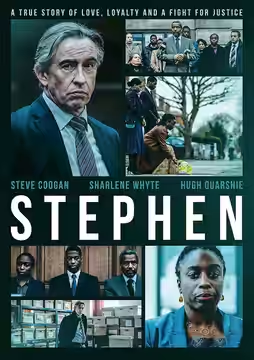
A careful, unshowy three-part account of the detective who reopened the Stephen Lawrence case, carried by Steve Coogan’s refusal to perform and Sharlene Whyte’s refusal to forgive. The middle episode sags under paperwork, but it earns the evening.
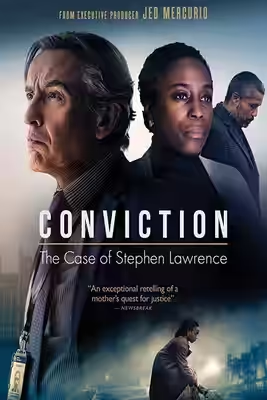
Thirteen years after Stephen Lawrence was stabbed to death at a bus stop in Eltham, a Metropolitan Police detective nobody has heard of asks to look at the case again. That is the whole of Stephen, three episodes of 45 minutes written by Frank Cottrell Boyce and Joe Cottrell Boyce with Clive Driscoll himself, and directed by Alrick Riley. It is not about the murder. It is about the long, dull, decent work of a man who decided the file was not closed, and about a family who had heard that before.
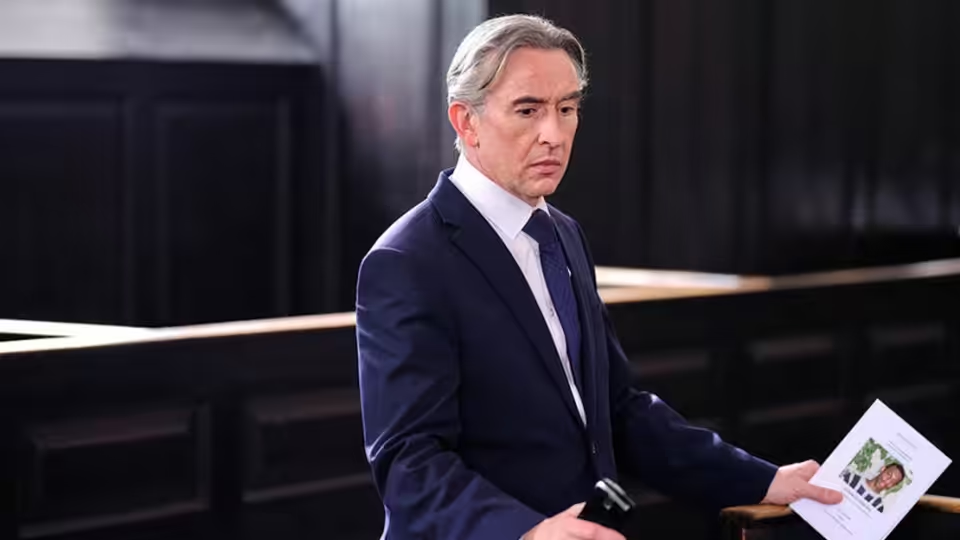
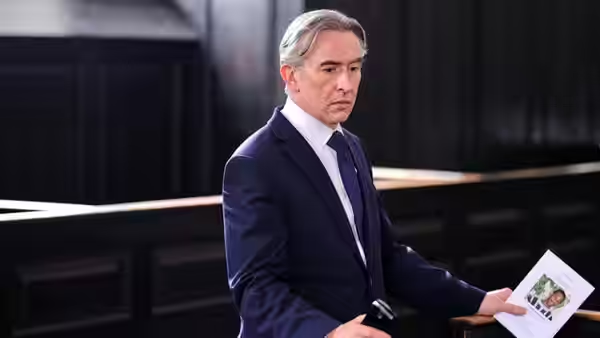
Steve Coogan plays Driscoll, and the casting sounds like a stunt until about four minutes in. He wears a bad suit and a worse haircut, speaks in a south London murmur, and says sorry to the Lawrences without once asking to be forgiven for it. There is no twinkle. When a colleague asks why he is bothering, he gives a flat, practical answer about the evidence, and you believe this is a man who does not need to be liked. We kept waiting for the Coogan we know to surface, and it is to his credit that he never does.
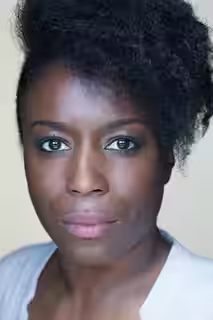
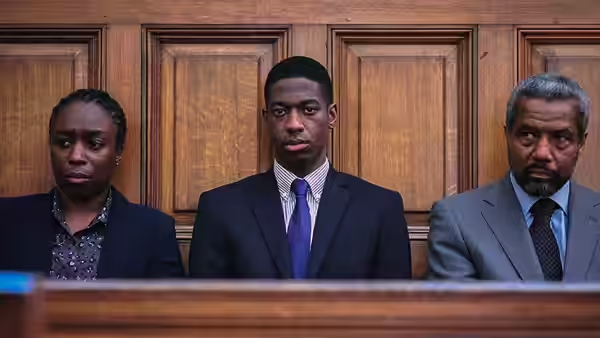
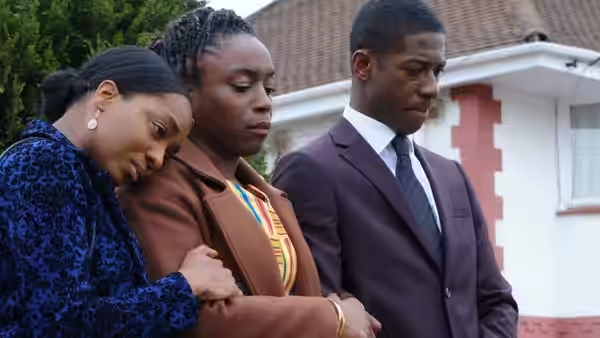
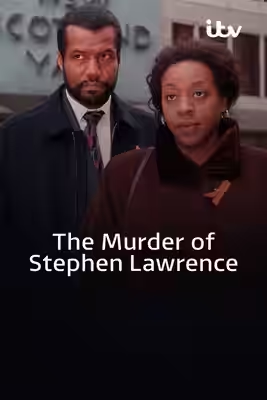
Sharlene Whyte’s Doreen Lawrence is the series’ spine. She sits across tables from policemen with her hands folded and her face closed, and the drama never pretends she owes Driscoll anything. Hugh Quarshie, who played Neville Lawrence in Paul Greengrass’s 1999 film, plays him again, older and quieter, and the scenes between the two parents are the ones we found hardest to sit through. It moved us more than we expected, and we can say exactly where: the first time Driscoll is in Doreen’s front room, Whyte gives him nothing at all, not anger, not hope, just a stillness that says she has sat through this speech before. That stillness does more than any line in the script.
Aaron Reid shoots it in the flat grey of south London office light, strip lamps and rain on windows, and never reaches for anything prettier. Jamie Lapsley’s police rooms are stacked with old box files; the Lawrence house is tidy and dim, and the contrast does work the script then does not have to. Segun Akinola’s score stays low, mostly held strings under dialogue, and is sensible enough to stop when the family speaks. Helen Chapman cuts the investigation in short, patient steps, a bag opened, a form signed, a call made, and the pace suits a story about a case nobody hurried over for thirteen years.
The procedural stretches are where it is weakest. Jonjo O’Neill’s DI Shaun Keep and the rest of Driscoll’s team are decent company but thin on the page; we learn what they do and nothing of who they are. Siân Brooke’s Cressida Dick is given a few scenes of careful institutional caution and no more, so the Met’s resistance arrives as paperwork rather than people. The second episode spends a long time in laboratories, with Sam Troughton and Jay Simpson doing unshowy work over evidence bags, and the drama goes quiet in a way that is faithful and slightly airless.
The reviews so far are split down the middle. One found it cold, a police procedural that keeps the family at the edge of the frame; the other found it riveting and compassionate. We are closer to the second. This is the Lawrences’ story told through the one officer who treated it as a job to be done rather than a scandal to be managed, and keeping its voice down is how it shows them respect. But the first complaint is not wrong about that middle hour.
Where it ends is a matter of public record and we will not rehearse it here. What the series is for is the getting there, and the getting there is slow, well acted and honest about how little the police deserved the family’s patience. Watch it in one evening, not three; it is built as a single piece and the gaps would let the anger cool.