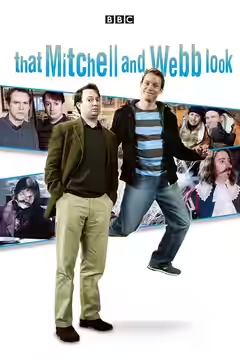
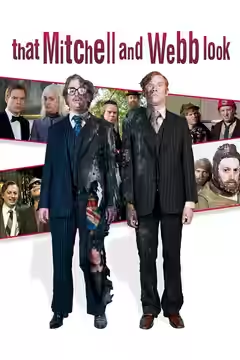
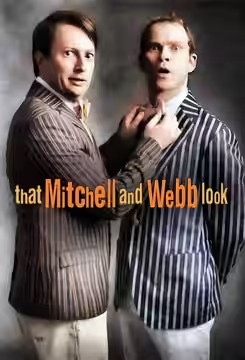
Mitchell and Webb’s sketch show has a higher hit rate than the form usually allows, a supporting cast it did not deserve this early, and a weakness for sketches that are mainly pleased with themselves. We laughed a great deal and winced a little.
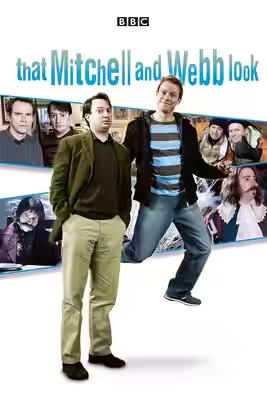
Sketch shows are built to disappoint. Six or seven ideas a week, a couple of them good, the rest making up the time, and an audience that remembers the misses because the hits are over so fast. That Mitchell and Webb Look does not escape this, but it comes closer than most. Across four series of six half-hour episodes, beginning on 14 September 2006 and ending in the summer of 2010, the proportion of sketches we would happily watch again is high, and the proportion we would skip is small. That is our verdict, and the caveats follow.
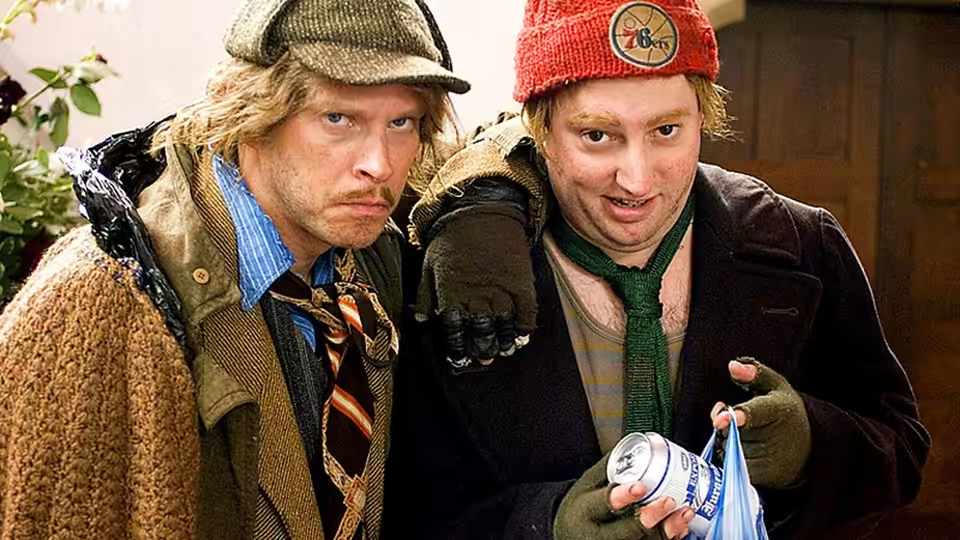
The act itself is simple and old. David Mitchell is the man who is right and cannot understand why nobody will admit it; Robert Webb is the man who is wrong and does not mind. The show finds a dozen ways to stage that pairing. Two snooker commentators get quietly drunk through an afternoon session and say less and less about the snooker. Sir Digby Chicken Caesar, a tramp who believes himself a detective, narrates his own crimes while Webb’s Ginger steals things behind him. A game show called Numberwang runs on rules the contestants seem to understand and we never will, which is the whole joke, and it holds for longer than it should.
The sketch people quote is the one in the bunker. Two SS officers, Mitchell and Webb, in a lull, and one of them has started to look at the insignia on their caps. Skulls, he points out. Have we noticed that we are the ones with the skulls? We laughed, and then the laugh stuck a little, because the sketch never raises its voice. Nobody shouts, nobody is punished, and Mitchell plays the dawning thought with the face of a man checking his bank statement. It is the best thing the show does and it is about ninety seconds long.
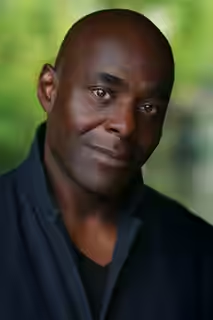
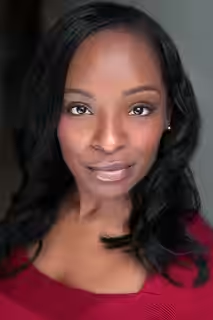
The cast around them is the show’s quiet luxury. Olivia Colman, early in her career, turns up as game show hostesses, long-suffering wives and women who have simply had enough, and she is funny in a different register each time; she does not do voices, she does people. Paterson Joseph brings a weight to authority figures that makes the nonsense around them land harder. James Bachman and Mark Evans, who write alongside the two leads, also appear, and the writing has the feel of four people who have argued every line to a standstill. David Kerr directs with a plainness that suits it: flat studio light, a camera that stays put, no winking.
What does not work is the show’s habit of telling us it knows. There is a strain of sketch here that is about sketches, or about the audience, or about the idea of a joke, and it is weaker each time it appears. By the fourth series, which arrived on 13 July 2010, the irony has started to eat the material; a few sketches set up a cliché, point at it, and stop, as if pointing were the punchline. Mitchell’s rant, so good when it is aimed at something, becomes a template the writers reach for when they have not found the something. And a handful of sketches run a full minute past their best line, which in a half-hour programme is a lot.
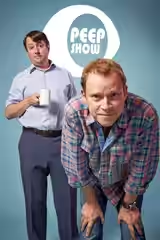
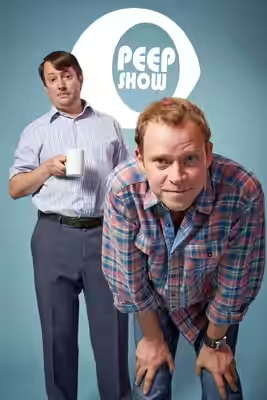
Against the form’s own standards it sits in the line of double-act shows that prefer a single idea, played slowly, to a barrage of catchphrases, and it is the most assured example of that line since the pair’s own Peep Show made them a name. The fourth series ends with a Sherlock Holmes sketch that turns out to be about something sadder than detection. We will not describe it. It moved us more than a sketch show has any business doing, and it is the right note to go out on.
Watch it two episodes at a time. Six in a row and the rants blur into one; two, and you will still be quoting the bunker at breakfast.