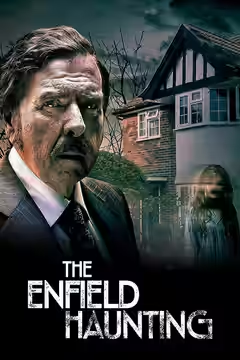
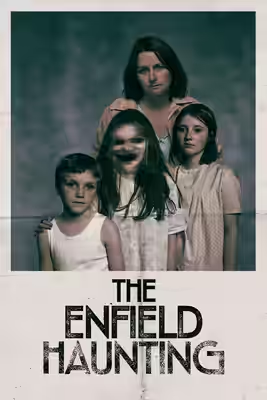
The Enfield Haunting earns its chills through credible performances, especially Eleanor Worthington-Cox’s unsettling Janet. The story wanders and pushes too hard for its payoff, but the family drama makes it worth the trouble.
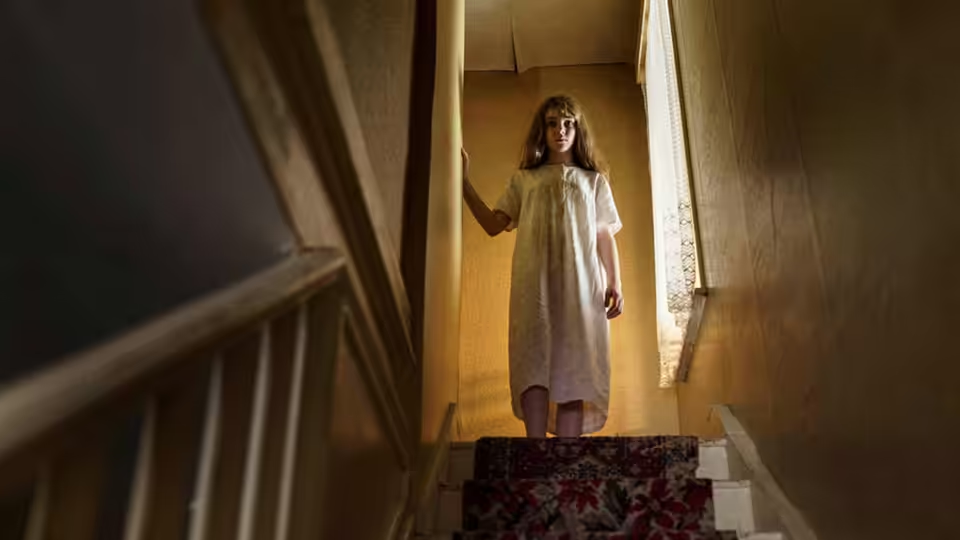
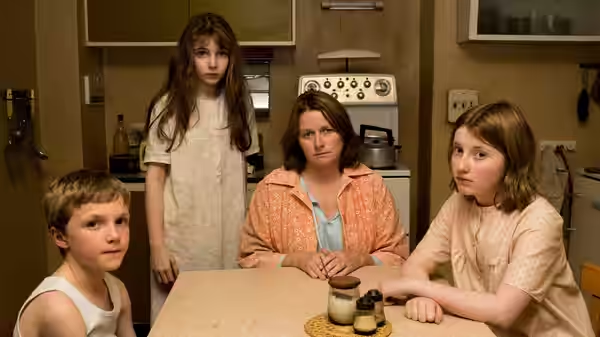
The strongest reason to watch The Enfield Haunting is Eleanor Worthington-Cox, who makes Janet Hodgson frightening when there is little obvious incident to help her. Kristoffer Nyholm’s three-part series is a good chiller with a worthwhile interest in family distress, though its storytelling becomes less assured as it proceeds. It gives the actors something to do beyond indicating that something dreadful might happen. For much of its length, that attention to the people involved makes the uncertainty involving rather than merely frustrating.
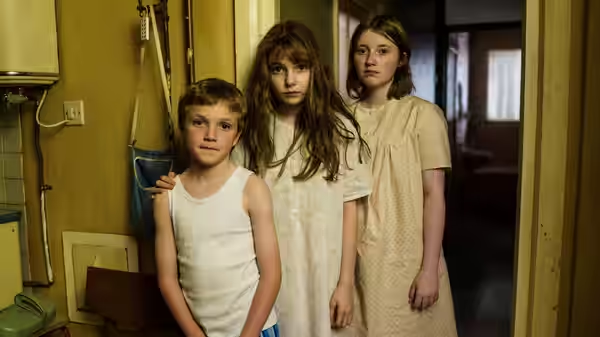
We were unsettled by Janet even when little was happening. Eleanor Worthington-Cox makes the character difficult to read, and we keep studying her without feeling that we have understood her. A performance in a ghost story can too easily become a collection of cues telling us when to be alarmed. Here, our interest in Janet lasts beyond the immediate prospect of a fright, which is essential if the family drama is going to matter.
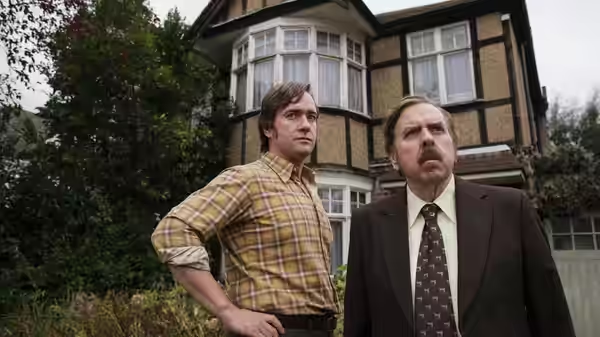
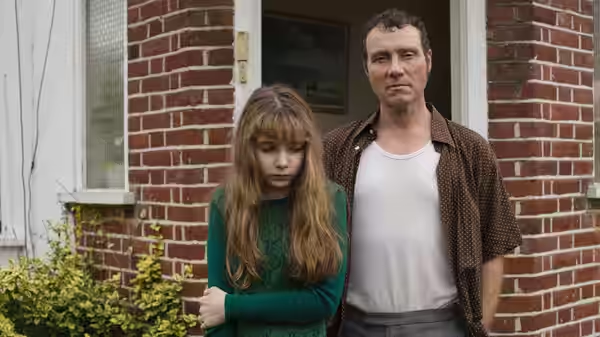
The cast around her helps. Timothy Spall as Maurice Grosse, Matthew Macfadyen as Guy Lyon Playfair and Juliet Stevenson as Betty Grosse give the drama a credible human scale. Rosie Cavaliero’s Mrs. Hodgson belongs to the same recognisable world, which matters in a story so exposed to the risk of exaggeration. Joshua St. Johnston’s writing is strongest when family distress is allowed to be troubling in its own right, without having to serve simply as preparation for the next scare.
Jacqueline Abrahams’s production design contributes to that credibility. Its attention to detail makes the surroundings feel inhabited, and keeps the setting from becoming a conspicuous collection of things intended to frighten us. Kristoffer Nyholm handles the relationship between those surroundings and the performances well. His direction gives the family drama sufficient weight to remain interesting when the mystery is not advancing, allowing us time to consider the characters rather than continually anticipate the next disturbance.
Benjamin Wallfisch’s music is effective support, although it makes less of an impression than the performances. The relatively uneventful passages are also where Matt Platts-Mills’s editing is most persuasive: our attention stays with Janet without requiring a constant supply of incident. The pacing across the three episodes is less secure. There is room to deepen the family drama without letting the story wander, so its weakening sense of direction becomes a frustration that the quality of individual scenes cannot quite overcome.
A ghost story can leave questions unresolved and still feel carefully told. Here, Joshua St. Johnston’s writing becomes less disciplined about what deserves our attention, while the push towards a more conventional horror payoff feels too forceful for these performances. We will not describe the developments. The disappointment is that the series has already demonstrated how effectively it can frighten us without such insistence, particularly through Eleanor Worthington-Cox’s performance.
For viewers who want a tightly managed mystery, those reservations matter. This is better suited to an evening when there is time for family tensions and for performances that do not explain themselves immediately. The uneven storytelling need not rule it out for anyone who enjoys that kind of patient unease. Choose it for Janet, with modest expectations of how neatly the writing will bring everything together.