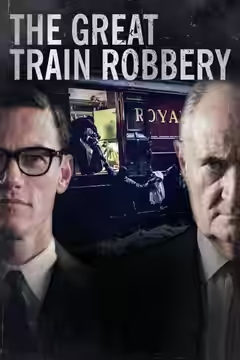
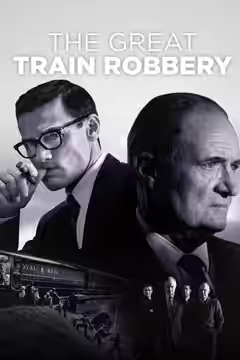
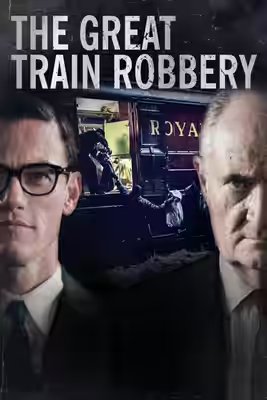
A well-made, absorbing crime drama with a persuasive ensemble and a rather generous view of its robbers. Chris Chibnall gives the gang’s relationships more attention than the moral questions their story raises.
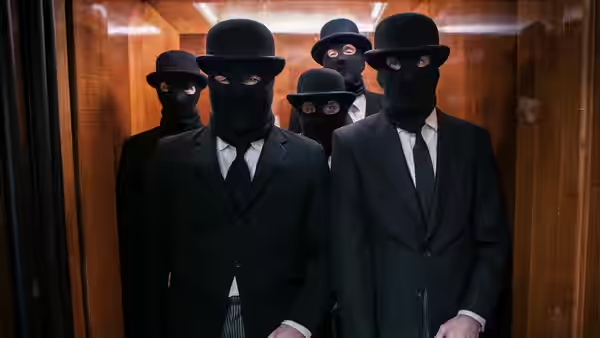
The Great Train Robbery is good, absorbing crime drama, though we would not turn to it for a searching account of criminal responsibility. Chris Chibnall makes the gang’s relationships worth following, and the ensemble gives the programme an interest beyond the robbery itself. The attraction is straightforward: capable actors, assured storytelling and a period setting given proper care. Our reservation is that the robbers are rather too easy to enjoy.
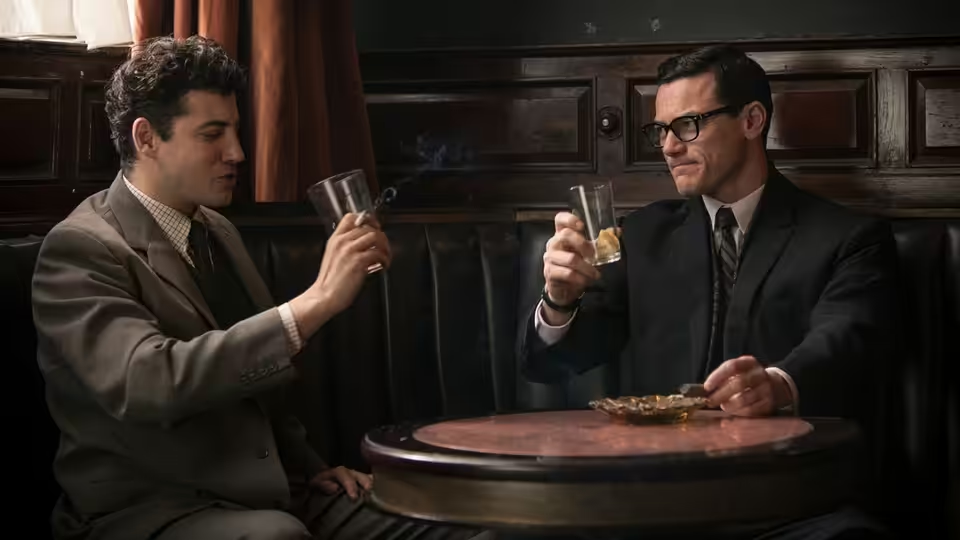
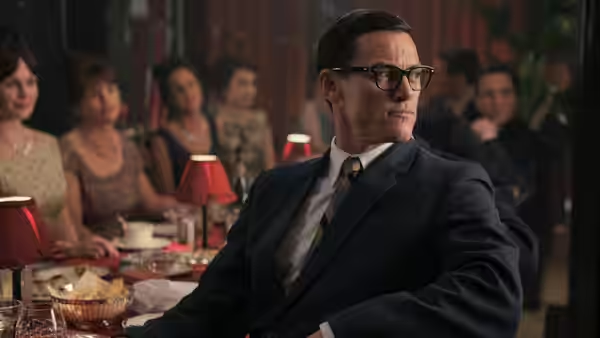
Luke Evans gives Bruce Reynolds enough presence to hold our attention without swallowing the ensemble. Jack Roth as Charlie Wilson, Paul Anderson as Gordon Goody and Neil Maskell as Buster Edwards make the gang feel like people with reasons to spend time together. We enjoyed their company more than we expected; the attention to how they relate to one another drew us in. Those relationships give the drama something to return to when the practical business might otherwise take over, and the supporting performances repay that attention.
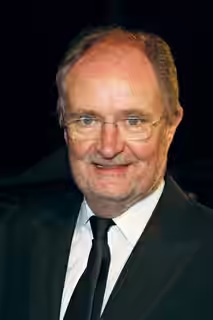
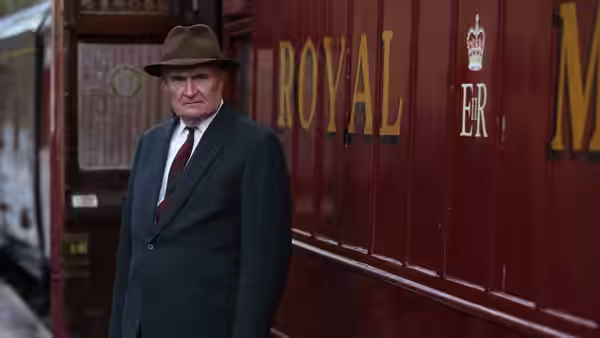
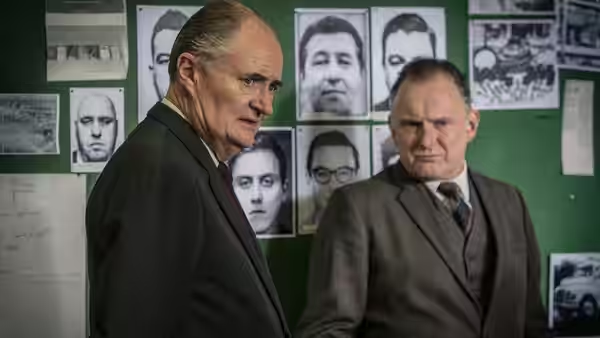
Jim Broadbent’s DCS Tommy Butler brings a welcome firmness, with Robert Glenister’s DI Frank Williams giving the police another credible presence. Broadbent makes authority interesting without insisting that it should also be charming. There is pleasure in watching an actor who can command attention without making every moment an announcement. Glenister is well matched to him, and the pair give this sizeable cast a steadiness that it needs.
Directors James Strong and Julian Jarrold have a capable team behind them, and the care is apparent. George Richmond’s cinematography gives the drama a clear, composed finish, while Helen Scott’s production design makes the period setting persuasive. The detail works because it supports our belief in the people, rather than merely inviting us to inspect their surroundings. We can appreciate the finish without feeling that the programme has stopped to congratulate itself on getting the past to look right.
Editors Billy Sneddon and Mark Eckersley keep the ensemble intelligible and the pace moving, without treating the relationships as an interruption. Glenn Gregory and Paul Englishby receive the music credits, and the soundtrack does useful work in sustaining tension. The use of Nina Simone’s music is particularly effective: we felt properly apprehensive as it sharpened our attention to the gang. Music can easily make crime look glamorous; here, at its strongest, it makes the company less comfortable.
The weakness is Chibnall’s limited interest in disturbing that enjoyment for long. The gang-centred material understands the appeal of these men, but does less to test it, and the warmth between them can end up doing too much of their defence. We do not need a lecture about theft or a policeman appointed to explain the moral. We do need the writing to be as curious about the men’s excuses as it is about their companionship. A few more uncomfortable questions would have made the same characters more interesting.
By the standards of a straightforward robbery drama, there is enough skill here to justify the two episodes. Anyone hoping for a searching study of responsibility will have more work to do than the programme does. The cast makes that limitation worth tolerating, though it also suggests how much more these roles might have yielded. Watch it for the ensemble; a little scepticism about the robbers will not spoil the evening.