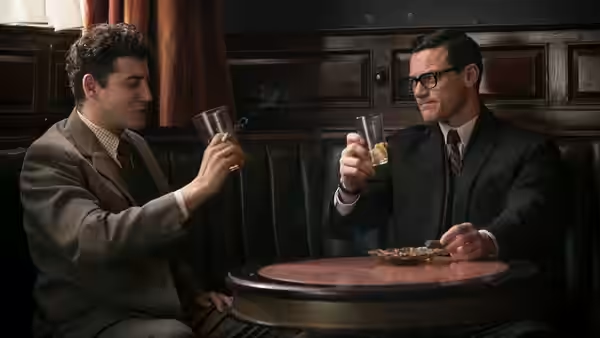
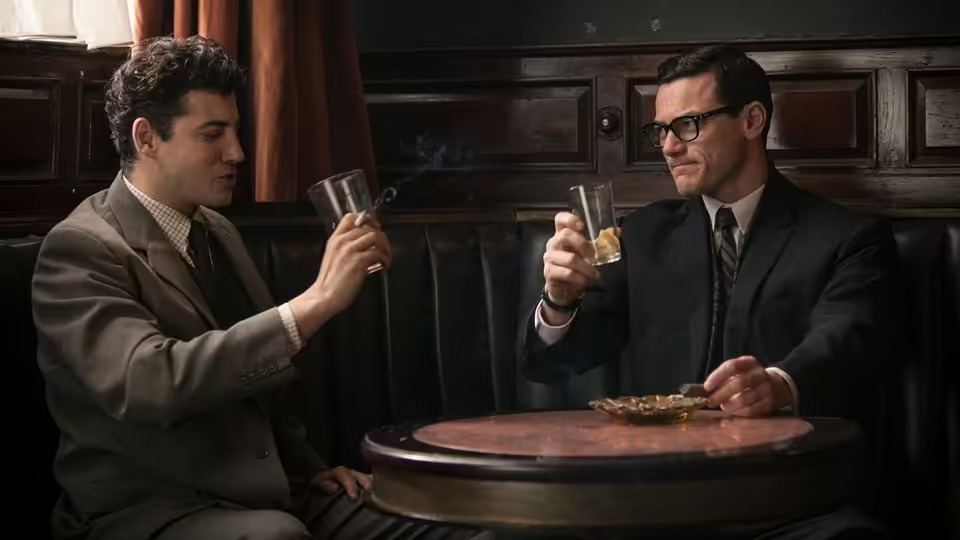
Two men raise their glasses across a small table in a wood-paneled pub
Series review

The Great Train Robbery

2013 · Created by Chris Chibnall · Series · 1h 30m

In a sentenceThe robbers are good company, which is a slightly awkward reason to recommend them

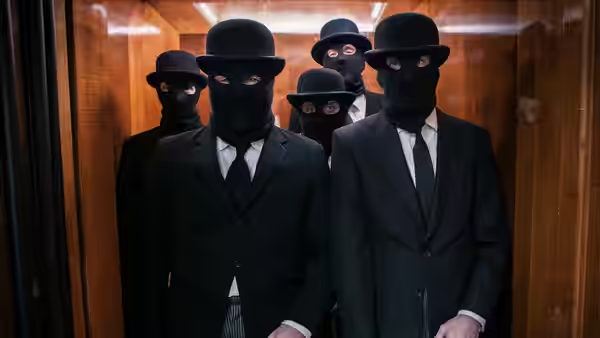
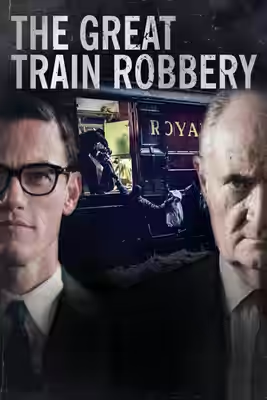
Bruce Reynolds (Luke Evans) is at the centre of a gang preparing for a train robbery. Among the men around him are Charlie Wilson (Jack Roth), Gordon Goody (Paul Anderson) and Buster Edwards (Neil Maskell), while DCS Tommy Butler (Jim Broadbent) and DI Frank Williams (Robert Glenister) represent the police. The prospect of stolen money brings the gang’s relationships and their ability to work together into focus. Across two episodes, the drama approaches the crime through the men responsible for it and the officers on the other side.

Plays from YouTube when you press play; nothing loads from them until then.

Fi1m review

A well-made, absorbing crime drama with a persuasive ensemble and a rather generous view of its robbers. Chris Chibnall gives the gang’s relationships more attention than the moral questions their story raises.

The Great Train Robbery is good, absorbing crime drama, though we would not turn to it for a searching account of criminal responsibility. Chris Chibnall makes the gang’s relationships worth following, and the ensemble gives the programme an interest beyond the robbery itself. The attraction is straightforward: capable actors, assured storytelling and a period setting given proper care. Our reservation is that the robbers are rather too easy to enjoy.

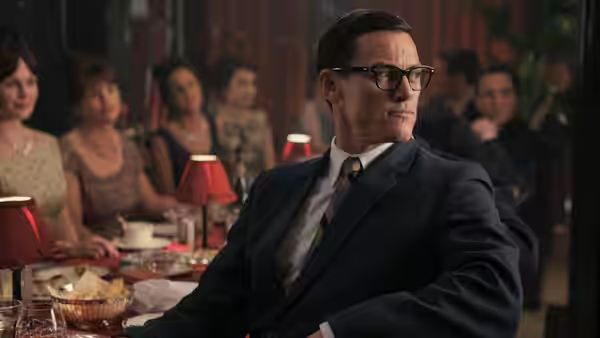
Luke Evans gives Bruce Reynolds enough presence to hold our attention without swallowing the ensemble. Jack Roth as Charlie Wilson, Paul Anderson as Gordon Goody and Neil Maskell as Buster Edwards make the gang feel like people with reasons to spend time together. We enjoyed their company more than we expected; the attention to how they relate to one another drew us in. Those relationships give the drama something to return to when the practical business might otherwise take over, and the supporting performances repay that attention.

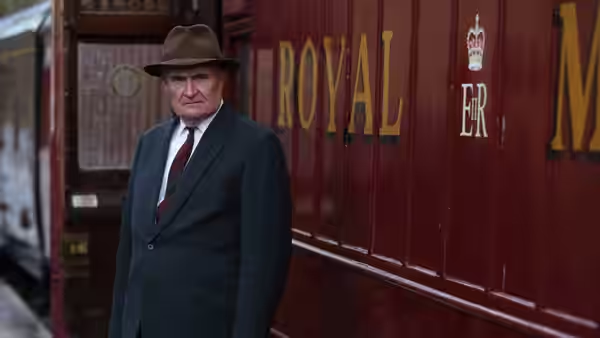
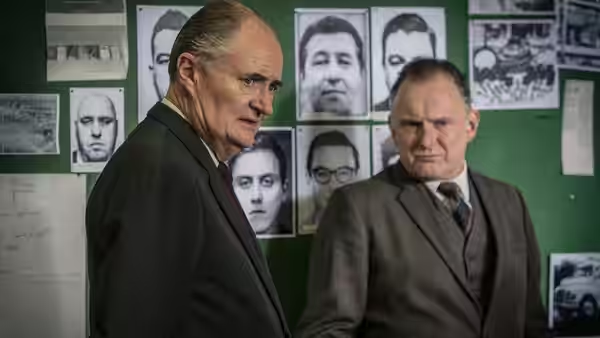
Jim Broadbent’s DCS Tommy Butler brings a welcome firmness, with Robert Glenister’s DI Frank Williams giving the police another credible presence. Broadbent makes authority interesting without insisting that it should also be charming. There is pleasure in watching an actor who can command attention without making every moment an announcement. Glenister is well matched to him, and the pair give this sizeable cast a steadiness that it needs.

Directors James Strong and Julian Jarrold have a capable team behind them, and the care is apparent. George Richmond’s cinematography gives the drama a clear, composed finish, while Helen Scott’s production design makes the period setting persuasive. The detail works because it supports our belief in the people, rather than merely inviting us to inspect their surroundings. We can appreciate the finish without feeling that the programme has stopped to congratulate itself on getting the past to look right.

Editors Billy Sneddon and Mark Eckersley keep the ensemble intelligible and the pace moving, without treating the relationships as an interruption. Glenn Gregory and Paul Englishby receive the music credits, and the soundtrack does useful work in sustaining tension. The use of Nina Simone’s music is particularly effective: we felt properly apprehensive as it sharpened our attention to the gang. Music can easily make crime look glamorous; here, at its strongest, it makes the company less comfortable.

The weakness is Chibnall’s limited interest in disturbing that enjoyment for long. The gang-centred material understands the appeal of these men, but does less to test it, and the warmth between them can end up doing too much of their defence. We do not need a lecture about theft or a policeman appointed to explain the moral. We do need the writing to be as curious about the men’s excuses as it is about their companionship. A few more uncomfortable questions would have made the same characters more interesting.

By the standards of a straightforward robbery drama, there is enough skill here to justify the two episodes. Anyone hoping for a searching study of responsibility will have more work to do than the programme does. The cast makes that limitation worth tolerating, though it also suggests how much more these roles might have yielded. Watch it for the ensemble; a little scepticism about the robbers will not spoil the evening.

Critical consensus AI synthesised

2 of 6
Positive
1
Mixed
1
Negative
0
The Guardian
18 December 2013 · Sam Wollaston
85*

Wollaston finds the drama gripping and beautifully made, with a strong focus on the gang’s relationships. He especially praises its period detail and the use of Nina Simone’s music to build tension.

Read the full review →
Den of Geek
18 December 2013 · Louisa Mellor
55*

Mellor finds the first film slick, well-made and well-acted, but lacking moral nuance when viewed on its own. She praises the moment when Bruce Reynolds recognizes that the stolen money is too much, calling it a sharp encapsulation of the gang’s coming burden.

Read the full review →

Straight answers AI written, from our review

Is The Great Train Robbery worth watching?
The Great Train Robbery is worth watching for its persuasive ensemble and absorbing robbery drama; we score it 73 out of 100. Across two episodes, the gang’s relationships and the credible police characters hold our attention, though we find the writing too generous towards the robbers to offer much scrutiny of their excuses.
How long is The Great Train Robbery, and what is it rated?
The Great Train Robbery has episodes of about 1h 30m. It is a drama series.
Where can I watch The Great Train Robbery in Indonesia?
The Great Train Robbery is not on any streaming or rental service in Indonesia at the moment. It is available in 3 other countries; change your country at the top of the page to see where. Availability is checked daily.
How violent or frightening is The Great Train Robbery, and is it suitable for children?
The Great Train Robbery has a UK 12 certificate and a US TV-14 rating, making it a more appropriate choice for teenagers than younger children. We find the tension apprehensive rather than describe it as outright horror, particularly when the music sharpens our attention to the gang; the certificates alone do not establish how graphic any violence is.
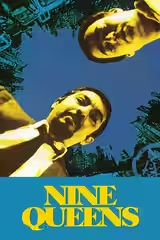
How does The Great Train Robbery compare to Nine Queens?
The Great Train Robbery offers absorbing ensemble crime drama, while Nine Queens is the better choice for a clever, funny con-man thriller. We recommend both for the uneasy pleasure of spending time with thieves, but our reservations differ: the programme is too forgiving of its robbers, while the film’s plotting occasionally strains belief.
What should I watch after The Great Train Robbery?
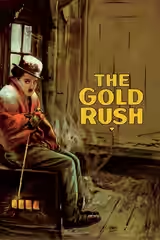
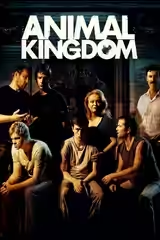
After The Great Train Robbery, try Nine Queens (2000, Fi1m 83): For the uneasy business of trusting someone who steals for a living. Then The Gold (2023, Fi1m 89): For a wider look at what stolen money does after the robbery; and Animal Kingdom (2010, Fi1m 84): A criminal family’s loyalties make for harsher, less reassuring evening viewing.

Cast

If you liked this, try…

  1. Rififi (1955) · not reviewed yetFor a robbery whose practical details generate their own considerable suspense.

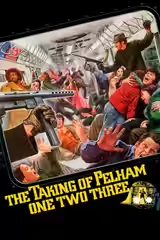
  2. The Taking of Pelham One Two Three (1974) · not reviewed yetAnother train, with sharper jokes and a pleasingly impatient police response.

  3. Nine Queens (2000, Fi1m 83)For the uneasy business of trusting someone who steals for a living.

  4. The Gold (2023, Fi1m 89)For a wider look at what stolen money does after the robbery.

  5. Animal Kingdom (2010, Fi1m 84)A criminal family’s loyalties make for harsher, less reassuring evening viewing.

Free account

Know what to watch tonight

Two lists that know where things are streaming, collections you can share, your own score beside ours, and Discover that remembers what you have seen.

  • Want to see, sorted by what is streaming now
  • Seen, with your score out of ten
  • No adverts, ever