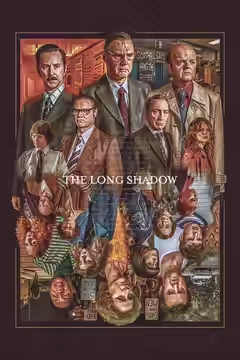
George Kay’s seven-part account of the Yorkshire Ripper years keeps its eyes on the women and their kitchens rather than on the killer, and is the better for it. Careful, angry and, at seven episodes, a long sit.
George Kay’s seven-part series takes the five years in which Peter Sutcliffe killed thirteen women in the north of England and tells them from two places at once: the incident rooms where West Yorkshire Police failed to catch him, and the front rooms of the women he attacked. The killer is kept to the edge of the frame, a shape in a car, a name arriving late. That is the series’ idea, and it is a good one, and for most of its length it holds. It first aired on 25 September 2023, carries a 15 and runs to seven episodes, which is at least one more than it needs.
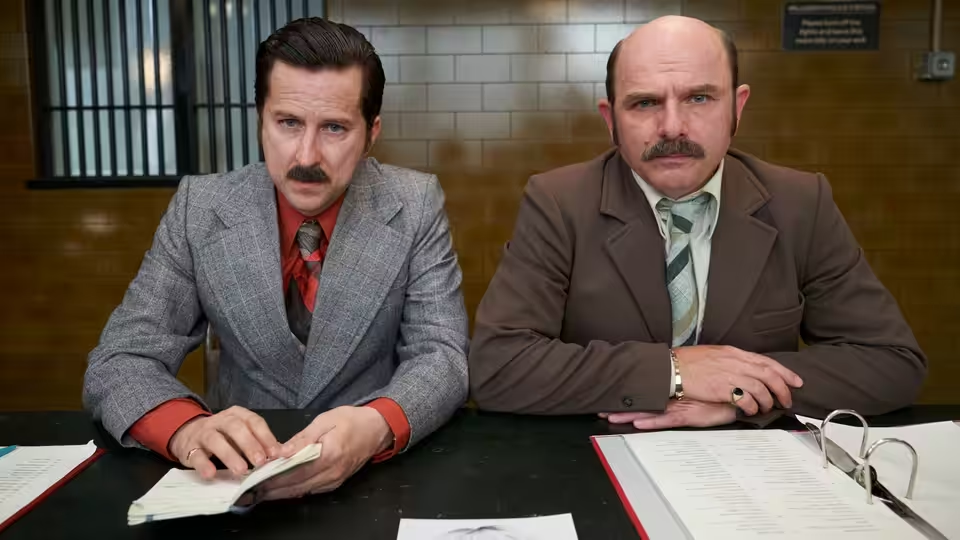
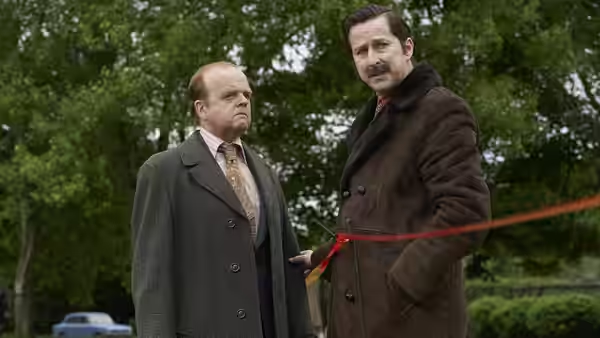
Toby Jones plays DCS Dennis Hoban, the Leeds detective who takes the first case in the autumn of 1975, and he is the best thing in it. Jones gives Hoban a tired decency: he goes to the dead woman’s house, sits with her children, Richard (Dylan Hall) and Sonia (Alexa Goodall), and understands that nobody above him much minds. Michael McElhatton’s Chief Constable Ronald Gregory minds about the newspapers. Lee Ingleby’s Jim Hobson and Jack Deam’s Les Hanley inherit the inquiry as it grows, and the series is honest that what it grows into is a card index rather than a hunt. The walking is done by the lower ranks, DC John Nunn (Kris Hitchen) and WPC Jenny Bush (Chloe Harris), and the series notices them without making saints of them.
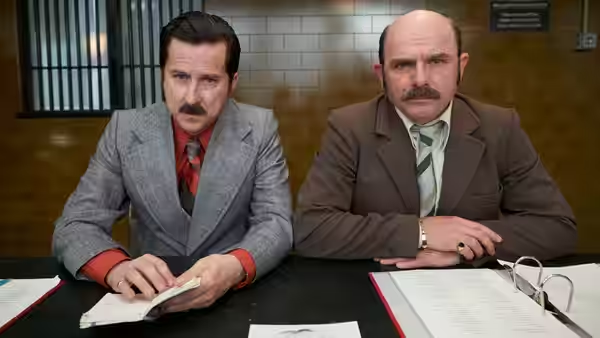
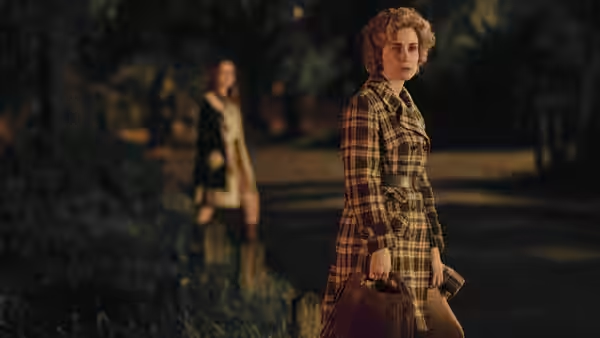
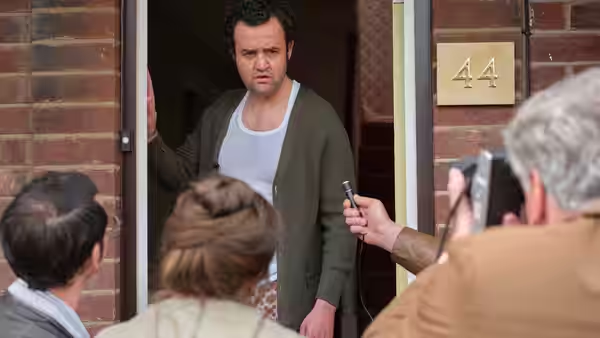
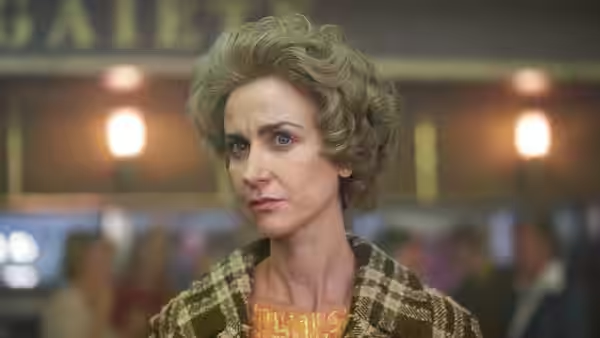
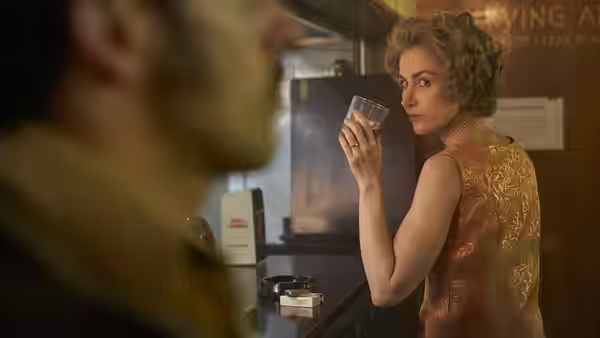
Lewis Arnold directs all seven episodes, which gives the thing a single temperature, and it is a cold one. Ed Rutherford shoots Leeds and Bradford in mustard, brown and nicotine under low grey skies, and lights the night streets with sodium orange, so that every woman walking home is in the same light the police keep describing in their appeals. Anna Higginson’s incident rooms fill up as the years pass, more desks, more boxes, more pins, until the scale of the failure is on the walls. Orla Smyth-Mill keeps the detectives in the same two suits for five years and the women in what they could afford. Sarah Warne’s score is spare, mostly low strings, and often absent; the kitchens are allowed their silence. Sacha Szwarc and Kyle Waters cut the attacks so that we see the street before and the house after and almost never the act itself, which is the right decision and a brave one for a series sold on a manhunt.
One image stayed with us. Two small children at a bus stop in the early morning, in school clothes, waiting for a mother who is not coming, and the series does nothing to help it along: no music, no line, just the bus arriving and leaving without her. We found it hard to watch and harder to forget, and it is the moment that tells you what Kay is making. He is not making a thriller.
That is also the trouble. A new woman arrives every episode or so, which is sound morally and costly dramatically: we are asked to attach ourselves and then move on, and by the fourth or fifth time the series is asking for more than it has earned. The police half is more familiar than Kay seems to think. The superintendent who shouts and the junior who is ignored are stock, and McElhatton’s Gregory is written to be wrong in every scene he enters, which makes him easy to blame and dull to watch. The series also underlines: a line of dialogue will tell us what the picture has just shown. The second half follows the inquiry down a wrong turning that the record describes and we will not, and here the length tells, because the mistake is made once and then shown being made for three hours. By the sixth episode we were angry, as the series means us to be, and we were also tired, which it does not.
Red Riding (2009) took the same years and the same police and made them a fever dream; this is plainer and more useful, and it will be remembered for a list of names rather than for an image. Kay wrote Hijack (2023), which runs on a clock; here he has deliberately taken the clock away, and the series is more honest and less gripping for it.
Watch it one episode a night rather than all at once. It is not built for a weekend and it is not meant to be enjoyed. Its best moments are the quietest, and most of them have Toby Jones in them, or a woman at a sink.