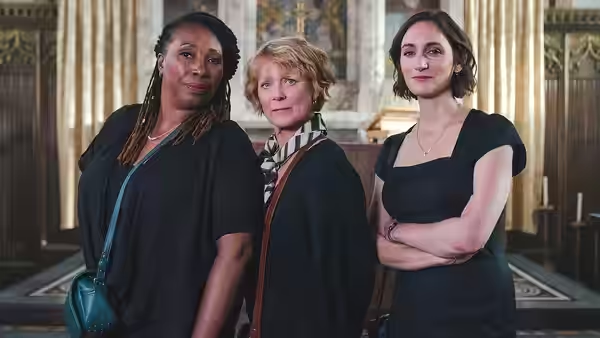
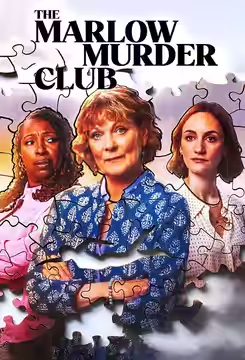
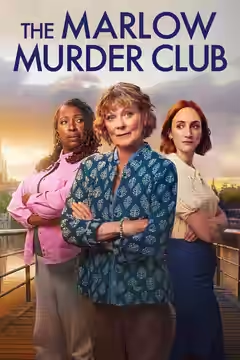
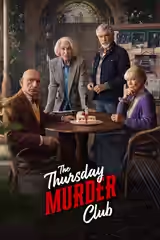
Robert Thorogood’s whodunnit gives Samantha Bond, Jo Martin and Cara Horgan a pretty town and a murder to share, and they are good company. The script keeps stopping to tell us what we have just seen, and two episodes feel like three.
Robert Thorogood created Death in Paradise, and here he adapts his own novel, so he knows exactly what he is making: a whodunnit with a river where the beach used to be and three amateurs in place of the detective. Somebody in Marlow dies, and three women with no business investigating decide it was murder and set about proving it. It is pleasant, it is well cast, and it is slow. The first series is two episodes long and both of them feel padded.
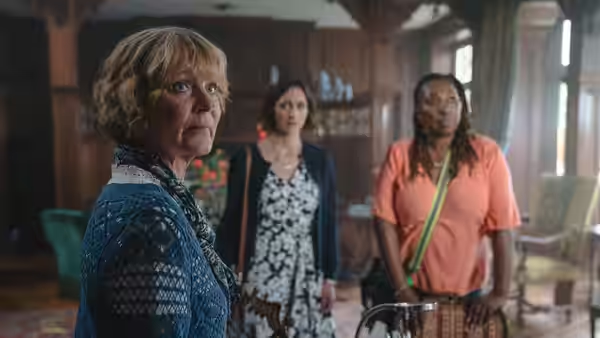
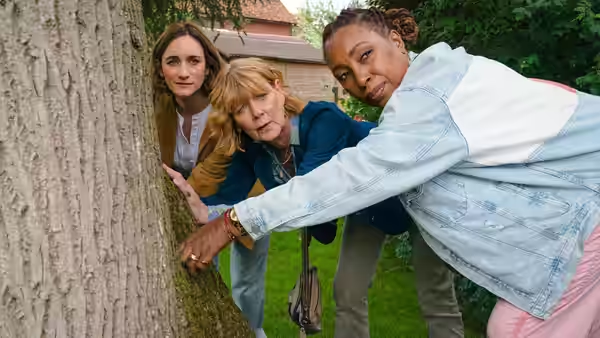
The cast is the reason to watch. Samantha Bond plays Judith Potts as a woman who has decided that living alone means she may do exactly as she pleases, and the plot leans on her habit of walking into rooms she has not been invited into. Jo Martin’s Suzie Harris has the gossip, and is blunt where Judith is grand; their bickering is the best-written material in the series. Cara Horgan has the hardest job as Becks Starling, the respectable one, whose rebellion consists mostly of lying about where she has been, and Horgan finds the comedy in a woman who is slightly appalled at herself. Natalie Dew’s DS Tanika Malik exists to be wrong so the others can be right, and Dew plays it with more patience than the part deserves.
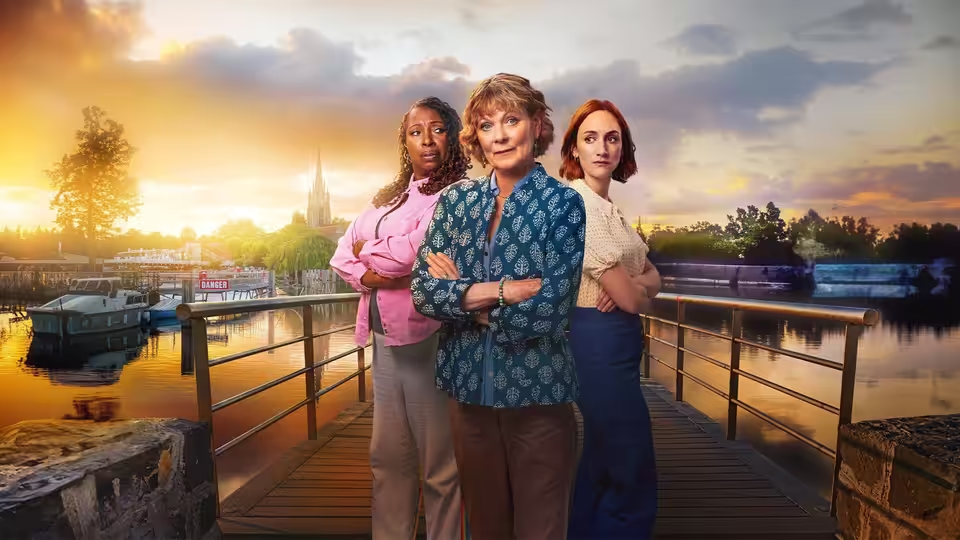
Trevelyan Oliver shoots Marlow in the light of a fine English afternoon. The river is green and slow, the brick is the colour of toast, and the church tower turns up in the background of every other shot. Katherine Churcher and Steve Barron direct without fuss, keeping the camera at the height of a person standing in a garden and letting the actors get on with it. The town is on its best behaviour and so is the programme.
The trouble is the talking. Thorogood, Lucia Haynes and Julia Gilbert have written dialogue that keeps stopping to tell us what we have just watched. Judith finds a clue. Judith explains the clue to Suzie. Suzie repeats it to Becks, and the three of them then lay it out for Malik, who writes it down. A whodunnit runs on the pleasure of noticing things, and here nobody is allowed to notice anything without a paragraph attached to it.
Somewhere in the second episode we realised we had stopped trying to guess and were simply waiting to be told, and for a mystery that is a small disaster. We were not bored. We had simply stopped caring who did it, and the programme did not seem to have noticed. The suspects are the cause. Daniel Lapaine’s Elliot Howard and Mark Fleischmann’s Giles Bishop each get one good scene to be suspicious in and are then kept off screen for so long that we had to be reminded who they were, which the script duly does. Rita Tushingham arrives as Mrs Eddingham and is given far too little to do. The editors, Jeremy Strachan and David Yardley, let scenes run a beat or two past their last useful line, and over two long episodes those beats add up.
Against Thorogood’s own standard this is the milder work. Death in Paradise gave its detective a grudge against the sun and built a series on it; Judith’s eccentricities are a lovely idea and not quite a character, and the series has to keep telling us she is formidable because it has not yet shown us. The second and third series run to six episodes each, which suggests somebody agreed the shape was wrong. Watch the first episode with a pot of tea and decide whether the company is enough. It was nearly enough for us.