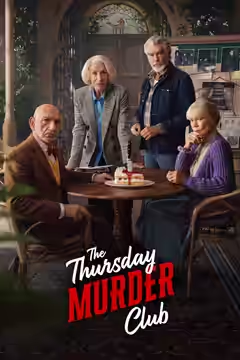
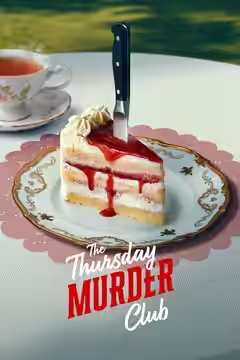
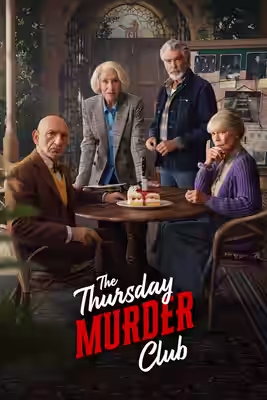
Chris Columbus gives Richard Osman’s retirees a cast most directors would wait a career for and then forgets to make the murder matter. Mirren, Brosnan, Kingsley and Imrie are excellent company; the mystery they are solving is not.
Four residents of Coopers Chase, a retirement village with more lawn than most county towns, meet every Thursday to go over cold cases the police have filed and forgotten. Then a man is killed a short walk from their front doors, and the case is suddenly warm. Chris Columbus has adapted Richard Osman’s novel with a cast most directors would wait a career for, and he has made a pleasant, tidy, inert 118 minutes. It is agreeable company. It is not much of a murder mystery.
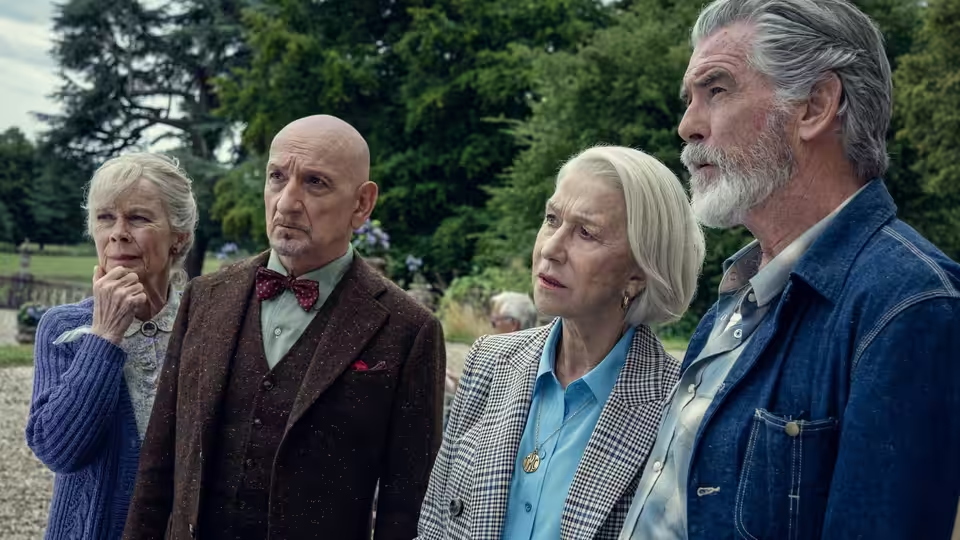
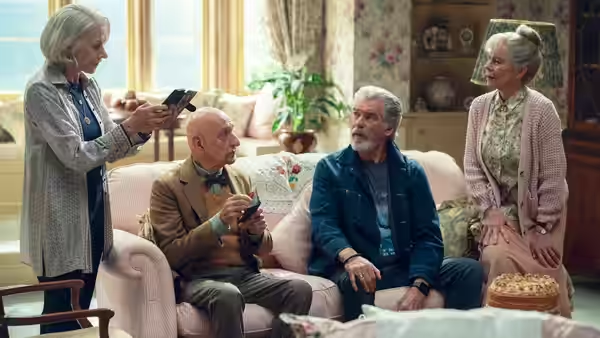
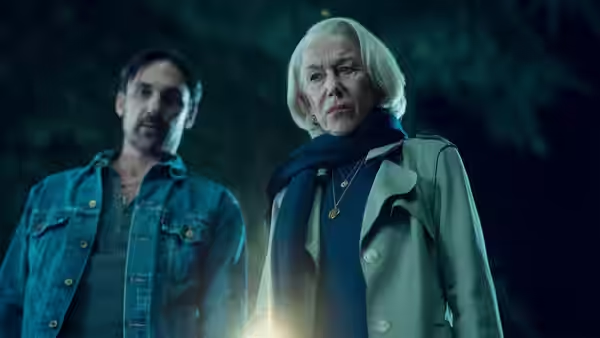
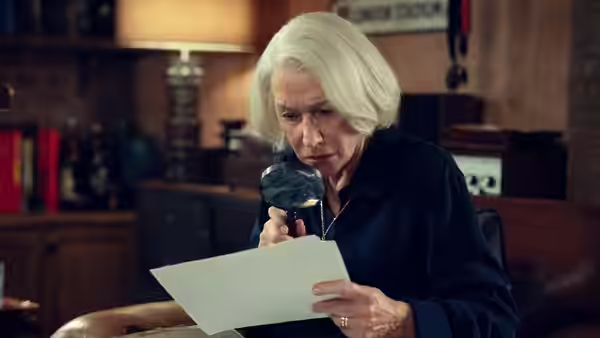
The company is the point, and it is good. Helen Mirren plays Elizabeth, who declines to say what she did before she retired and does not need to; she asks questions in a tone that assumes the answer is already on its way. Pierce Brosnan’s Ron, a retired union man in a tracksuit, treats every conversation as a picket line and is having the best time of anyone on screen. Ben Kingsley’s Ibrahim, a psychiatrist, keeps the files and corrects people’s grammar. Celia Imrie’s Joyce, a former nurse and the newest member, narrates into her diary and is the one the film trusts us to like first. Their scenes together have the ease of people who have been famous for forty years and no longer need to prove it.
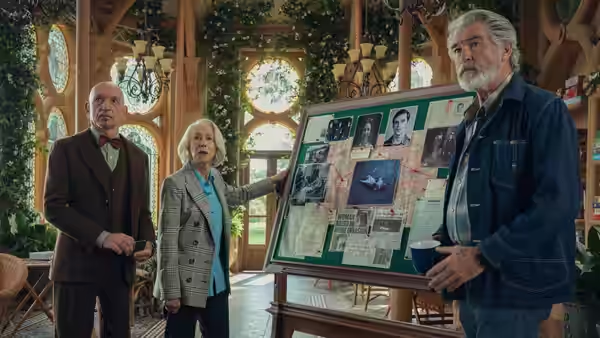
The case is where the trouble starts. David Tennant’s Ian wants to build on part of the site, his partner Tony Curran (Geoff Bell) is found dead, and Naomi Ackie’s PC Donna De Freitas, who came to give a talk on window locks, is quietly adopted by the club and put to work behind the back of Daniel Mays’s DCI Chris Hudson. The screenplay by Suzanne Heathcote and Katy Brand lines up suspects, including Richard E. Grant’s Bobby Tanner and Henry Lloyd-Hughes’s builder Bogdan, and the club interviews them one at a time, with tea between. Nobody is ever in danger. Nobody behaves as if they might be. Somewhere around the forty-minute mark we realised we did not mind who had done it, and the film gave us no reason to change our minds.
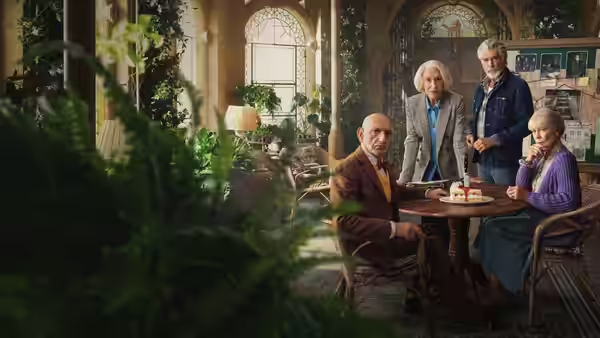
Columbus shoots it as if for a large and comfortable television. Don Burgess lights the village like the brochure Ian would hand out: every lawn green, every room full of late-afternoon sun, not a shadow anywhere for a body to fall into. James Merifield’s sets are handsome, warm stone and long windows and a room given over entirely to jigsaws, and none of them ever feels lived in by anyone with a secret. Thomas Newman’s score plucks and skips under every scene, announcing that this is all good fun a beat before anything funny has happened. Dan Zimmerman cuts each scene off the moment its point is made, which keeps the film moving and denies a murder mystery the one thing it needs, which is time to make us uneasy. Joanna Johnston’s costumes do more characterisation than some of the dialogue: Elizabeth’s tailored coats and silk scarves tell you who she was before the script gets round to hinting.
There is one scene that is about something. Jonathan Pryce plays Stephen, Elizabeth’s husband, whose memory is going, and in their flat he puts a record on and they dance. For two minutes the film is about what it is actually about, which is people who have less time left than they had and know it. It moved us more than we expected. Pryce plays a man who understands what is happening to him about a third of the time, and Mirren lets us see what it costs her to keep step with him and say nothing. Then it cuts back to the case, and the case is still not interesting.
Columbus made Home Alone (1990) and Mrs Doubtfire (1993), films that knew how to build a set piece and how long to hold it. Here the set pieces are conversations in armchairs, and he holds them for exactly as long as the plot requires. The novel’s jokes sat next to its funerals; the film keeps the funerals brief and the jokes soft, and it is the softness that does the damage. A cosy mystery still needs a corpse that counts.
Watch it at home on a Sunday with someone who has read the book and will tell you what has been left out. It carries a 12A, runs 118 minutes, and is precisely as dangerous as that suggests.