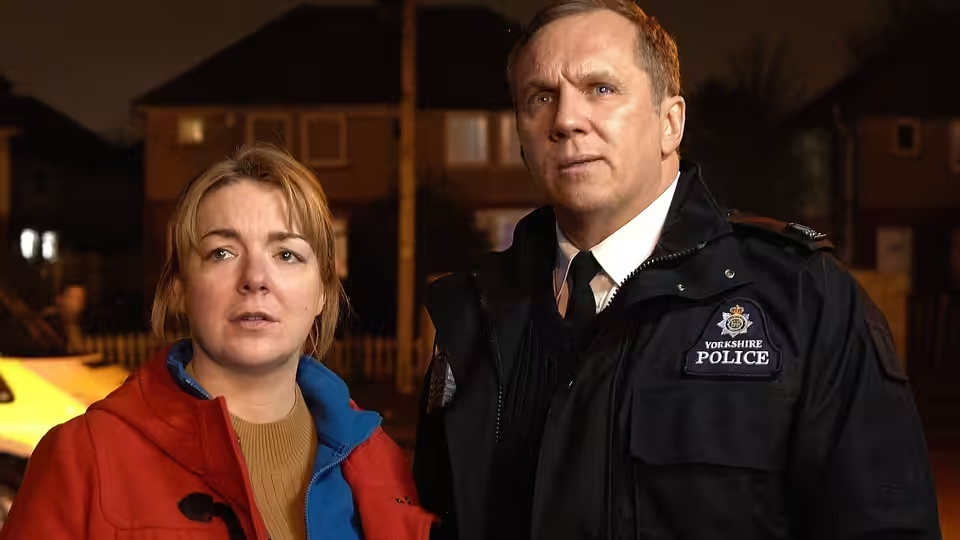
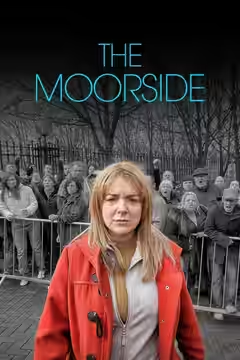
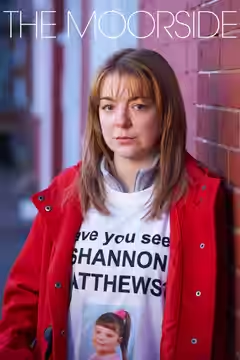
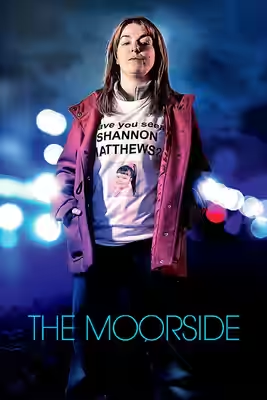
Sheridan Smith gives this humane two-part drama its strength, with Gemma Whelan making Karen Matthews difficult to dismiss. We recommend it for the performances, though its determination to encourage understanding occasionally becomes too insistent.
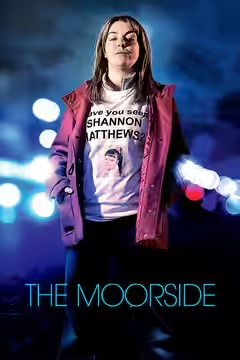
The Moorside is a good, humane drama with an unusually firm grasp of how much effort kindness can take. Written by Neil McKay and directed by Paul Whittington, it asks us to pay attention to people we might otherwise judge quickly. That is a worthwhile ambition, and the performances make it worth our time. Its weakness is an occasional eagerness to make sure we recognise that ambition, when the actors have already done enough.
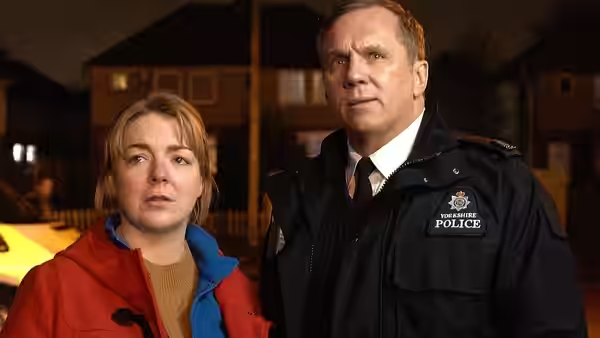
Sheridan Smith, as Julie Bushby, is the strongest reason to watch. Her performance makes concern for other people feel demanding, sometimes exhausting, and entirely credible. We were moved by her Julie because the kindness comes with such force of personality; there is nothing comfortably saintly about it. Smith allows us to admire this woman without asking us to find her agreeable at every moment. It is a generous performance with enough friction to keep it interesting.
Gemma Whelan has a different difficulty as Karen Matthews: making someone intelligible without making our judgement for us. She gives the character enough complexity that a simple label starts to feel inadequate. McKay’s attention to Karen’s motives helps, although this is also where the writing can press its case too firmly. We sometimes wanted less guidance about how to understand her. Whelan is capable of sustaining that uncertainty without the drama doing quite so much to assist.
Whittington’s direction is most persuasive in its trust in those performances. This is the kind of television drama in which an emphatic style could easily make the people seem smaller, and his approach keeps the emphasis where it belongs. Ben Yeates’s editing deserves consideration on the same terms: the important measure is whether we remain engaged with the characters, and we do. Across two episodes, the concentration is welcome, even when the emotional emphasis feels a little too carefully managed.
Susie Cullen’s production design and the music credited to Badly Drawn Boy belong to a drama whose strongest impression remains its acting. Neither supplies a stronger reason to watch than Smith and Whelan, which seems a fair order of priorities here. Tudor George’s costume design is similarly secondary to the people wearing the clothes. These contributions support a convincing whole, though the programme is less distinctive in its surroundings and musical character than in its central performances.
Against the standards of social drama, its chief virtue is taking compassion seriously without treating everybody as harmless. Its limitation is that the wish to be humane can become another way of directing our response. Most of the time, McKay and Whittington avoid that trap by allowing the actors sufficient complexity. The result is positive without becoming cosy, and troubling without treating its characters as objects of contempt.
There is enough judgement here to stop sympathy becoming an automatic response, and enough sympathy to make judgement uncomfortable. That balance is not maintained perfectly, but the lapses do not undo the performances. Watch it for Smith and Whelan, and allow yourself to remain less certain about the people they play than the writing occasionally seems to require.