Winterbottom puts Coogan and Brydon in a car, points them at northern restaurants and lets them talk. It looks like a freebie and it is a sad, funny portrait of a man who cannot bear being the less liked person at the table.
Michael Winterbottom’s The Trip is built on one joke: put Steve Coogan next to Rob Brydon, call the characters Steve and Rob, and watch Coogan mind. It gives that joke six half-hour episodes and the restaurants of the north of England. The premise is thin on purpose. Two men drive, eat and talk, and the whole series bets that the talking will be enough. It is, comfortably, though we can see why some viewers felt they had been left outside the car.
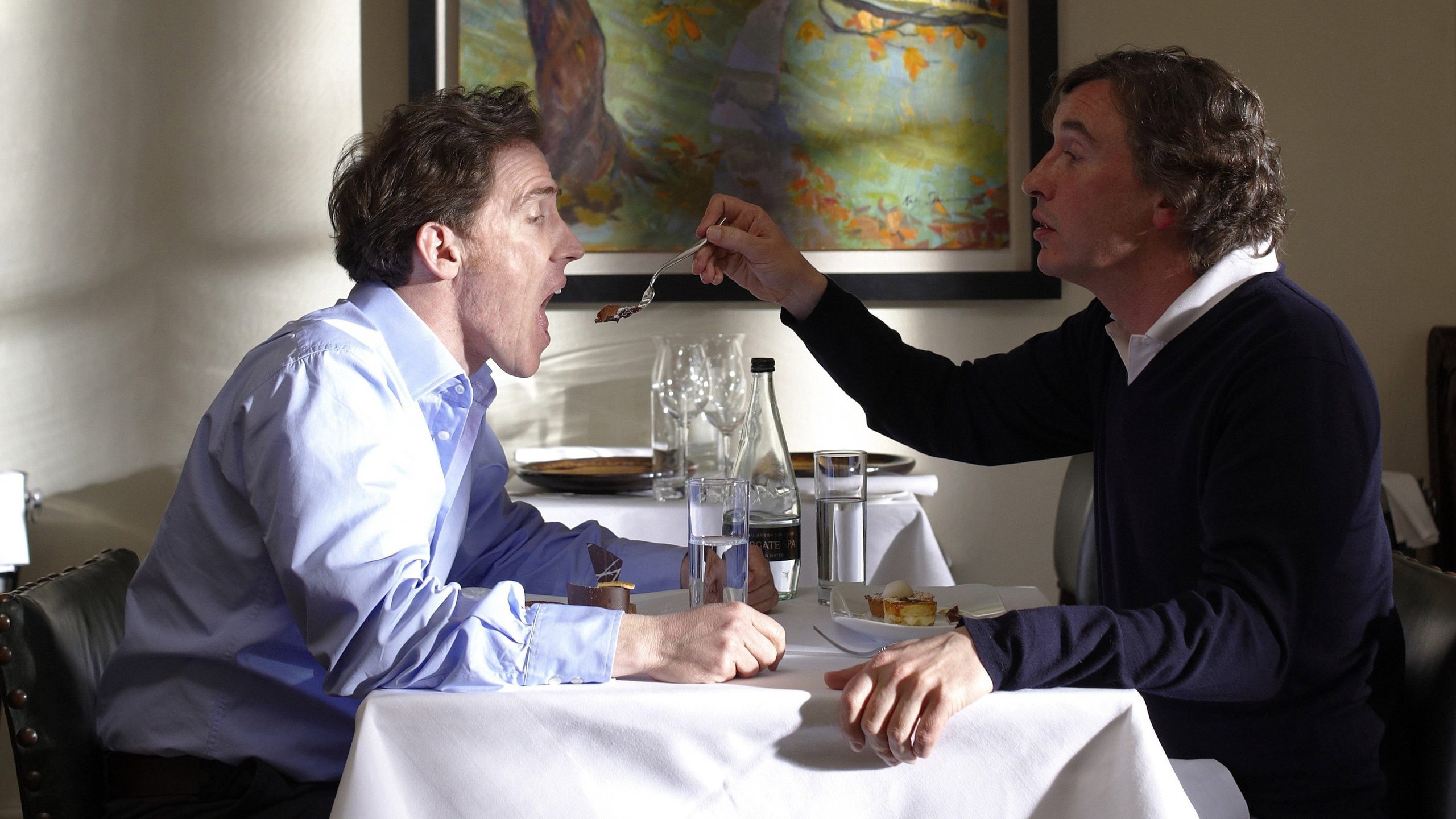
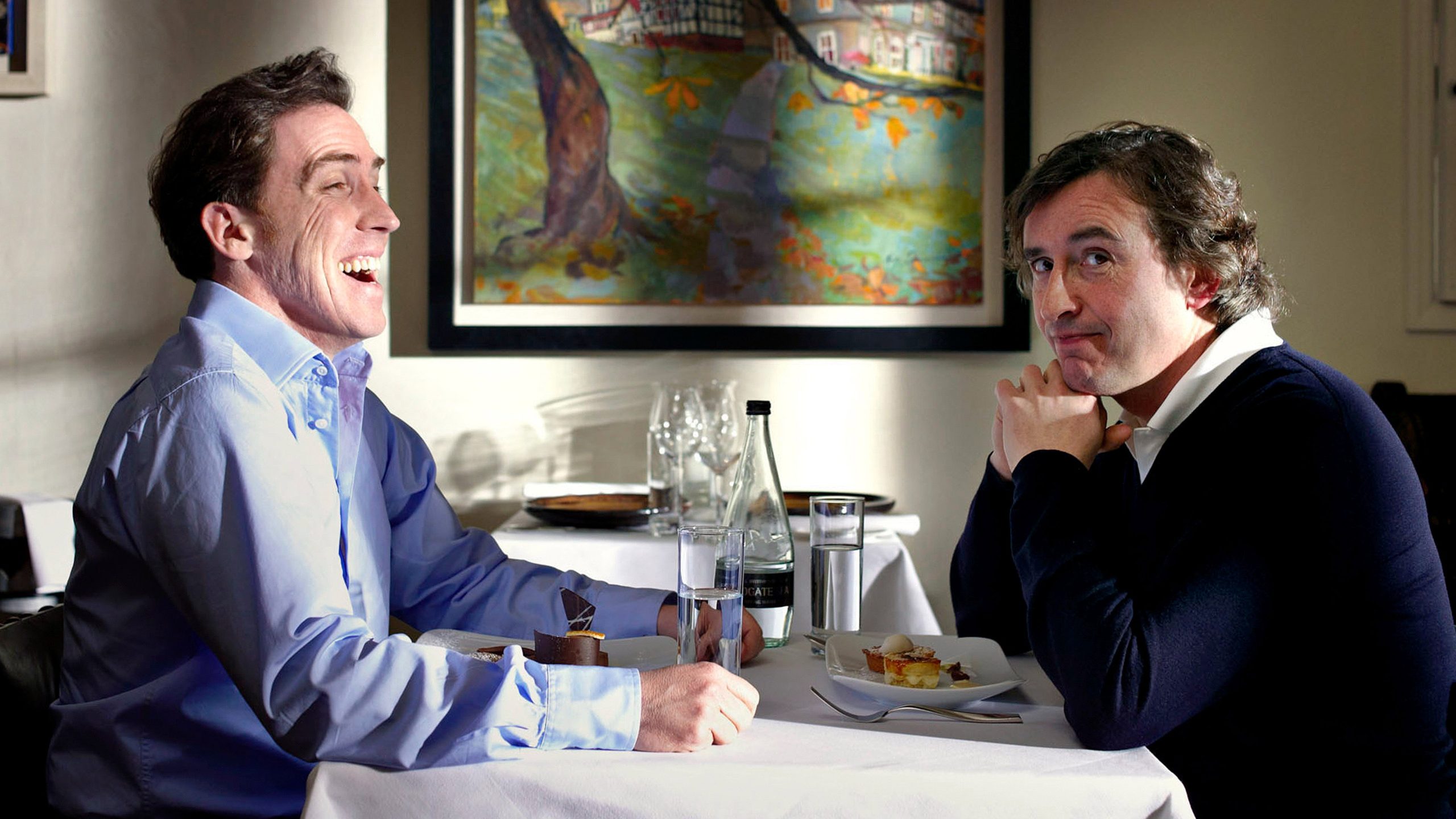
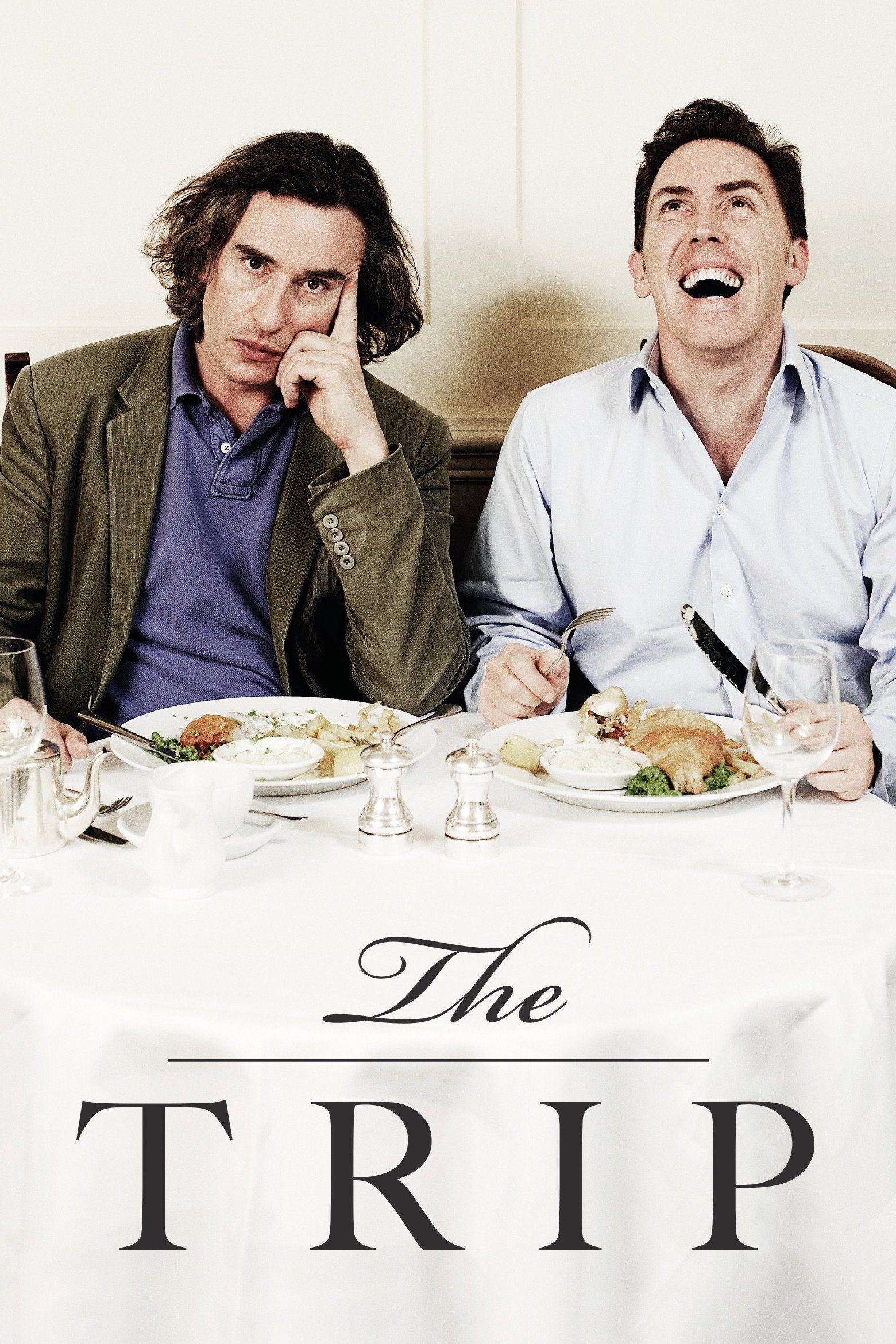
The impressions come first, because they are what everyone remembers. Steve and Rob do Michael Caine at each other over dinner, disputing how far the voice has dropped over forty years and whether the nostrils are involved, and it is the funniest passage of British television we have seen in a long while. The competition is never announced and never off. Coogan’s Steve is the better mimic, Brydon’s Rob gets the bigger laughs, Steve knows it, and his face does the rest.
The impressions are the surface, though, and the series is about what is under them. Coogan plays Steve as a man who has done well and cannot enjoy any of it: a comedian who wants to be taken for an actor, an Englishman who wants to be in America, a man who recites poetry at the scenery to nobody in particular. Brydon plays Rob as someone content with his wife, his work and his tricks, which Steve finds close to unforgivable. We laughed helplessly at the Caine duel. Twenty minutes later, watching Steve alone in a hotel bedroom ringing a girlfriend on another continent who does not much want to talk, we felt a pity for him we had not expected, and the series does this over and over: a big laugh, then the empty room after it.
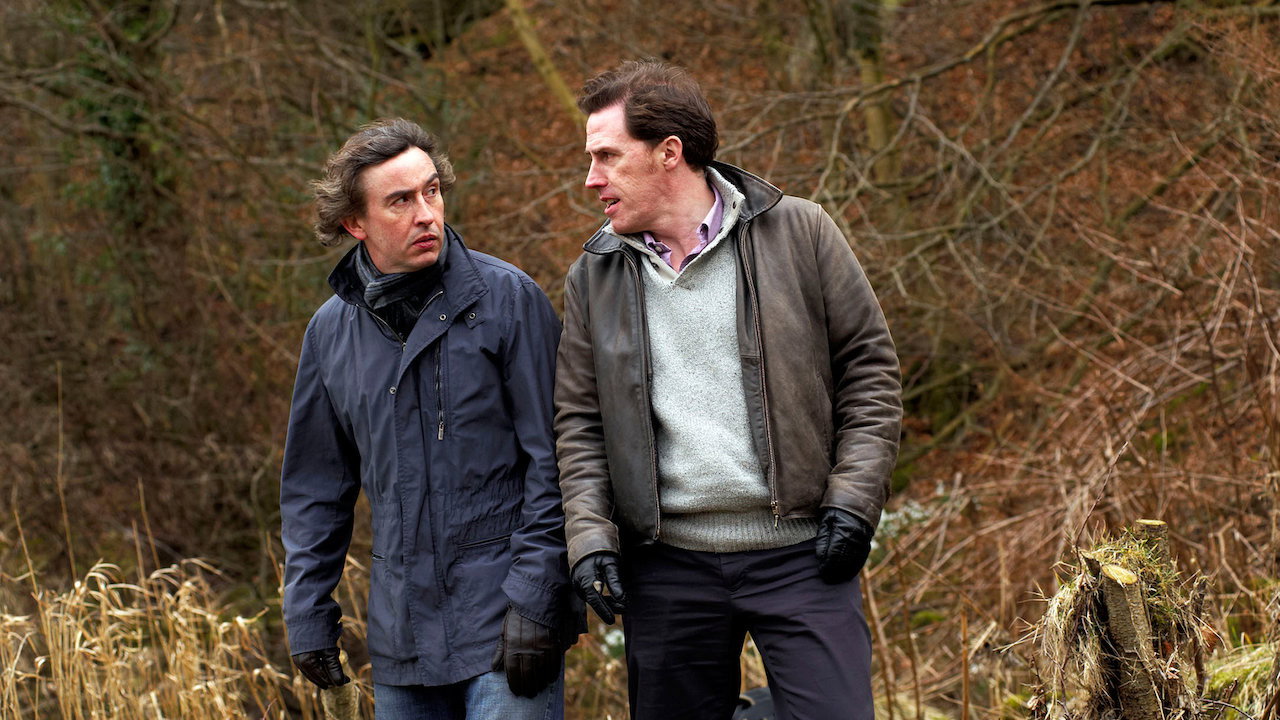
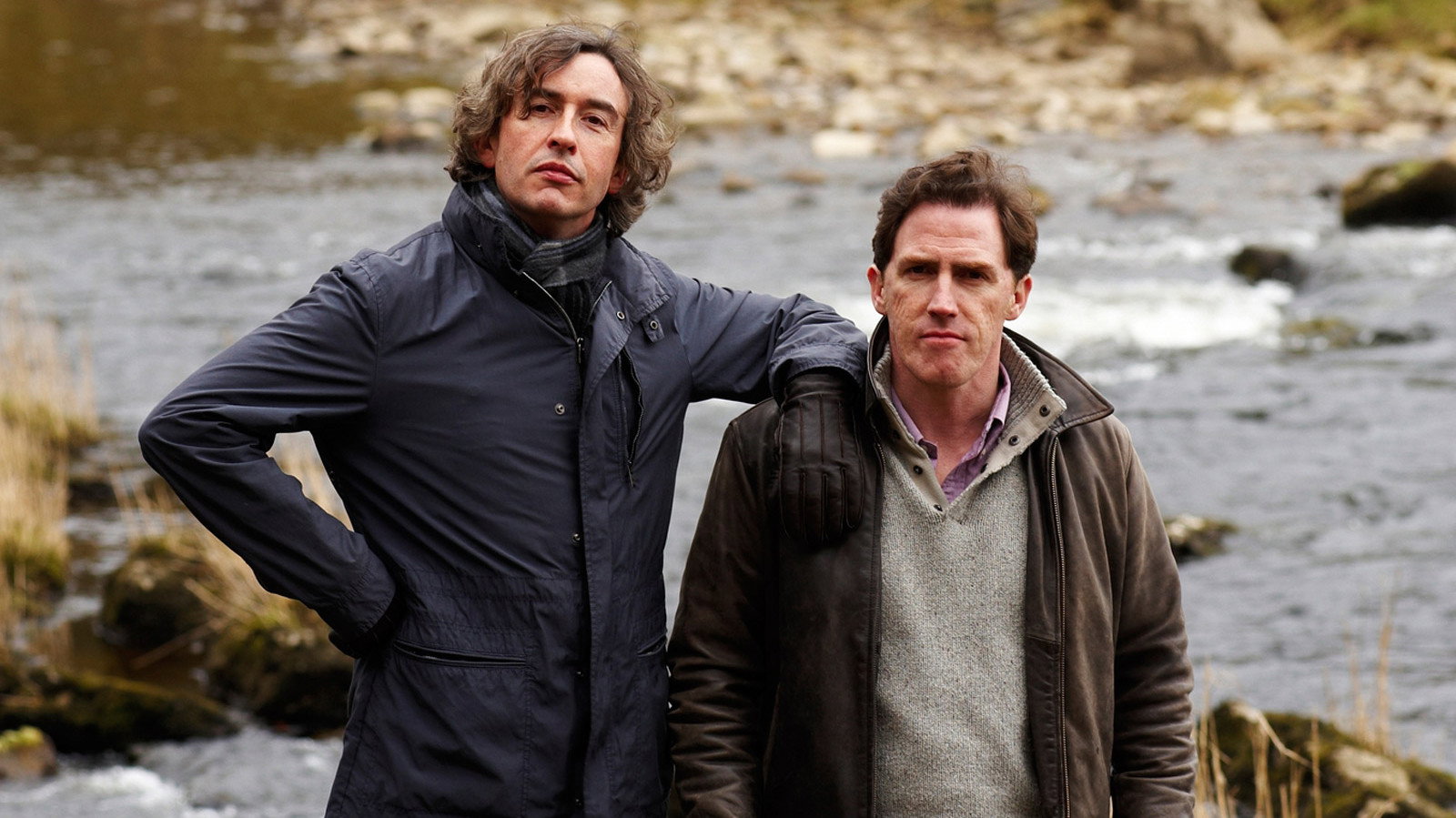
James Clarke and Ben Smithard shoot the north as it is under low cloud rather than as the tourist board would like it: grey light on the fells, wet dry-stone walls, the car small and dark on an empty road. The dining rooms are lit as they were found, and each course arrives as a short kitchen insert, hands plating, a sauce going on, with nobody ever telling us what it tastes like. That is the point; Steve is meant to be reviewing the food and has no opinion about it. The editors, Marc Richardson, Paul Monaghan and Mags Arnold, had the harder job. The dinners were improvised and ran long, and their trick is to let an impression go about ten seconds past comfortable, so the laugh turns into something more awkward and more truthful. Every episode has the same shape: drive, lunch, walk, dinner, phone call, bed.
That sameness is the design, and it is also the cost. By the fourth episode you have either accepted the rhythm or you have not, and the early complaint that the thing runs about twenty minutes long is fair. Not every impression that overruns turns into anything; some just overrun. The dream in the first episode, in which Ben Stiller appears as himself to tell Steve that Hollywood wants him, spells out a longing the rest of the series has the sense to leave unspoken. Claire Keelan’s Emma, Steve’s assistant, is a voice on the phone and little else. This is a series about two men, and the women in it are people the men ring.
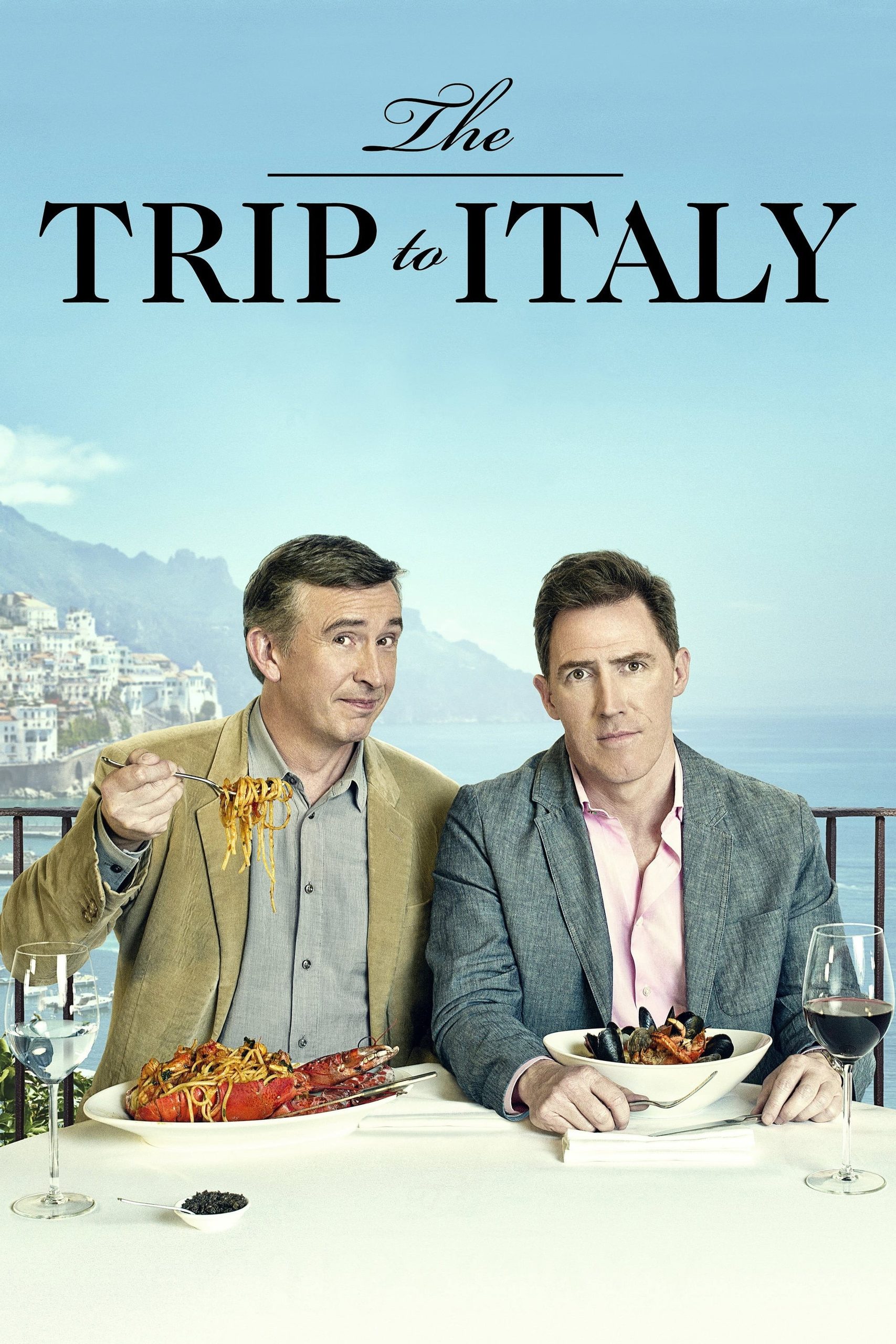
Most critics disagree with us, or did. The reviews around its first broadcast, on 1 November 2010, split down the middle, and the unhappy half said the same thing: a self-indulgent jolly, two comics doing their party pieces on somebody else’s budget, the only people in on the joke. We think that mistakes the subject for the fault. Steve’s self-indulgence is what the series is about, and Winterbottom films it from Rob’s seat across the table, half amused and half worried, which is where we sit too. The series has since gone to Italy, Spain and Greece. This first outing is the one we return to, because nobody involved yet knew it was a formula.
Watch it two episodes at a time, with something to eat, and preferably with someone whose company you are not entirely sure of. Six half hours is about the length of a long lunch, and roughly as much of these two as anyone should take in one sitting.