Mackenzie Crook’s remake of Barbara Euphan Todd’s scarecrow stories is gentle, funny and quietly worried about the countryside. The hours are slight and the grown-ups are underused, but it is some of the kindest children’s television we have seen in years.
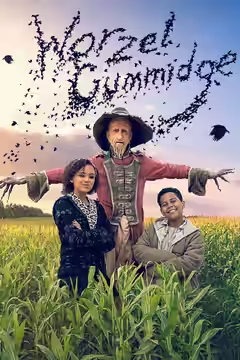
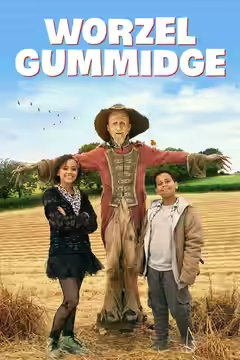
Mackenzie Crook writes, directs and plays the scarecrow in this remake of Barbara Euphan Todd’s stories, and he has made something quieter than the name suggests. His Worzel belongs to the field before he belongs to the children, and the programme is as interested in what the hedgerows are doing as in what anybody says. The first episode went out on 26 December 2019, a second followed, and three more arrived in 2021. Each runs an hour, which is long for a children’s programme, and Crook uses the length to let things sit.
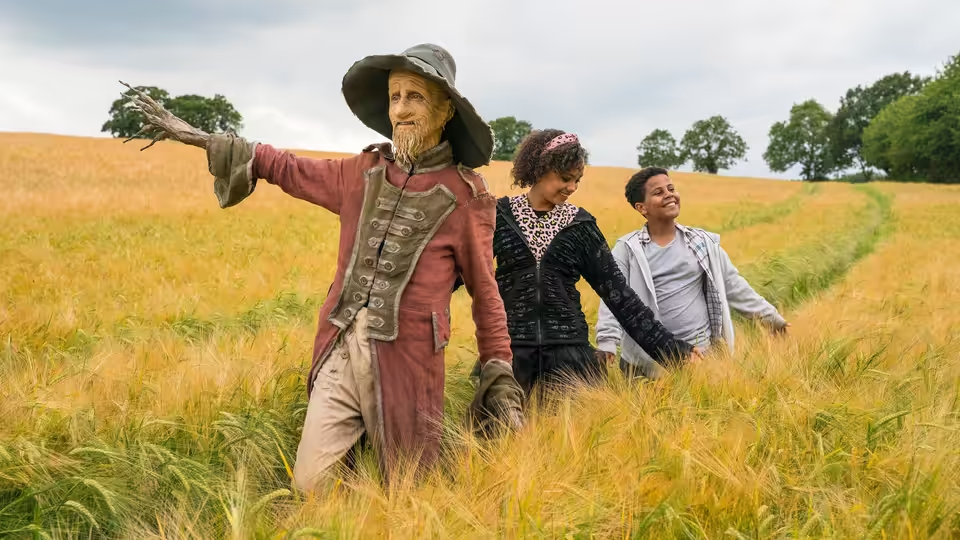
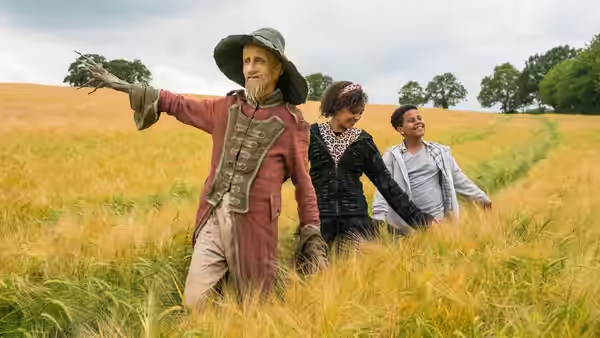
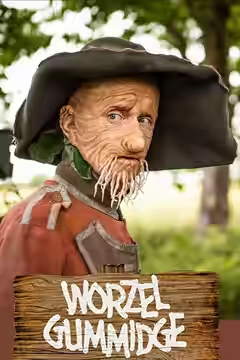
He plays Worzel as a man who has stood on one post for years and finds walking a novelty. He moves stiff-kneed, tilts his head like a bird and talks slowly, with a country burr and a vocabulary of his own. He has a robin for company and a problem he cannot solve: the year has stuck. It is the end of summer on the farm and the seasons have forgotten how to turn. Susan (India Brown) and John (Thierry Wickens), children sent to stay with the Braithwaites, are the first people in a long time he has let see him move.
There is a scene in that first hour where Worzel stands in his field at dusk and explains, half to the children and half to himself, that the year has stuck and he does not know why. It moved us more than a children’s programme has any right to. Crook plays it straight, with no wink to the adults, and nobody on screen has to say what it is about; the stopped field says it. That is the method throughout. The worry about the land is in the pictures, and the words are kept for jokes.
The children are the second thing Crook gets right. Brown and Wickens are not cute and are not asked to be. They arrive bored, wary and used to being moved on, and the script lets them stay suspicious of the farm, the Braithwaites and the talking scarecrow for longer than most writers would risk. When they come round, we believed it. Steve Pemberton and Rosie Cavaliero, as the couple who have taken them in, are given chores, kindness and reaction shots, and not much else; two actors this good deserved a scene of their own.
The craft is modest and exact. The fields are filmed at the gold end of the day, in long lenses that flatten the hedges into bands of colour, and the theme is sung in folk harmony over the titles, so the mood is set before anyone appears. The scarecrows are the best design work. Each one at the gathering Worzel takes the children to is built from what a farm leaves lying about, and you can tell at a glance which is vain, which is shy and which is falling apart. Vicki Pepperdine plays Aunt Sally, the wooden doll from the manor who considers herself above a scarecrow, with a stiff neck and a grand voice, and Francesca Mills, as Earthy Mangold in the second episode, is so plainly devoted to Worzel that we winced for her.
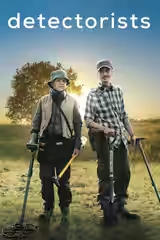
It is slight, and knows it. An hour is a generous allowance for a plot in which a scarecrow wants autumn to start, and the second episode slows after its halfway point. The message about the land is said out loud more than once when the pictures had already made it. There is no real villain and no real peril, so a child who wants a chase may fidget; this is television for the ones who will sit still for a robin. It is thinner than Detectorists, Crook’s comedy about two men with metal detectors and a great deal of patience, because it has to explain itself to the young.
Watch the first episode on a grey afternoon with the lights down, children or not. If that first hour does nothing for you, the remaining four will not either. If it does, there are four more, and they are kind to the end.