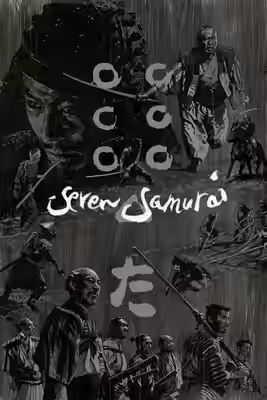
Pixar’s second feature puts Seven Samurai at the height of a blade of grass, and the grass is the reason to see it. The light is lovely, the villain is first-rate and the hero is a bore. Worth a family evening, not a pilgrimage.
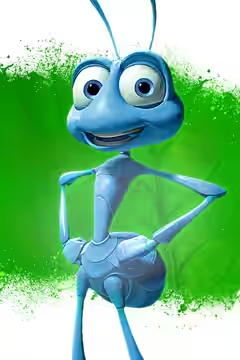
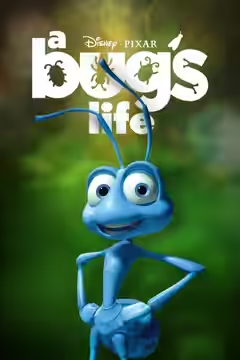
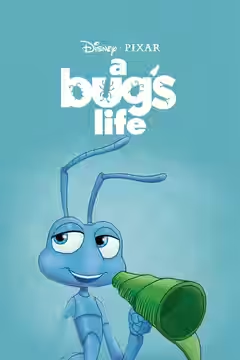
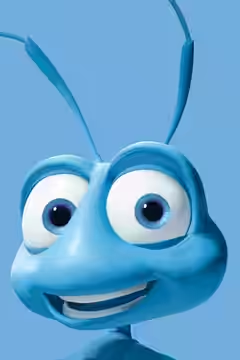
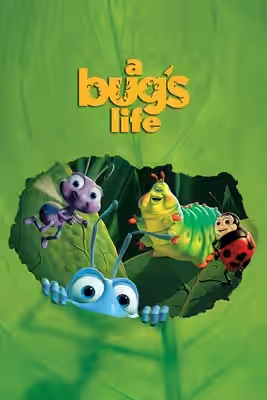
John Lasseter’s second feature takes the plot of Seven Samurai, a village hiring protection against bandits, and gives it to ants. Flik, an inventor nobody asked to invent, loses the colony’s offering to the grasshoppers, is sent to the city for warriors, and comes home with a circus troupe who think they have been booked for a show. It is a sound plot, and Andrew Stanton, Don McEnery and Bob Shaw, the credited writers, do not do much to it that is new. What they do is put it somewhere nobody had put a camera, at the height of a blade of grass, and for most of 95 minutes that is enough.
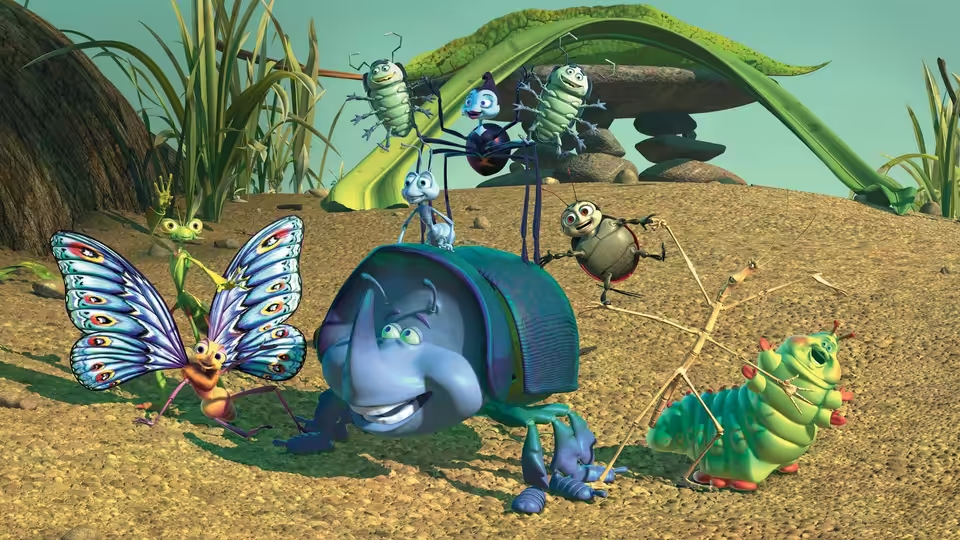
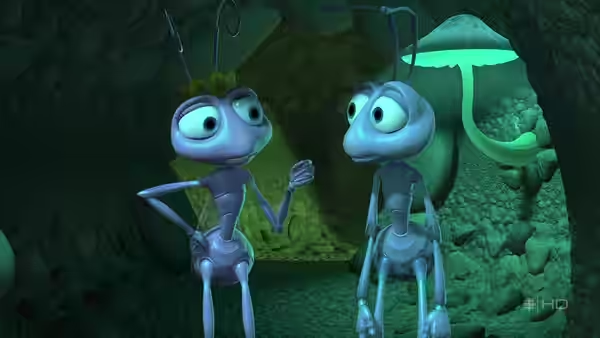
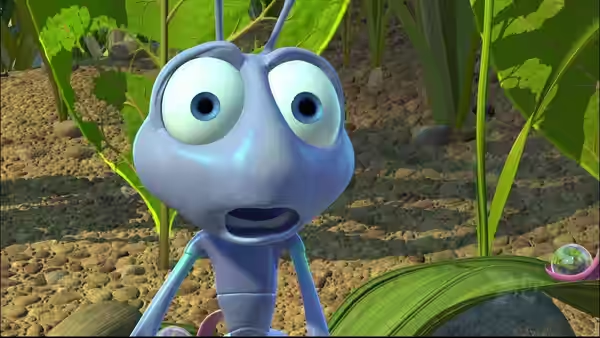
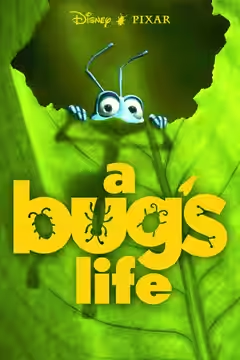
William Cone’s Ant Island is a dry riverbed beneath a tree, and he builds the colony out of what would actually be lying about: a seed husk for a roof, a leaf for a bridge, a flat stone for the offering. Sharon Calahan lights it from behind and above, so the sun comes through the leaves and turns them the green of church glass, and a drop of dew on a grass blade works as a lens. The city is a heap of rubbish under a parked mobile home, its streets lit blue by an insect zapper, and the flies who cannot keep away from the light get the best running joke in the film.
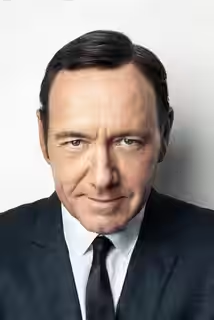
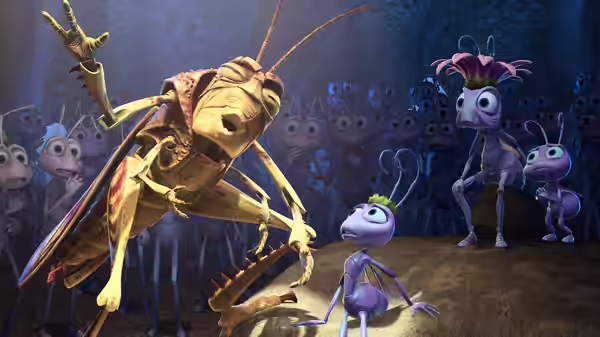
Kevin Spacey’s Hopper is the reason the film is more than pretty. The ants have run underground when the grasshoppers come, and they come through the ceiling in a shower of dirt. Lee Unkrich cuts the arrival like a raid in a western: a silence, a shadow across the entrance, then the big one walking slowly through a crowd that parts for him. Spacey never raises his voice. He explains how the arrangement works and what happens to ants who break it, and when he reaches for Dot, Atta’s small sister, and holds her a second longer than is comfortable, we were frightened on her behalf and surprised to be.
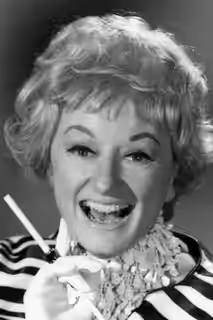
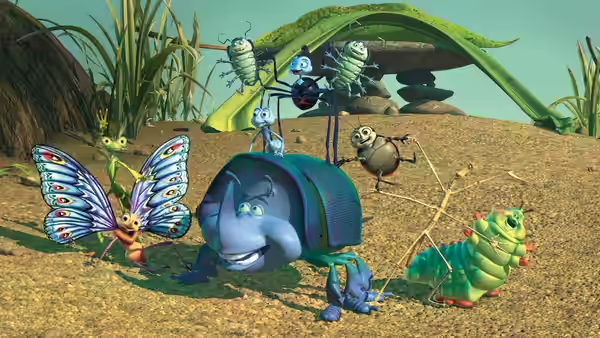
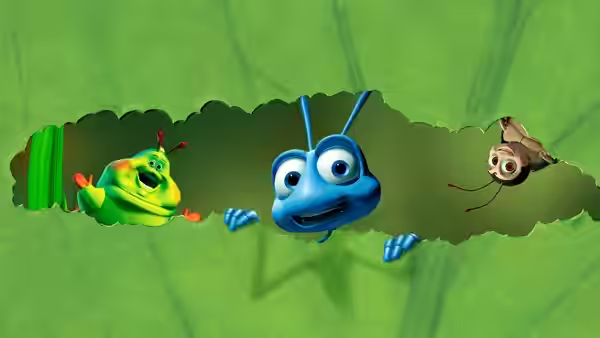
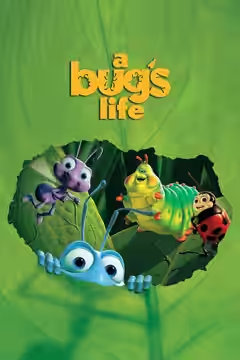
The circus troupe is where the comedy lives. David Hyde Pierce’s Slim is a stick insect sick of being cast as a stick. Denis Leary’s Francis is a ladybird who is tired of being taken for a lady. Joe Ranft voices Heimlich, a German caterpillar whose whole personality is appetite, and he made us laugh every time he spoke, which is something for a character with one joke. Jonathan Harris’s Manny, a praying mantis magician, and Madeline Kahn’s Gypsy, his moth assistant, are an old showbusiness marriage, and Bonnie Hunt’s Rosie, a black widow, keeps the rest in line. The script gives each of them a single trait and trusts the voice to do the rest, and the voices are good enough that it works.
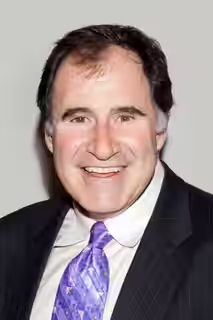
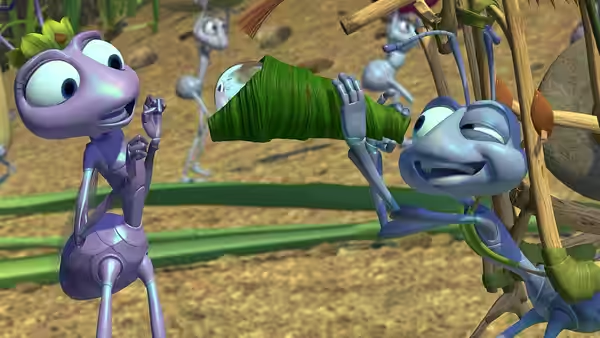
The weakness is Flik. Dave Foley plays him as a decent, flustered sort, and that is all he is: no edge, no wit, nothing to make us want him to win beyond his being the hero. Julia Louis-Dreyfus’s Atta, panicking about a job she has not started, is the more interesting character and gets less to do. The plot runs exactly where you expect, and the middle stretch, in which the ants mistake the circus for an army and the circus mistakes the colony for an audience, goes round the same misunderstanding more times than it needs to. We were never bored, but we were often ahead of the film, and so will a child of eight be.
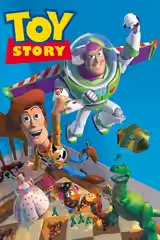
Randy Newman’s score does a good deal of the lifting. He writes the harvest as a brass march with a limp in it and the city as something wearier, and his closing song is plainer and sadder than the film it ends. Set against Toy Story, made three years earlier, this is a step forward in the pictures and a step back in the people. The toys wanted things from each other. The bugs mostly want to get through the season.
Stay for the credits, which run a reel of fake outtakes in which the insects fluff their lines and walk into the scenery. It is a cheerful idea and it sends you out smiling in a way the story might not have managed on its own. The certificate is U and nothing here will trouble anyone over about five.