Jason Statham remains watchable in a rescue thriller dragged down by repeated fights, tangled plotting and leaden dialogue. David Harbour supplies welcome humour, but we cannot recommend spending 116 minutes waiting for the film to relax.
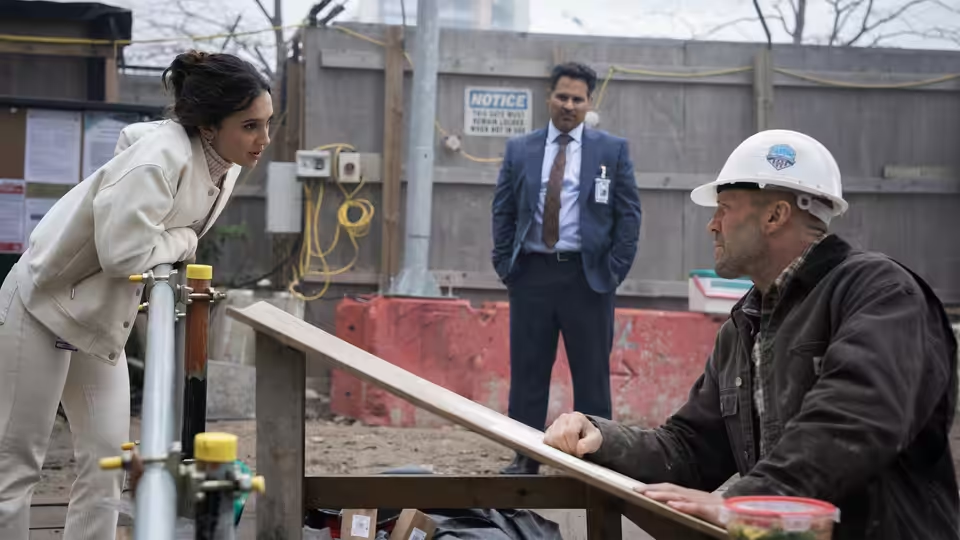
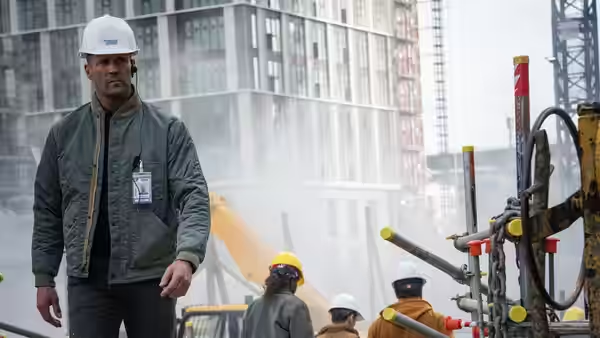
A Working Man is a poor action thriller with a dependable leading man and too much solemn conversation. David Ayer begins with a construction worker drawn into the search for a kidnapped woman, then rapidly falls back on familiar special-operations skills. Putting Levon Cade among people doing an ordinary job offers a promising start: the violence might interrupt a life we recognise. Instead, the construction premise is soon put aside, and Jason Statham is left to make routine rescue business worth following.
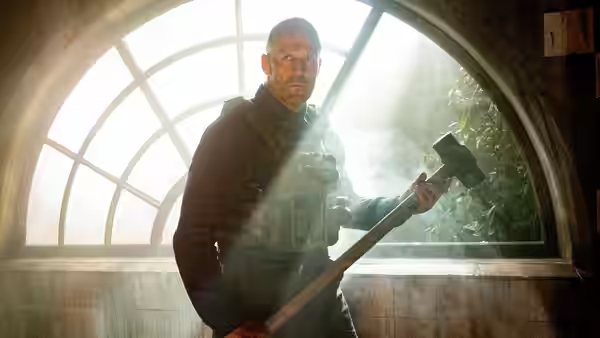
He nearly manages it. Jason Statham gives Levon a degree of vulnerability without making his competence look doubtful, and that small adjustment helps. We can believe that this man has something to lose, even when the screenplay seems more interested in what he can break. His physical assurance makes the fights credible from moment to moment; the problem is how little they change our understanding of him.
Arianna Rivas is another reason the film does not entirely flatten out. Her Jenny Garcia has some initiative, and the performance gives the kidnapped woman more presence than a rescue plot usually allows. David Harbour, playing Gunny Lefferty, brings welcome comic ease to a film that otherwise treats almost everything with excessive seriousness. Both performances suggest how much more engaging this could have been if David Ayer had allowed the supporting cast more room.
The screenplay, credited to Sylvester Stallone and David Ayer, keeps getting in their way. Its tough-guy speeches are laboured, while the trafficking story accumulates mob complications without making the search more urgent. We were bored by the repeated confrontations because Levon’s ability to deal with them is established long before the film stops demonstrating it. At 116 minutes, there is too much dialogue explaining the criminal network and too little reason to care about its workings.
Fred Raskin’s editing makes matters worse by chopping up action that needs room for us to follow the bodies. Jason Statham’s quick physical decisions ought to be the pleasure of these scenes; too often the cutting distracts from them. Shawn White’s cinematography occasionally makes this criminal world look agreeably peculiar, but the solemn conversations soon drain the fun from it. Nigel Evans’s construction setting offers the prospect of action built around a recognisable workplace, a possibility the film too readily abandons. The building site gives Levon a more interesting setting than much of the criminal business that follows.
Jared Michael Fry’s music adds to the heavy mood when the film could use a little less insistence. The occasional absurd comic moment suggests a brisker, less self-important action film, but the direction keeps pulling back towards seriousness. A rescue thriller does not need to surprise us at every turn, and predictability alone would be no objection. It does need clearly staged fights, some momentum and a reason to care who gets through the next door.
There are passages where the physical action does its job, and the cast deserve credit for keeping familiar material alive as long as they do. Those pleasures are brief, with another speech or another complication generally waiting behind them. Even for an evening built around watching Jason Statham hit people, we would choose something less wearying.