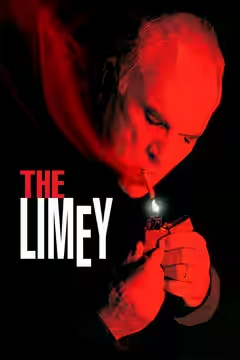
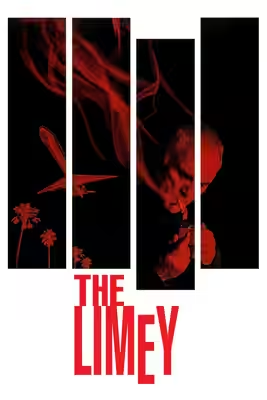
The Limey poster

The Limey

1999 · Directed by Steven Soderbergh
1h 29mCrimeDramaThriller18
80
Fi1m score
68
Critics · 8
Audience · not yet

Where to watch in the UK

Checked 10 September at 22:29. Prices and availability change; the service’s page is the last word.

Synopsis

Wilson (Terence Stamp), a Cockney career criminal newly out of prison, flies to Los Angeles after his daughter Jenny (Melissa George) dies in a car crash. The police have closed the case. Wilson has not. With the help of Eduardo (Luis Guzmán), a friend of Jenny’s who becomes his reluctant driver, and Elaine (Lesley Ann Warren), a voice coach who knew her, he follows her last months to Terry Valentine (Peter Fonda), an ageing record producer with a house in the hills, a young girlfriend, Adhara (Amelia Heinle), and a fixer, Avery (Barry Newman), who handles the things Valentine would rather not know about. Wilson starts asking questions, and then he stops asking.

Fi1m review

In a sentenceTerence Stamp arrives in Los Angeles speaking a language nobody there understands and frightens everyone anyway

Steven Soderbergh takes a plain revenge plot, cuts it out of order and lets Terence Stamp’s face do the rest. It is short, sharp and far sadder than the genre requires, though the script under the style is thin.

Terence Stamp plays Wilson, a Cockney career criminal just out of prison, who flies to Los Angeles because his daughter Jenny (Melissa George) is dead. The police call it a car crash. Wilson does not believe them, and the trail leads him to Terry Valentine (Peter Fonda), a record producer with a house in the hills and a girlfriend, Adhara (Amelia Heinle), about Jenny’s age. That is the whole plot, and Steven Soderbergh and his writer Lem Dobbs know it. What they have made from it is 89 minutes of revenge thriller that keeps turning into something sadder, and we recommend it without much hesitation.

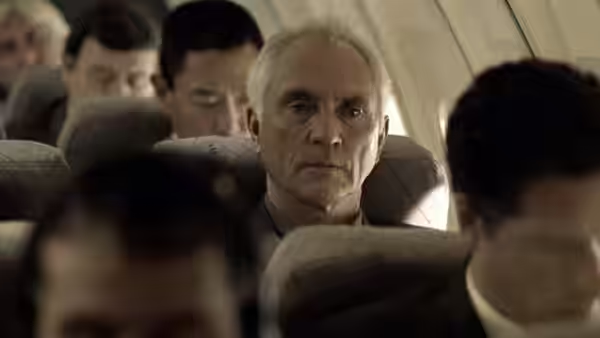
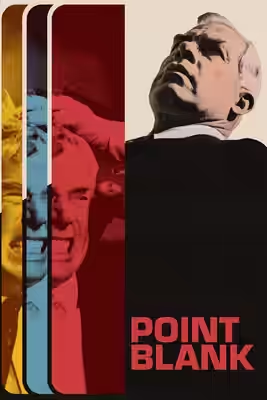
The first thing you notice is the cutting. Sarah Flack does not let a scene run in order: a sentence starts in a car and finishes in a kitchen, a conversation on a beach is handed out in pieces across the whole film, and a shot of Wilson on the plane, staring at nothing, comes back again and again. This is the method of Point Blank (1967) and Soderbergh is not hiding the debt. In lesser hands it is a trick. Here it plays as an old man’s memory, going back to the same few pictures because they are the only ones he has.

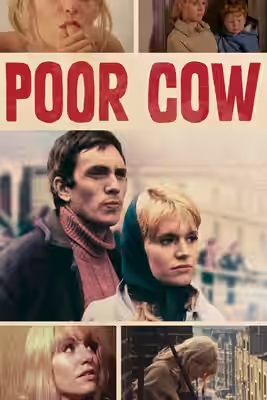
Some of those pictures are borrowed. When Wilson remembers Jenny as a child, Soderbergh uses footage of Stamp himself from Ken Loach’s Poor Cow (1967), a young thief with a young man’s face. There is no make-up and no recasting, just the same actor thirty-two years apart, and it caught us off guard; we were more moved than we expected a revenge film to manage. Soderbergh does not underline it. He cuts from the boy to the old man and moves on.

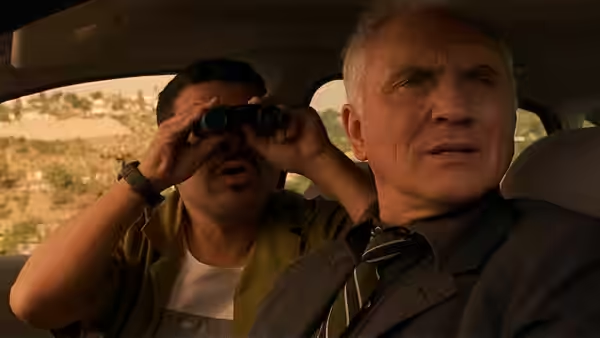
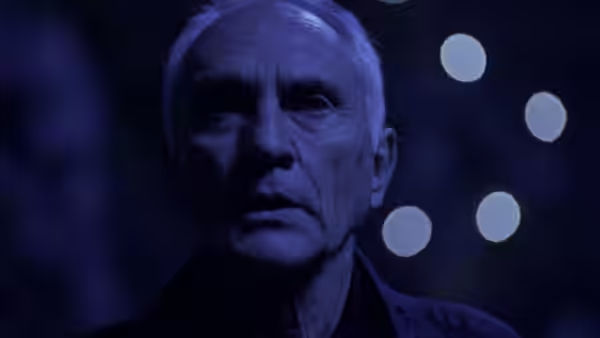
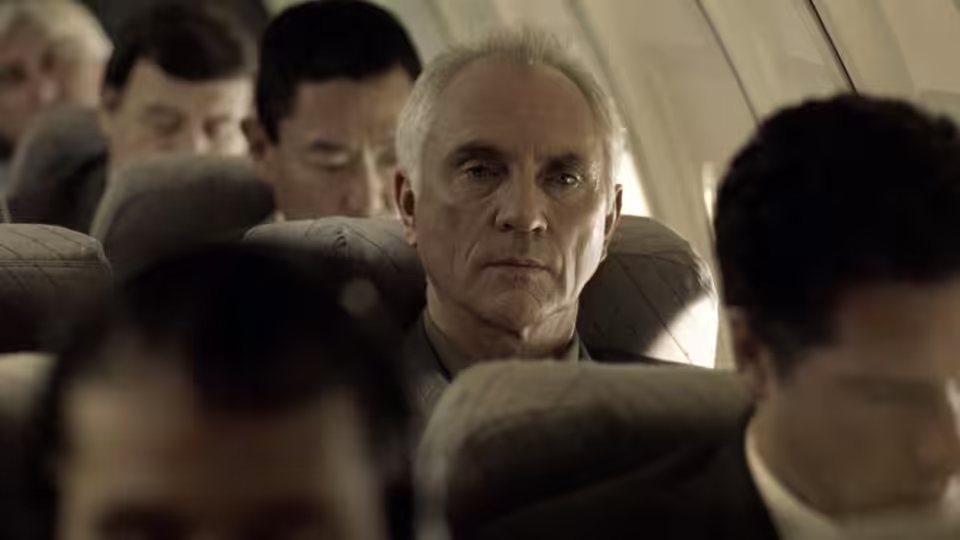
Stamp does the rest. Wilson speaks in rhyming slang that nobody in California can follow, and Luis Guzmán, as Eduardo, a friend of Jenny’s who becomes his reluctant driver, keeps asking him to say it again in English. The film’s best scene is in the first twenty minutes: Wilson walks into a warehouse asking about his daughter, is beaten and thrown into the yard, gets up, walks back in, and we stay outside with the camera while the gunshots come through the wall. We laughed, and then felt the cold under it. The line he leaves with is the one on the poster.

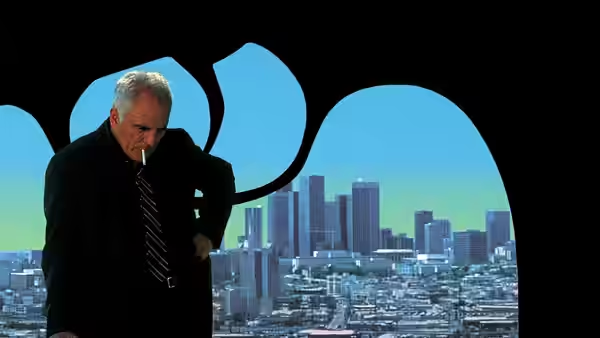
Fonda plays Valentine as a man who got rich off the sixties and kept the tan. He is vain, soft and frightened, and Barry Newman’s Avery, the fixer who does his sums, is the one person in the house who understands what is coming. Edward Lachman shoots the two worlds differently: Valentine’s glass house in hard white daylight, and Wilson’s Los Angeles at night in motels, warehouses and car parks. Gary Frutkoff furnishes Valentine’s rooms with money and not much else. Cliff Martinez’s score is a low electronic hum that never tells us what to feel, and Louise Frogley keeps Wilson in the same dark jacket throughout.

The flaws are in the writing. Dobbs gives Valentine a crime that stays a sketch, and a middle stretch involving a party and a federal agent that the film seems as bored by as we were. Lesley Ann Warren’s Elaine, a voice coach who knew Jenny, brings a warmth the script does not know what to do with, and Heinle’s Adhara is a good idea for a character who is mostly looked at. Now and then Flack’s cutting stops being memory and becomes a mannerism, the same shot returning for a fourth time when the third had done the work. A few critics have called Stamp wooden. We think the stillness is the performance, though there are moments where the editing does his acting for him.

This came a year after Out of Sight (1998) and a year before Erin Brockovich and Traffic (both 2000), and it is the smallest and strangest of the four. It is also the one that feels most like a film Soderbergh made for himself. Watch it at home, where the broken sentences settle and the faces are close enough to read. It runs 89 minutes and carries an 18.
Critical consensus AI synthesised

68
Positive
6
Mixed
1
Negative
1

Most critics take The Limey for what it is: a slight revenge plot made sadder and more interesting by the way Soderbergh assembles it. The praise clusters around the editing, the scrambled timelines and the decision to use footage of the young Terence Stamp from Poor Cow as flashbacks, which several reviews single out as the film’s most affecting idea. The casting of Stamp and Peter Fonda as relics of the 1960s is widely admired, as is Ed Lachman’s photography, and the general reading is of a rueful, nostalgic picture about ageing and retirement rather than an action film. The reservations are about Lem Dobbs’s script, which even admirers find thin, and about whether the style carries more weight than the story can bear. The spread is wide. Empire dismisses it as stilted and overstyled, and Eye for Film finds Stamp wooden, a view no other review shares.

Slant Magazine
24 October 2022 · Chuck Bowen
85*

The critic describes The Limey as a terse and atmospheric crime film with an unusually vivid sense of regret achieved through submerged textures and cross-cutting timelines. It functions as a perfect storm of technique, intuition, and personal taste that opens a vortex of longing and nostalgia for lost cinematic waves.

Read the full review →
The AV Club
29 March 2002 · Scott Tobias
80*

The critic sees The Limey as a clever and meaningful homage to fractured late-'60s classics like Point Blank and Petulia that scrambles basic genre elements into something fresh and formally exciting. It edges into a sad, rueful tone that lends poignancy to Stamp's quest and the stars' ebbing careers.

Read the full review →
Time Out
10 September 2012 · GA
80*

This low-budget crime movie is funny, touching and assured, milking the fish-out-of-water premise with imagination and wit. Stamp delivers a superb lead performance supported by strong turns from Fonda and others, with Soderbergh's narrative playfulness singled out as a highlight.

Read the full review →
The Guardian
18 May 1999 · festival review · Peter Bradshaw
75*

The critic describes Soderbergh's thriller as a compelling duel between two 1960s relics, with Terence Stamp as a vengeful Cockney ex-con and Peter Fonda as his sleazy target. He singles out the film's innovative use of clips from the 1967 film Poor Cow for flashbacks instead of recasting or aging the actor.

Read the full review →
Sight and Sound
· Philip Strick
70*

Soderbergh's latest is a fragmented, memory-like revenge tale that prioritises visual and linguistic play over straightforward narrative. The critic highlights the film's elegant framing and allusions while noting its capricious attention and the standout performance by Amelia Heinle.

Read the full review →
The New Yorker
4 October 1999 · Anthony Lane
70*

The critic finds power in the film's oblique European-style approach and glimpses of the protagonist's past rather than its deadened morality or revenge plot. He singles out the use of clips from the young Terence Stamp in Poor Cow for emotional resonance.

Read the full review →

Cast

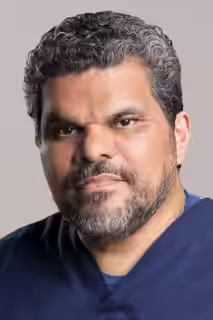
Luis Guzmán
Eduardo Roel
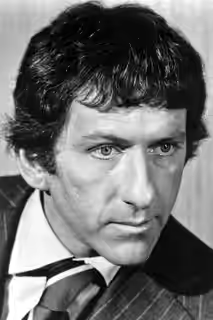
Barry Newman
Jim Avery
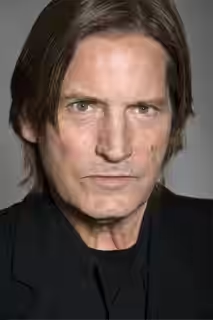
Joe Dallesandro
Uncle John
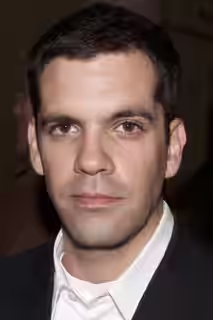
Nicky Katt
Stacy the Hitman
Peter Fonda
Terry Valentine

Stills

If you liked this, try…

Point Blank poster

Point Blank

1967 · The revenge film Soderbergh is quoting; Lee Marvin walks through Los Angeles like a ghost

Poor Cow poster

Poor Cow

1967 · The Loach film that lends Wilson his youth; see the young Stamp for yourself

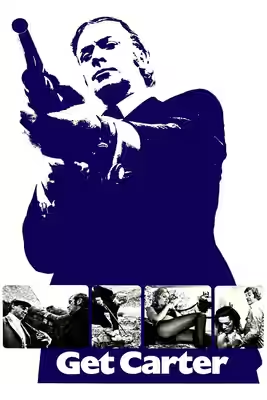
Get Carter poster

Get Carter

1971 · Michael Caine goes north to bury a brother and asks harder questions than anyone likes

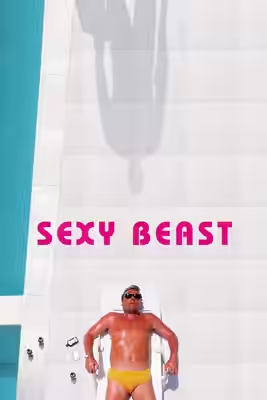
Sexy Beast poster

Sexy Beast

2000 · Another London hard man in the sun, this time trying not to go back

Blue Ruin poster

Blue Ruin

2013 · A revenge film that keeps showing how badly an ordinary man does it