Soderbergh shoots it himself, in three palettes, and cuts the drug trade into a thriller that never stops moving. Benicio del Toro’s Tijuana policeman is the best thing in it by some distance. The Washington strand is where the film stops to make speeches.
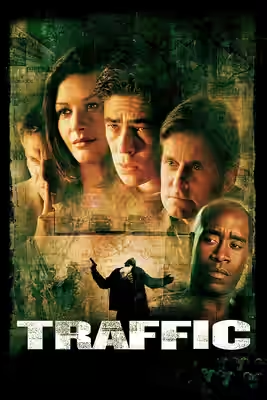
Steven Soderbergh’s Traffic is adapted from a British television series, and it keeps the original’s idea: follow the drug trade from the fields to the nose, through people who never meet. Stephen Gaghan’s script runs three stories side by side. A Tijuana policeman, Javier Rodriguez, is hired by a general to take down a cartel. An Ohio judge, Robert Wakefield, is made the American government’s man in charge of the war on drugs, while his daughter Caroline gets high in her friend’s bedroom. And in San Diego a rich wife, Helena Ayala, finds out where the money came from when federal agents take her husband away. It is a very good film, 147 minutes long and never slack, and it has one weak leg out of three.
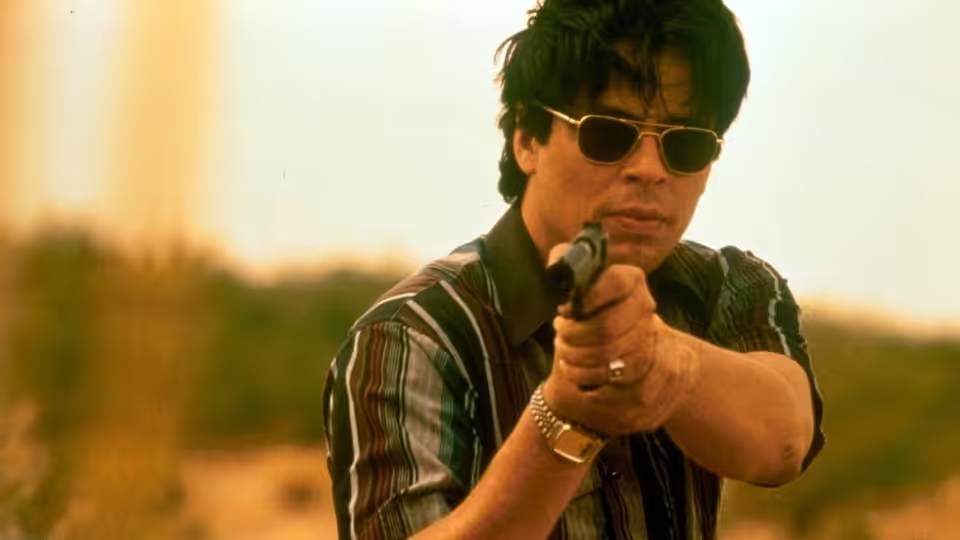
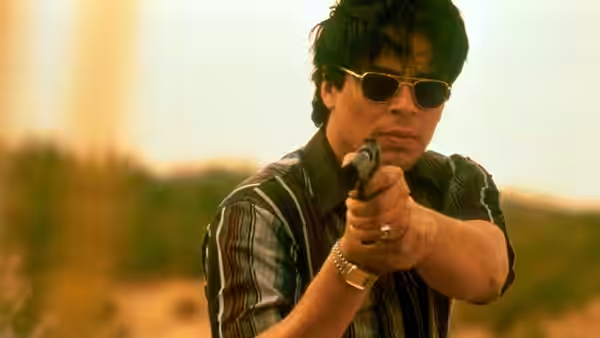
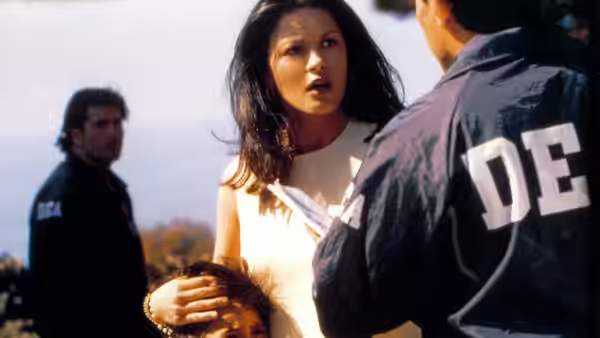
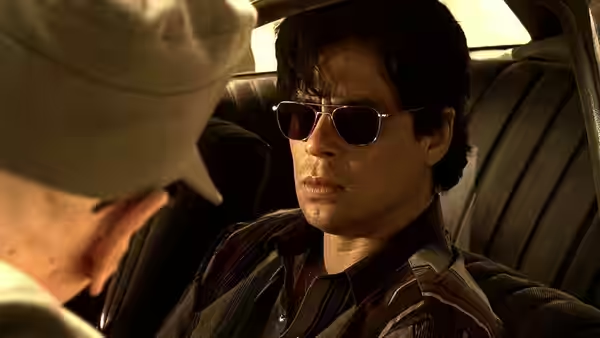
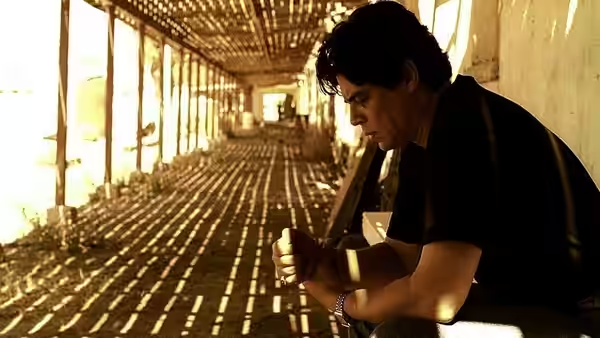
Soderbergh is credited as his own cinematographer, and the look is the film’s argument. Mexico is bleached yellow and grainy, as if the negative had been left in the sun; the Wakefield house in Ohio is cold and blue, the shadows almost black; San Diego is shot in ordinary warm daylight, the way a life looks when you have not yet noticed anything is wrong. The camera is handheld nearly throughout, and it follows rather than leads, so scenes feel found rather than staged. Stephen Mirrione cuts between the three so that each answers the last: a speech in Washington about winning, then a body in the desert.
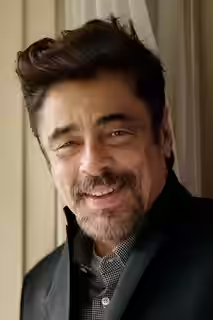
Del Toro is the reason to watch. Javier is a decent man working for people who are not, and del Toro plays him almost entirely from the neck up, in Spanish, with a slow blink and a face that gives away nothing to the men he is talking to and everything to us. There is a scene in a Tijuana car park, early on, where he works out how much trouble he is in while somebody else is still explaining the job, and we felt our stomach drop for him. Nothing happens in the shot. He simply understands, and we understood with him. Jacob Vargas, as Manolo, is looser and hungrier and very good at making his friend nervous.
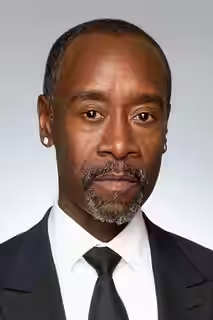
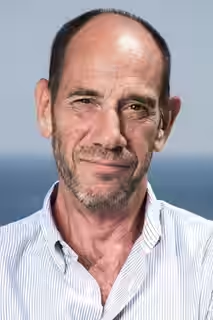
The San Diego strand is the thriller. Zeta-Jones starts Helena as a woman who orders lunch and ends the first act as something else, and she makes the change in plain sight without announcing it. Don Cheadle and Luis Guzmán, in the car outside her house, are the film’s comedy and its conscience at once, two men who like each other and know their job is largely pointless. Miguel Ferrer, as the witness Eduardo Ruiz, gets one long, contemptuous monologue about how the trade actually works, and delivers it as if he is bored of being right.
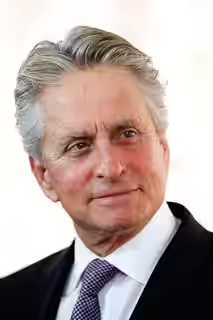
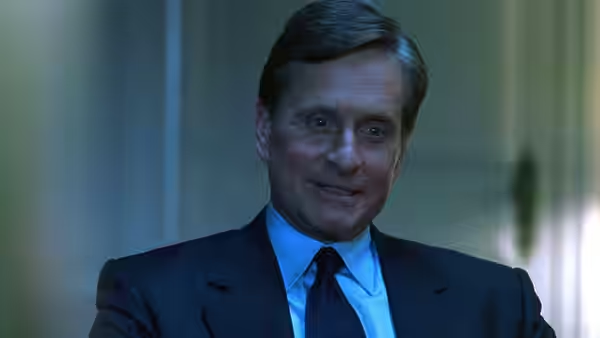
The Wakefield strand is the problem. Erika Christensen is fine as Caroline, watchful and privately furious, and Topher Grace gives Seth the exact smugness of a clever boy who has read two books. But Michael Douglas has been handed a man who exists to learn a lesson, and Gaghan writes the lesson out in full, more than once, in rooms full of people nodding. Amy Irving, as his wife Barbara, has to stand nearby while he does it. Every time the film cuts back to Ohio it slows down, and we caught ourselves waiting for Mexico.
Cliff Martinez’s score is a low electronic hum that rarely rises above the dialogue and never tells you when to be frightened, which is correct. Philip Messina’s production design keeps each city plausible and unglamorous: cartel money looks like a nice house, not a palace, and Louise Frogley dresses the agents in the polo shirts of men who have given up on promotion. Some critics have complained that Mexico gets the corruption and America gets the hand-wringing, and there is something in that. The Mexican officials are crooks; the American ones are merely tired. The film is more honest about the country it is not from.
The second half takes turns in all three strands that we will not describe, and the last twenty minutes let the sermon back in. Watch it for del Toro, for the three lights, and for Cheadle and Guzmán in a car. Skip the speeches; the film very nearly does.