Shaunak Sen’s documentary about caring for injured birds in Delhi is absorbing and quietly moving. Its patient photography rewards attention, though its account of the city’s environmental problems leaves questions that a little more explanation might have settled.
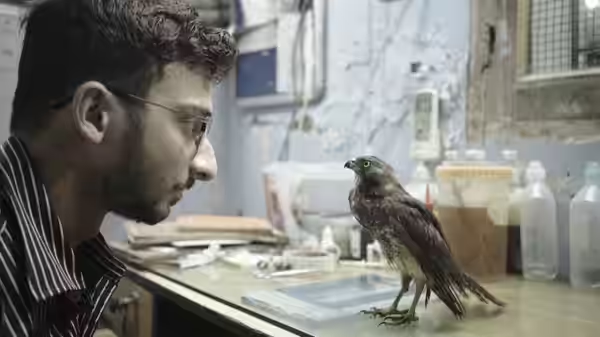
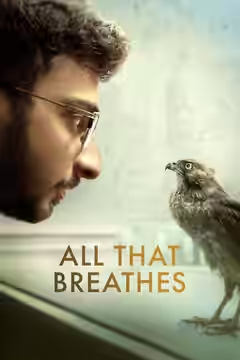
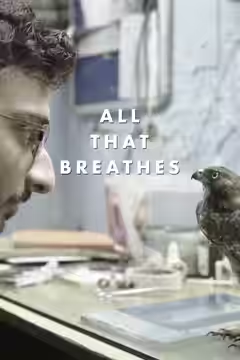
Shaunak Sen’s All That Breathes is an absorbing documentary about the care of injured black kites in Delhi, and about the patience that such care requires. It takes the birds seriously enough to give them individual attention, without making the people tending them seem saintly. The rescue work sits alongside family life and a city troubled by polluted air and social unrest. We recommend it, though its account of the environmental problems needs more explanation.
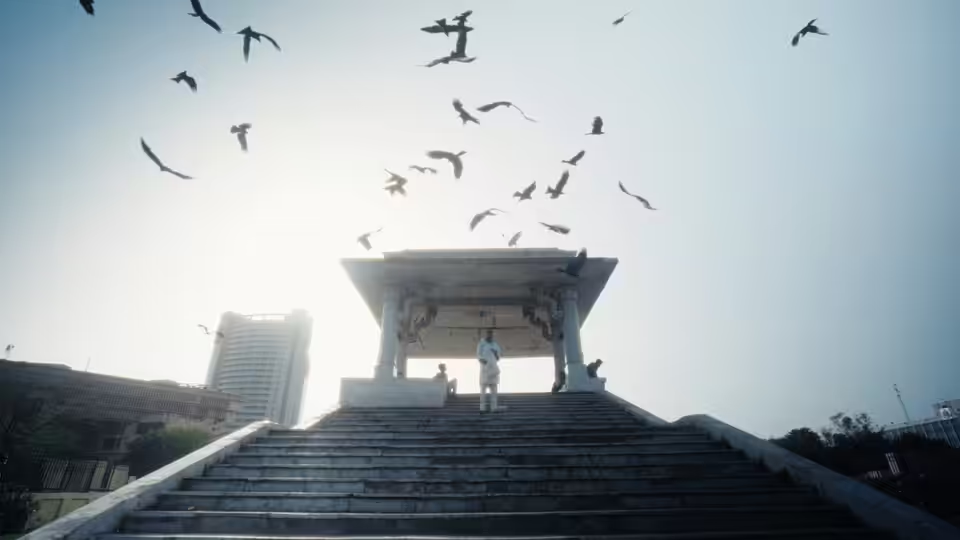
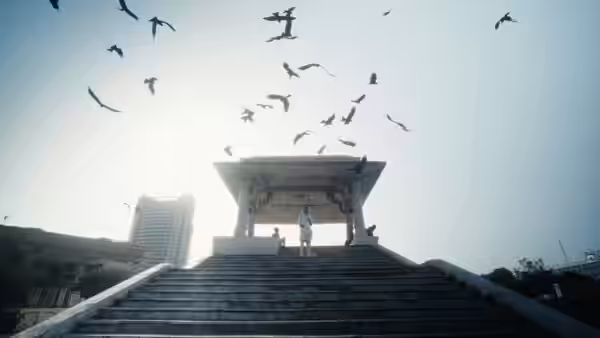
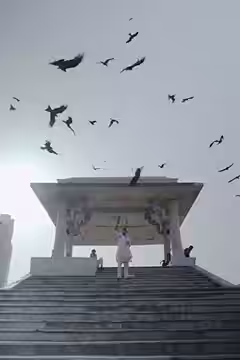
The cinematography, credited to Ben Bernhard, Riju Das and Saumyananda Sahi, gives the animals room without turning every appearance into an illustration of suffering. The horizontal compositions let us look around, taking in the other life that shares the city with the birds. That choice matters because a tightly directed image can settle what we are meant to notice before we have had a chance to look. Here the detailed images reward the time spent examining them.
We were moved by the painstaking care given to the injured black kites. Watching people give that much attention to animals, with the pressures of the city around them, made the work feel difficult and worth doing. The film lets us spend enough time with the birds to stop regarding them as an anonymous flock. We begin to take an interest in each one, which gives the rescue work its urgency even at this unhurried pace.
Charlotte Munch Bengtsen’s editing allows the rescue work, family life and observations of the city to share the film without continually announcing their connections. The pace gives us time to recognise those connections, though it asks for a willingness to sit and look. Roger Goula Sarda’s music helps sustain that attention, giving the quieter stretches feeling without making every bird into a small tragedy. Across 97 minutes, the measured rhythm mostly holds.
The difficulty comes when we want to know more about why these birds need help. Polluted air and social unrest are present, but the film gives us less help in understanding the environmental problems than in observing the surroundings. We are not asking for a lecture or a running count of injured birds. A little more explanation would make it easier to distinguish what has damaged these animals from the wider difficulties of living in Delhi. The uncertainty matters because the images encourage us to connect things that the film does not always establish.
As a wildlife documentary, it is unusually interested in the work of looking after animals. We spend time with creatures that need help and people willing to give it, and that proves enough to hold the film. Mohammad Saud, Nadeem Shehzad and Salik Rehman keep the human effort in view, while the scenes of family life stop the rescue work from seeming like their only concern. That attention to ordinary life helps keep the admiration from becoming solemn.
This is worth an evening when there is time to give it proper attention. Anyone wanting a brisk account of how bird rescue works should expect frustration, and the environmental questions will not all be answered. Leave the phone in another room.