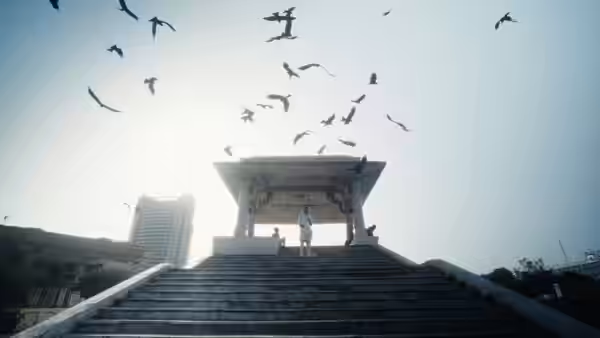
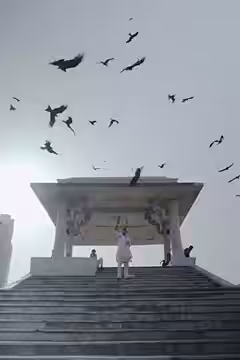
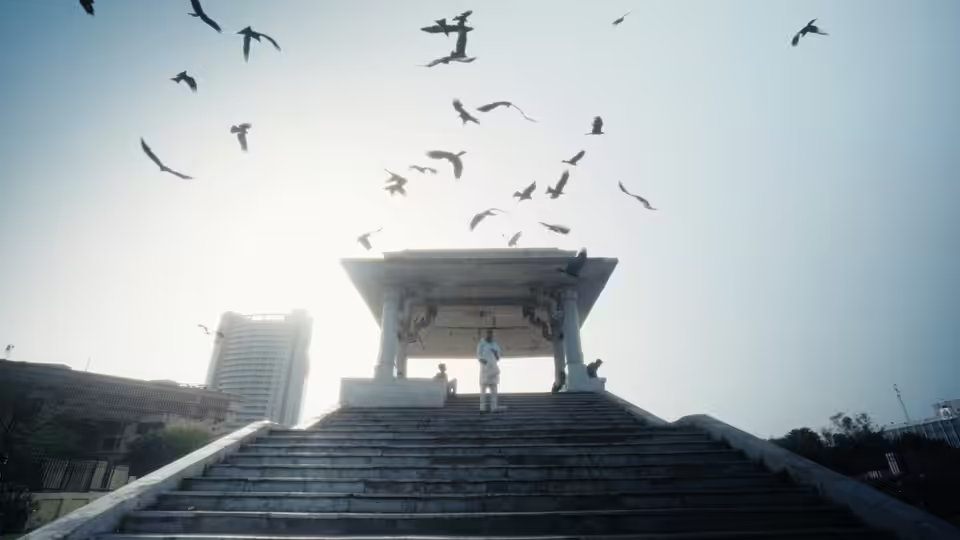
Two people stand beneath a rooftop pavilion as birds circle overhead
Film review

All That Breathes

2022 · Directed by Shaunak Sen · 1h 37m

In a sentenceDelhi’s injured birds get the sort of care most of us would be grateful to receive

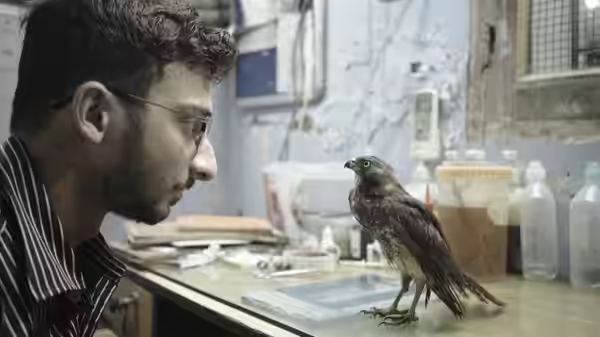
In New Delhi, injured black kites need care in a city clouded by smog and troubled by social unrest. Mohammad Saud, Nadeem Shehzad and Salik Rehman appear as themselves in this account of two brothers’ efforts to rescue and tend the birds. Their aim is to help the animals while people face pressures of their own. Family life continues alongside the rescue work, while other creatures share the urban surroundings. The birds require sustained attention, and the people caring for them have to make space for that work in their lives.

Plays from YouTube when you press play; nothing loads from them until then.

Fi1m review

Shaunak Sen’s documentary about caring for injured birds in Delhi is absorbing and quietly moving. Its patient photography rewards attention, though its account of the city’s environmental problems leaves questions that a little more explanation might have settled.

Shaunak Sen’s All That Breathes is an absorbing documentary about the care of injured black kites in Delhi, and about the patience that such care requires. It takes the birds seriously enough to give them individual attention, without making the people tending them seem saintly. The rescue work sits alongside family life and a city troubled by polluted air and social unrest. We recommend it, though its account of the environmental problems needs more explanation.

The cinematography, credited to Ben Bernhard, Riju Das and Saumyananda Sahi, gives the animals room without turning every appearance into an illustration of suffering. The horizontal compositions let us look around, taking in the other life that shares the city with the birds. That choice matters because a tightly directed image can settle what we are meant to notice before we have had a chance to look. Here the detailed images reward the time spent examining them.

We were moved by the painstaking care given to the injured black kites. Watching people give that much attention to animals, with the pressures of the city around them, made the work feel difficult and worth doing. The film lets us spend enough time with the birds to stop regarding them as an anonymous flock. We begin to take an interest in each one, which gives the rescue work its urgency even at this unhurried pace.

Charlotte Munch Bengtsen’s editing allows the rescue work, family life and observations of the city to share the film without continually announcing their connections. The pace gives us time to recognise those connections, though it asks for a willingness to sit and look. Roger Goula Sarda’s music helps sustain that attention, giving the quieter stretches feeling without making every bird into a small tragedy. Across 97 minutes, the measured rhythm mostly holds.

The difficulty comes when we want to know more about why these birds need help. Polluted air and social unrest are present, but the film gives us less help in understanding the environmental problems than in observing the surroundings. We are not asking for a lecture or a running count of injured birds. A little more explanation would make it easier to distinguish what has damaged these animals from the wider difficulties of living in Delhi. The uncertainty matters because the images encourage us to connect things that the film does not always establish.

As a wildlife documentary, it is unusually interested in the work of looking after animals. We spend time with creatures that need help and people willing to give it, and that proves enough to hold the film. Mohammad Saud, Nadeem Shehzad and Salik Rehman keep the human effort in view, while the scenes of family life stop the rescue work from seeming like their only concern. That attention to ordinary life helps keep the admiration from becoming solemn.

This is worth an evening when there is time to give it proper attention. Anyone wanting a brisk account of how bird rescue works should expect frustration, and the environmental questions will not all be answered. Leave the phone in another room.
Critical consensus AI synthesised

79
Positive
15
Mixed
3
Negative
0

Most critics respond warmly to All That Breathes, with praise clustering around its cinematography and patient observation of two brothers rescuing injured birds in Delhi. The reviews value the attention paid to animals and overlooked urban life, and the way everyday rescue work brings environmental damage and political tensions into view. Several also praise the sound, while the brothers’ care for the birds gives the film an emotional directness that critics repeatedly recognise.

Reservations concern how much the observational approach leaves unexplained. IndieWire finds the meditative structure sometimes shapeless and the brothers elusive, while the Evening Standard wants more environmental context. Slant Magazine raises a different concern: the beauty of the imagery can risk making poverty look attractive. The recorded scores range from mixed to strongly enthusiastic, with no negative verdicts; the available reservations mostly qualify admiration for the film’s methods rather than reject them.

Los Angeles Times
27 October 2022 · Robert Abele
90*

Abele calls the documentary an extraordinary, humane work that illuminates ecological and societal change. He especially praises its poetic imagery and attentive observation of the brothers’ interconnected world.

Read the full review →
Sight and Sound
10 October 2022
90*

The critic calls the documentary a remarkable and vital work of cinema. They praise Sen’s patient, sculpted style for opening up the brothers’ story to the many forms of life around them.

Read the full review →
Empire
17 October 2022 · John Nugent
85*

The review finds the documentary thoughtful and meditative, with exceptional visual artistry. It especially praises the beautifully composed cinematography and its humane balance of large-scale issues with everyday family life.

Read the full review →
IndieWire
28 January 2022 · B+ · David Ehrlich
83

Ehrlich calls the film a vital, transfixing work of urban ecology, though its meditative style can feel shapeless and its subjects remain elusive. He singles out the striking cinematography and sound design for revealing the teeming life in overlooked details.

Read the full review →
The Hollywood Reporter
28 January 2022 · festival review · Daniel Fienberg
82*

Fienberg finds the documentary quietly provocative and dreamily beautiful, calling it a tiny marvel. He praises its carefully composed, horizontal imagery capturing nature and human chaos in New Delhi.

Read the full review →
Evening Standard
8 February 2023 · ★★★★ · Daniel Keane
80

Keane finds the documentary deeply affecting, visually striking and empathetic. He particularly praises its poetic imagery and soundtrack, while noting that it could provide more context about India’s environmental struggles.

Read the full review →

Straight answers AI written, from our review

Is All That Breathes worth watching?
All That Breathes is worth watching for its patient observation of injured birds and the people caring for them; we score it 82 out of 100. We find the painstaking rescue work quietly moving, but recommend it to viewers willing to sit and look rather than those wanting a brisk explanation of Delhi’s environmental problems.
How long is All That Breathes, and what is it rated?
All That Breathes runs 1h 37m. It is a documentary and drama film.
Where can I watch All That Breathes in Colombia?
All That Breathes is streaming on HBO Max and Amazon Prime Video in Colombia. Availability is checked daily; the links above go straight to each service.
How does All That Breathes compare to Honeyland?
All That Breathes shares Honeyland’s patient attention to animal care under human pressure, but gives more space to observing its urban surroundings. We recommend Honeyland for a stronger dramatic shape, though its editing conceals too much of the construction. All That Breathes suits a more contemplative evening, with detailed photography and moving rescue work, but leaves environmental questions insufficiently explained.
What should I watch after All That Breathes?
After All That Breathes, try Honeyland (2019, Fi1m 82): Another patient documentary about animal care made precarious by human demands. Then The Gleaners and I (2000, Fi1m 85): An inquisitive documentary finding people and possibilities where others see only waste; and The Red Turtle (2016, Fi1m 84): Wordless animation that gives human vulnerability and animal life equal weight.

Cast

Awards

Sundance Film Festival World Cinema Grand Jury Prize: Documentary, 2022

Won
Sundance Film Festival World Cinema Grand Jury Prize: Documentary

If you liked this, try…

  1. Honeyland (2019, Fi1m 82)Another patient documentary about animal care made precarious by human demands.

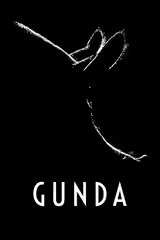
  2. Gunda (2020) · not reviewed yetFarm animals receive the sustained, unsentimental attention usually reserved for human faces.

  3. The Gleaners and I (2000, Fi1m 85)An inquisitive documentary finding people and possibilities where others see only waste.

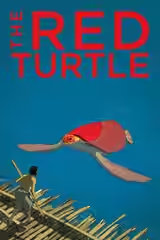
  4. The Red Turtle (2016, Fi1m 84)Wordless animation that gives human vulnerability and animal life equal weight.

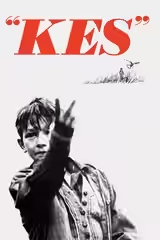
  5. Kes (1969, Fi1m 88)A boy’s care for a kestrel offers relief from a harsh daily life.