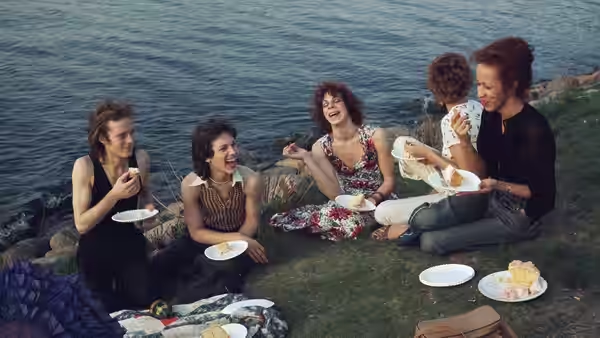
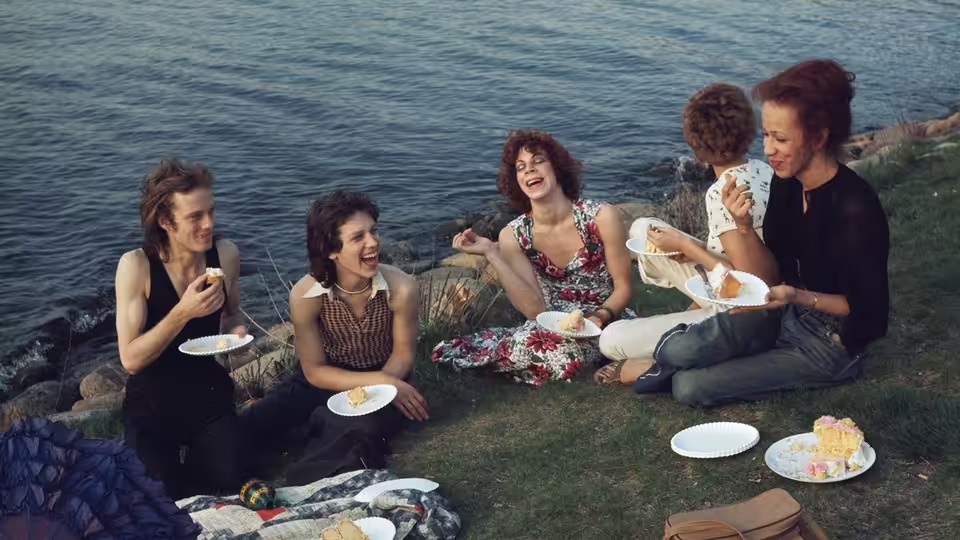
Five women share food on a grassy bank beside the water
Film review

All the Beauty and the Bloodshed

2022 · Directed by Laura Poitras · 2h 02m · IFCO 18

In a sentenceNan Goldin is rather bad for the Sackler family’s good name

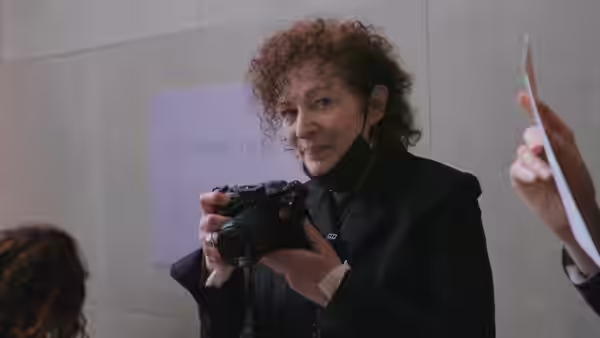
Photographer Nan Goldin appears as herself as she campaigns against the Sackler family over the opioid crisis. She wants to challenge the family’s public respectability, with protests and covert meetings providing the immediate business of the film. Alongside the campaign, Goldin tells her own story through spoken recollections, photographs and slideshows, revisiting family history, artistic work and personal loss. Marina Berio and Noemi Bonazzi also appear as themselves. Laura Poitras follows the campaigning while returning to the people and experiences Goldin has photographed, tracing the connections between her private life and her public resistance.

Plays from YouTube when you press play; nothing loads from them until then.

Fi1m review

Laura Poitras makes Nan Goldin’s photographs and campaigning equally gripping, with the artist’s own voice doing the hardest work. The crowded structure occasionally makes us wish she would stay put, but this is an angry, moving film worth the attention.

All the Beauty and the Bloodshed is an absorbing, often painful documentary about Nan Goldin, and it is strongest when it lets her speak. Laura Poitras places the photographer’s campaign against the Sackler family beside her account of her own life, without treating the photographs as decoration. The connection takes some work, and the film occasionally tries to hold too many subjects at once. For much of its 122 minutes, though, the attention it asks for is well repaid.

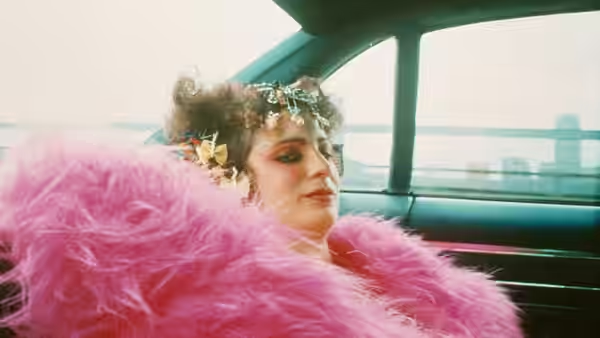
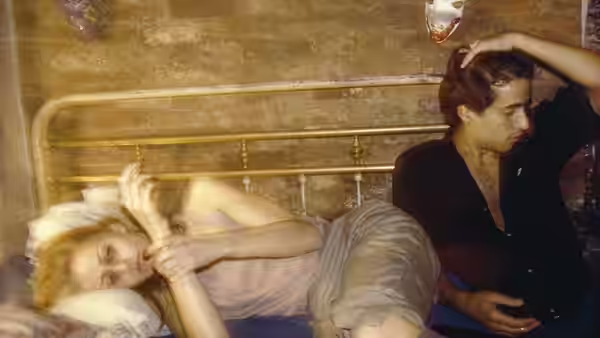
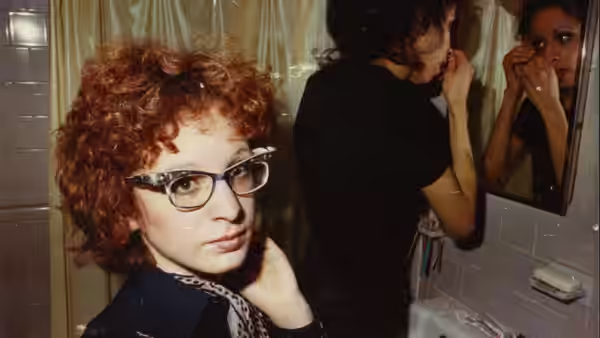
The photographs deserve the attention Poitras gives them, and the slideshows let us look closely while listening to Goldin’s recollections. We were moved by the combination. Her frank talk about intimacy and loss makes the people in the pictures matter before the film asks us to think about campaigning. That matters in a documentary with so much to cover, because a photograph can otherwise become something to put on screen while the speaker gets through another difficult memory.

The protests and covert meetings supply a different kind of concentration. Poitras finds suspense in the practical business of resistance, and Goldin’s campaign against the Sackler family gives the film something pressing to follow alongside the recollections. The risk is that the opioid crisis might make everything else seem like background material, however valuable in itself. Poitras mostly avoids that: the time spent with the photographs helps explain why this particular person is prepared to challenge public respectability.

Editors Brian A. Kates, Joe Bini and Amy Foote handle the shifts between slideshows, personal testimony and campaign footage with considerable care. A return to Goldin’s voice can draw us back in after the more urgent activity of the protests, without feeling like a pause for instruction. There are stretches, though, when another shift of subject feels premature, as if the film is impatient with a story we have only just settled into. We wanted longer with some of the recollections before being returned to the campaign.

The music by Stephan Crasneanscki and Simone Merli helps those changes of mood without becoming the thing we attend to. That is the right proportion for a film in which speech and photographs already ask so much of us. The dark landscapes offer another welcome pause from the pressure of testimony and campaigning. Poitras is good at allowing an image to carry feeling without requiring a fresh explanation.

A campaigning documentary often hurries past a person’s earlier life to get to the urgent matter at hand. Here the earlier life keeps claiming our attention, and that is a virtue even when it makes the film less tidy. Goldin’s account of family and community gives her resistance to authority a history, rather than presenting it as a position she has adopted for the camera. We come to understand something about why she persists, without being asked to find her exemplary at every moment.

We recommend it with that reservation about the crowded structure, and with some warning about the weight of Goldin’s recollections. The photographs and the campaigning both demand concentration; this is a poor choice for an evening spent half-watching and doing something else. Give the slideshows the same attention as the protests.
Critical consensus AI synthesised

83
Positive
23
Mixed
1
Negative
1

Most critics find All the Beauty and the Bloodshed deeply moving, with praise centred on how Poitras connects Nan Goldin’s personal history, photography and campaign against the Sacklers. The reviews repeatedly single out Goldin’s candid storytelling and the use of her photographs and archival material to convey intimacy, grief and the life of her community. The protest footage also draws praise for its tension, while the interwoven accounts of art and activism give the documentary much of its force.

The spread runs from emphatic praise to isolated dissatisfaction, though support is overwhelming. Reservations concern how well the many subjects fit together: Slant Magazine finds the film somewhat unwieldy but still powerful, while Little White Lies sees a vague purpose and unresolved implications that weaken it. The main disagreement is therefore about the storytelling, rather than the interest of Goldin’s life or the value of her activism.

Evening Standard
6 March 2023 · ★★★★★ · Charlotte O'Sullivan
100

O'Sullivan calls it the best documentary of the year, while warning that it is emotionally devastating. She praises how Poitras intertwines Goldin's campaign against the Sacklers with the tragedies in Goldin's personal life.

Read the full review →
IndieWire
3 September 2022 · A+ · Sophie Monks Kaufman
100

The critic calls the documentary a towering, emotionally powerful achievement. She praises how Poitras connects Goldin’s life, art, grief, and activism into a coherent whole.

Read the full review →
The Hollywood Reporter
3 September 2022 · festival review · Sheri Linden
95*

Linden calls the documentary a sublime, gritty knockout and says its interwoven stories are likely to shake viewers to the core. She especially praises how Poitras and Goldin bring Goldin’s family history, artistic life, and activism together.

Read the full review →
Empire
23 January 2023 · Ella Kemp
90*

Kemp finds the documentary urgent and deeply affecting in its portrait of Nan Goldin’s art and activism. She singles out the way Goldin’s photographic work gains added poignancy and political force on screen.

Read the full review →
Los Angeles Times
1 December 2022 · Robert Abele
90*

Abele finds the documentary enthralling and exhilarating, showing how art and activism can create meaningful change. He especially praises Poitras’ suspenseful, artful interweaving of Goldin’s personal history, photographs and campaign against the Sacklers.

Read the full review →
Sight and Sound
21 September 2022
90*

The critic finds the documentary tremendously moving and illuminating, unifying Goldin’s personal history with her activism. They praise its beautifully constructed storytelling and intimate use of Goldin’s voice and photography.

Read the full review →

Straight answers AI written, from our review

Is All the Beauty and the Bloodshed worth watching?
All the Beauty and the Bloodshed is worth watching for its moving account of Nan Goldin’s life and gripping campaigning against the Sackler family; we score it 86. We recommend it to anyone prepared to give the photographs and testimony their full attention, with the caveat that its crowded structure sometimes moves on before a recollection has had enough space.
How long is All the Beauty and the Bloodshed, and what is it rated?
All the Beauty and the Bloodshed runs 2h 02m and is rated 18 by the IFCO in Ireland. It is a documentary film.
Where can I watch All the Beauty and the Bloodshed in Ireland?
All the Beauty and the Bloodshed is available to rent from Apple TV from €3.99. Availability is checked daily; the links above go straight to each service.
How violent or frightening is All the Beauty and the Bloodshed, and is it suitable for children?
All the Beauty and the Bloodshed has a UK 18 certificate and is not suitable for children or younger teenagers. Goldin’s frank recollections of intimacy, family history and personal loss, alongside campaigning over the opioid crisis, make it emotionally demanding. We would flag the weight of that testimony rather than describe it as a conventional frightening film.
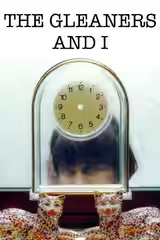
How does All the Beauty and the Bloodshed compare to The Gleaners and I?
All the Beauty and the Bloodshed is the more emotionally demanding choice beside The Gleaners and I, with urgent campaigning where Agnès Varda offers humour and curiosity about what people discard. We recommend Goldin’s story for concentrated testimony and political resistance, and Varda’s for a gentler, wandering approach. Both give overlooked people attention, though both sometimes leave someone worth hearing too soon.
What should I watch after All the Beauty and the Bloodshed?
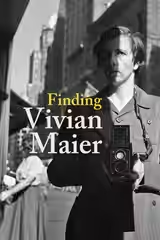
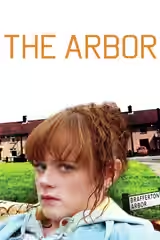
After All the Beauty and the Bloodshed, try The Gleaners and I (2000, Fi1m 85): An artist’s curiosity finds political force in the people others overlook. Then Finding Vivian Maier (2013, Fi1m 68): Another photographic life assembled from images, with difficult questions about who owns it; and The Arbor (2010, Fi1m 83): Recorded testimony and formal invention give a difficult family history unsettling immediacy.

Cast

Awards

Venice Film Festival, 2022

Won
Golden Lion

If you liked this, try…

  1. The Gleaners and I (2000, Fi1m 85)An artist’s curiosity finds political force in the people others overlook.

  2. Finding Vivian Maier (2013, Fi1m 68)Another photographic life assembled from images, with difficult questions about who owns it.

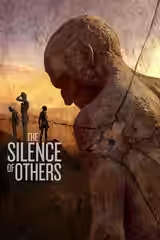
  3. The Silence of Others (2018) · not reviewed yetPatient, intimate campaigning against official forgetting, with people kept ahead of procedure.

  4. The Arbor (2010, Fi1m 83)Recorded testimony and formal invention give a difficult family history unsettling immediacy.

  5. Citizenfour (2014, Fi1m 83)Poitras again finds suspense in people deciding what public resistance will cost.