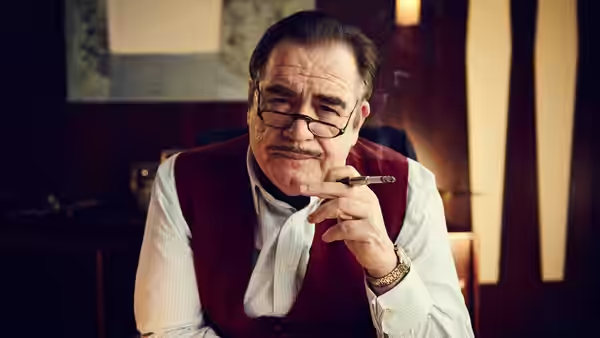
David Bradley gives this drama about the beginnings of Doctor Who enough warmth to reach beyond its devotees. The first half is thin, but his performance makes the affection feel earned.
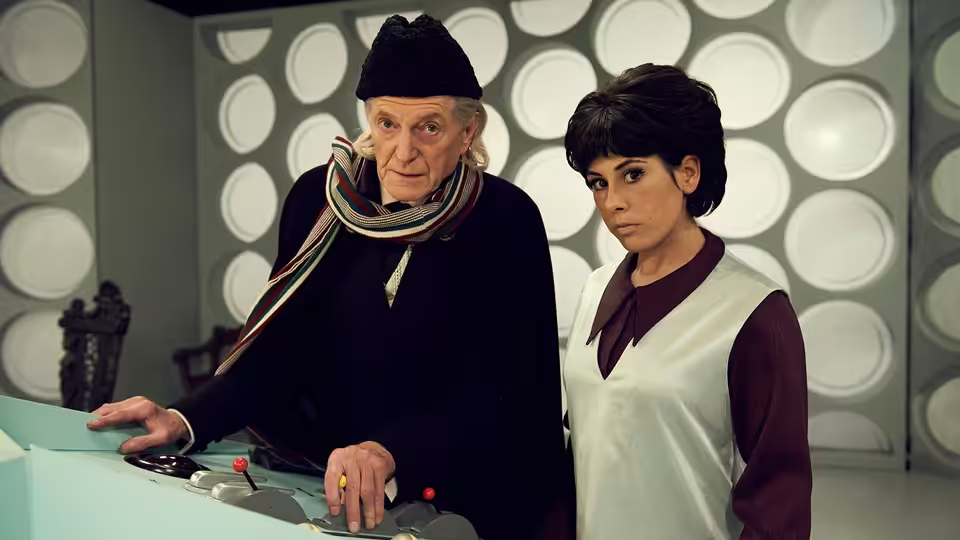
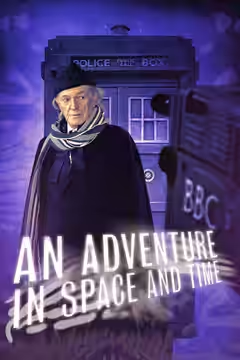
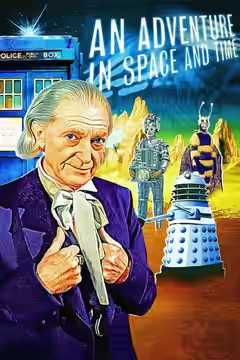
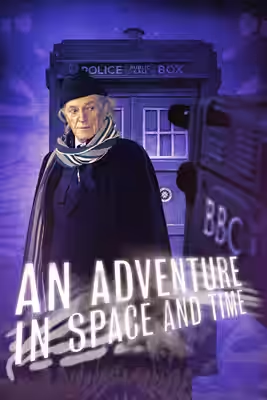
An Adventure in Space and Time is a warm, affecting drama with a rather thin account of how its television programme gets started. Written by Mark Gatiss and directed by Terry McDonough, it is most persuasive when William Hartnell’s investment in Doctor Who becomes its central concern. There is affection for the programme throughout, and sometimes that affection excuses scenes which need more friction or detail. David Bradley gives it the human interest that a dutiful recreation would lack.
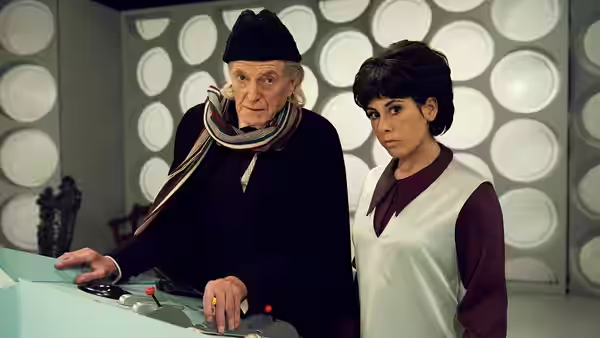
David Bradley lets William Hartnell be difficult without making difficulty his whole personality. The prickliness has weight, and the warmth does not arrive as an apology for it. We were moved by the affection for the job that shows through his bad temper; it makes his attachment to Doctor Who easy to understand, even without sharing it. There is enough going on in this performance to hold our attention when the writing takes a familiar route.
Jessica Raine’s Verity Lambert gives the film another useful source of energy, with her determination set against a television business run largely by men. That difficulty is clear, but the first half could spend more time letting us understand how she thinks and works. Mark Gatiss gets the broad pressures across without always giving individual encounters enough substance. The opening stretch is watchable, but we kept wanting a more detailed account of her work.
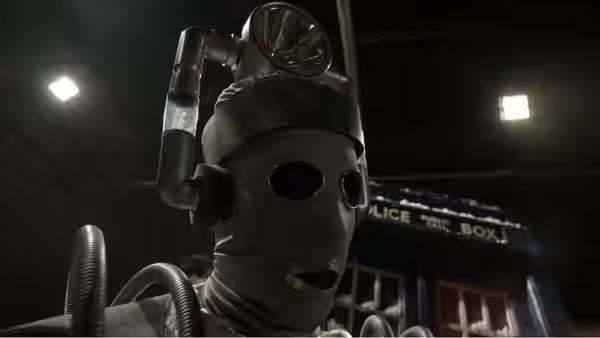
John Pardue’s cinematography and Dave Arrowsmith’s production design make the recreated early 1960s persuasive without requiring us to inspect every detail. The period setting gives these people a working environment we can accept, which matters in a drama so dependent on their attachment to the job. There is care here, and it helps. Terry McDonough keeps the performances central, so the reconstruction seldom becomes the only reason to watch.
Philip Kloss keeps the 83-minute film brisk, though speed cannot give the thinner early scenes more substance. The rhythm grows more comfortable once William Hartnell becomes the main concern. Edmund Butt’s music gives the tenderness a little more emphasis than it needs, but the feeling is already present in the performance. David Bradley is doing enough for us to believe it.
As a drama about the beginnings of a much-loved programme, it faces the usual temptation to treat everything as important because of what came afterwards. Mark Gatiss does not avoid that trap entirely, and familiarity with Doctor Who will supply some of the interest that the opening cannot generate for itself. Yet the attachment to work is plain enough to reach beyond the fans. We need not know the programme’s history to recognise the pleasure of finding a job that matters. Give the opening a little patience; David Bradley is worth waiting for.