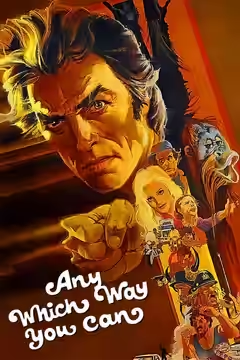
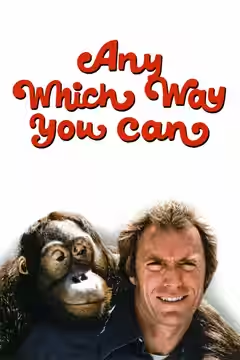
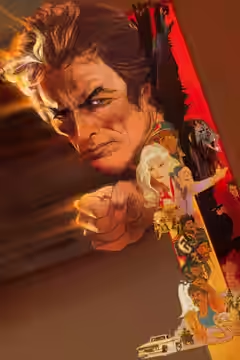
Buddy Van Horn’s sequel does what the first film did, slower and with more bikers. Eastwood coasts, Locke sings, Ruth Gordon swears and Clyde takes every scene he is in. Pleasant on a Sunday afternoon; it exists because the first one did.
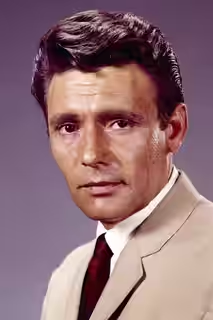
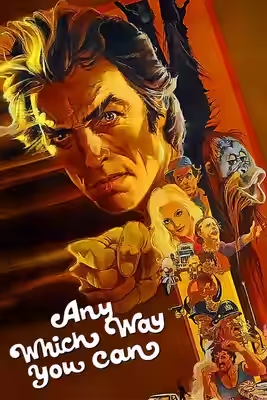
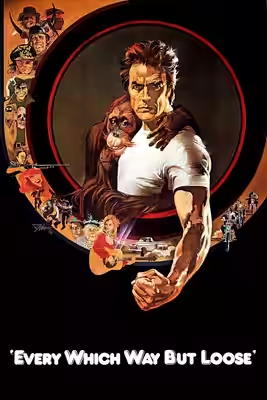
Every Which Way But Loose was a hit in 1978, and so two years later here is another one. Philo Beddoe is still fighting with his fists for money in the San Fernando Valley, still living with Orville and Ma Boggs and an orangutan called Clyde, still the mildest man in any room until someone swings at him. Stanford Sherman’s script has exactly one new idea, which is that Philo wants to stop and James Beekman wants him to fight Jack Wilson first. Everything else is a peg on which to hang the bits people liked last time.
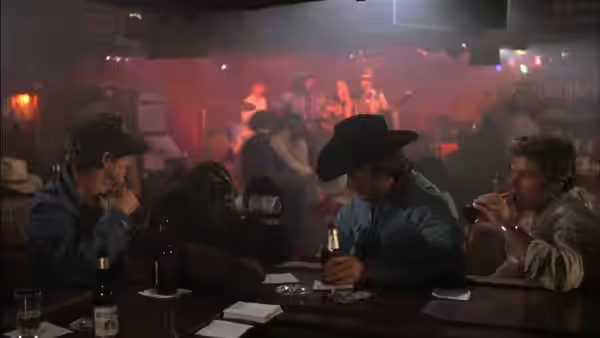
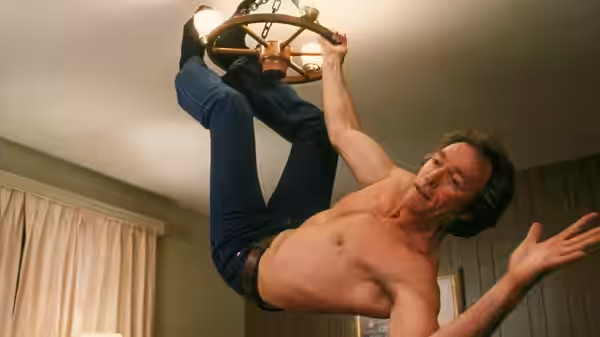
Clint Eastwood plays Philo as a man who would rather be under a truck. He is relaxed to the point of lying down, which suits the character and also suits a film in no hurry to get anywhere. Sondra Locke’s Lynn comes back wanting to be forgiven, and their scenes together are polite and careful, a reconciliation conducted across a table with the hands kept visible. Her songs in the bar are where the film stops to rest, and it rests often.
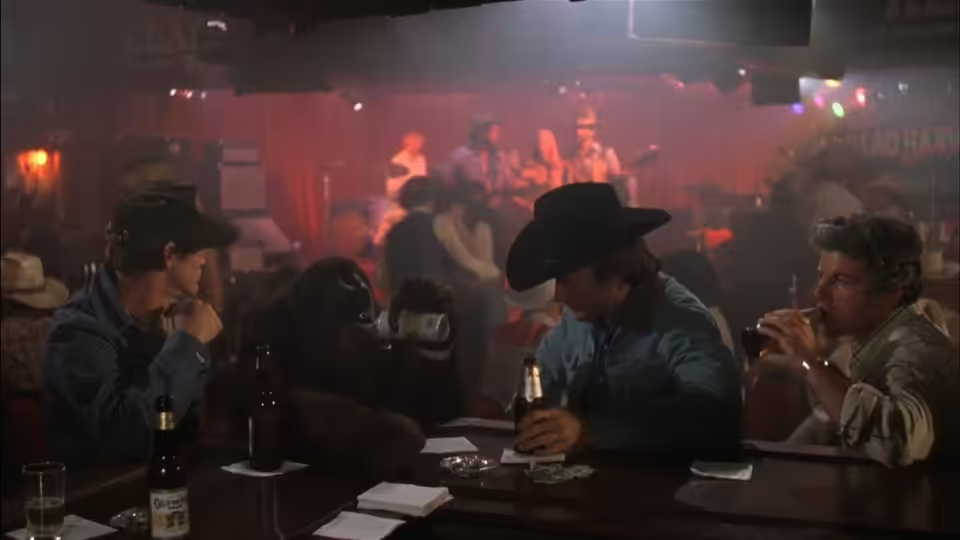
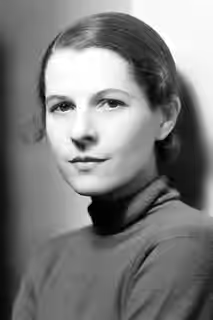
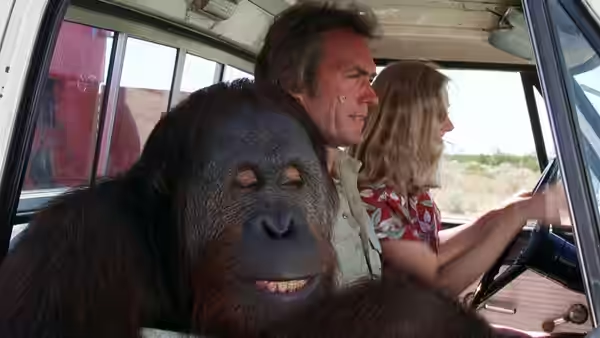
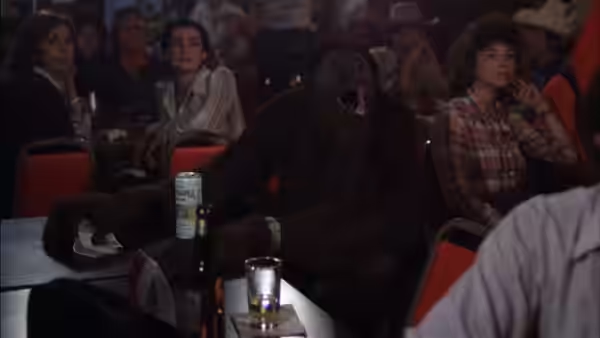
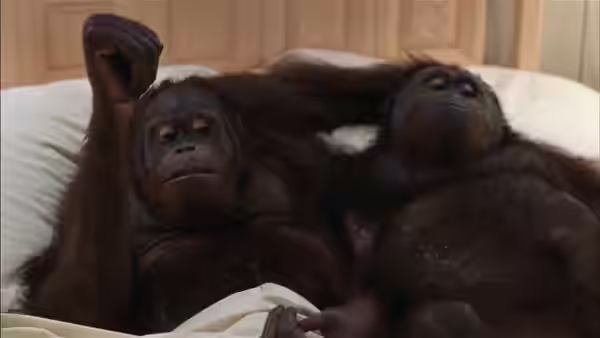
We laughed, properly and more than once, at Clyde. The orangutan has better timing than most of the cast: a slow drink from a bottle, a look at whoever has just spoken, a long pause before he does the thing everyone in the scene has been waiting for. Ruth Gordon’s Ma Boggs is the other reliable pleasure, a tiny woman in a housecoat who abuses everyone including the ape and gets most of the lines worth keeping. Then we felt a little ashamed of ourselves, because an orangutan and an elderly woman shouting were doing the work the script had not bothered to.
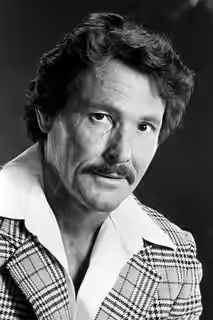
The film’s one surprising choice is Jack Wilson. William Smith plays him not as a villain but as a courteous, well-spoken professional who has read a book or two and would like to get this over with. The menace is left to Harry Guardino’s Beekman and Michael Cavanaugh’s Scarfe, who make threats in good suits, and the arrangement gives the back half a shape it would not otherwise have. We will not describe where it goes, except to say that the fight itself, when it arrives, is the only stretch where the film seems to know why it was made.
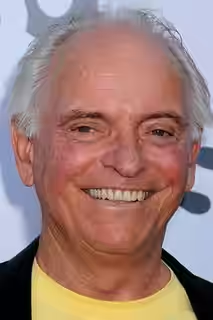
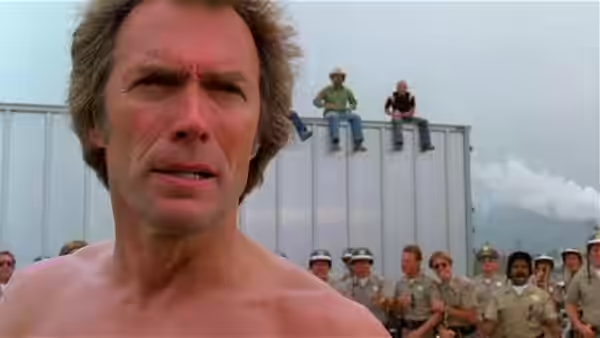
The Black Widows are the problem. John Quade’s Cholla and Bill McKinney’s Dallas and the rest of the gang turn up, lose, turn up again and lose again, and every one of these humiliations was done in the first film with more surprise. By the third round of it we were bored, and then a little sorry for the men in the leather, who are plainly game. Ron Spang and Ferris Webster let these scenes run on past their point, and at 115 minutes the middle of the film stalls for twenty of them. David Worth shoots the Valley flat and bright, like a daytime serial, and William J. Creber’s garages, bars and front rooms look exactly like what they are, which is honest but not interesting to look at.
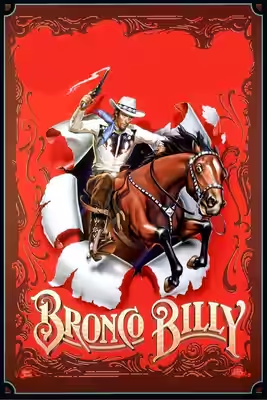
Buddy Van Horn directs, and the fights are the best-handled thing in the film. They are clear, heavy and shot so you can see who is hitting whom; the punches are thrown by men who look as though they could. Scenes without a fist in them are left to find their own way out, and most of them wander. Set against Bronco Billy, which Eastwood directed himself the same year and which has a real idea about a man and his audience, this is a film with a cast list and a tagline.
The few reviews we have read split between finding it harmless and finding it dire, and we land between them, nearer the harmless end. It is a 15 for the fights and the language, and it is fine at home, where you can go and make a cup of tea whenever the motorcycles start up and come back for the orangutan.