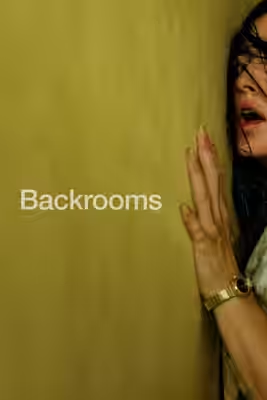
For an hour, the hum of the strip lights and the damp yellow carpet of Kane Parsons’ maze are as frightening as anything we have sat through in some time. Then the script starts explaining, and the fear drains out room by room.
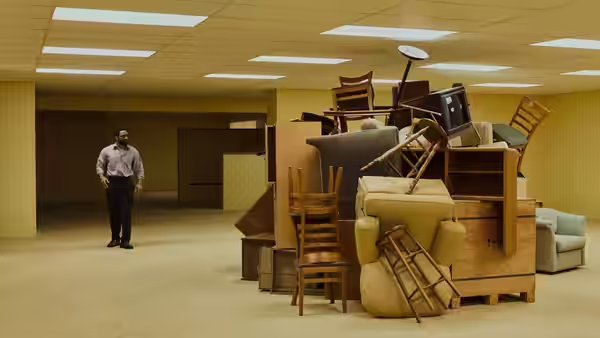
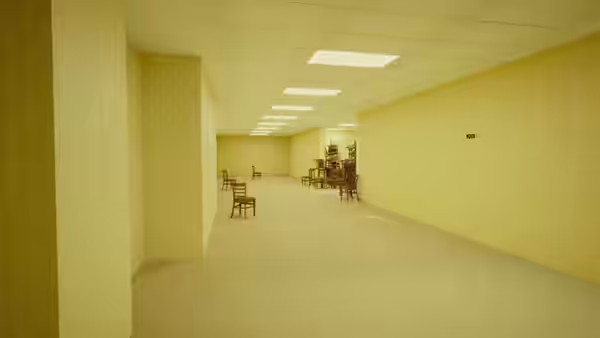
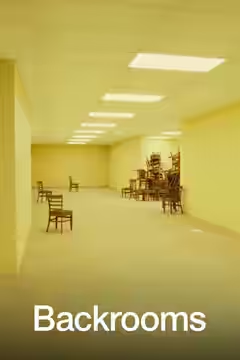
The Backrooms started as a photograph and a caption. An empty office, yellow wallpaper, strip lights humming, and the suggestion that if you fell out of the world in the wrong place you would land there and walk for ever. Kane Parsons made a series of short films about it for YouTube, and he has now made a feature, from a script by Will Soodik, that tries to give the place people and a story. The story is about memory, and about people who have stopped moving. For an hour it frightened us properly. Then it starts explaining itself, and the fear goes out of it a little with every answer.
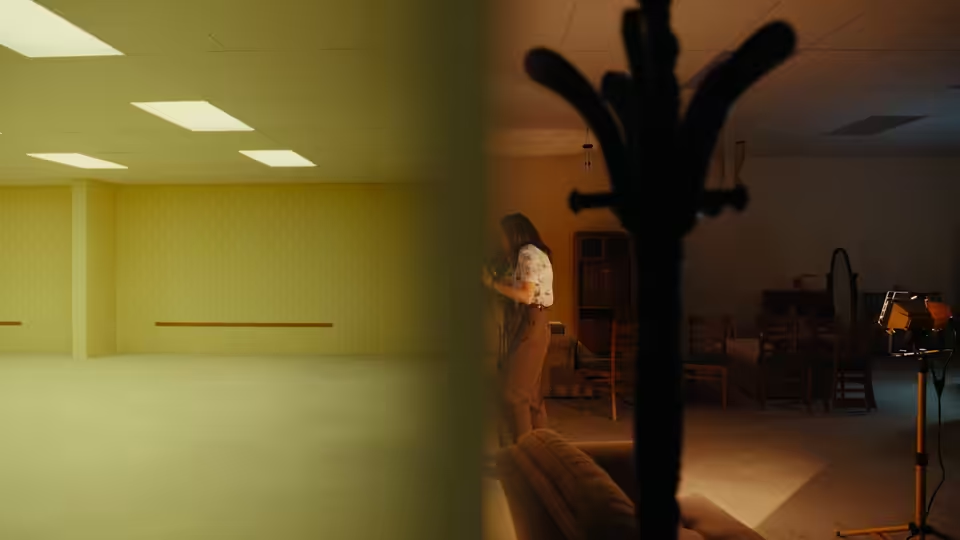
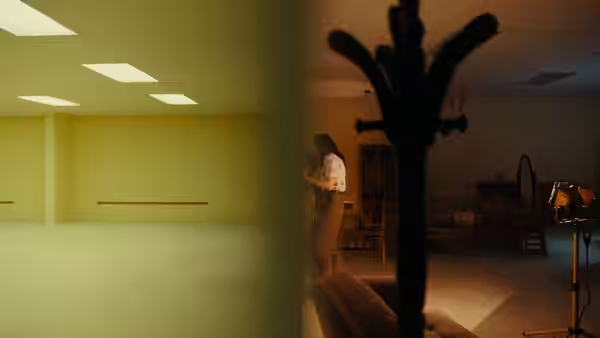
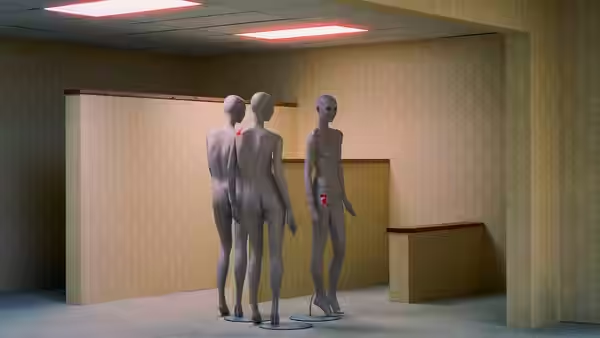
The first hour is Danny Vermette’s. He builds the rooms so they repeat with small wrong differences: a doorway an inch too low, a carpet that is damp in one corner for no reason, a light that flickers once and then does not. Jeremy Cox shoots all of it flat and bright, with no shadows to hide anything in, and it turns out that is worse. The found-footage passages, shot on what looks like a cheap camcorder, are grainy and jittery and cut against clean, still shots of the same corridors, so we are never sure which version to trust. Edo van Breemen and Parsons build the score out of the hum of the lights, and for long stretches we could not tell where the strip lights stopped and the music began.
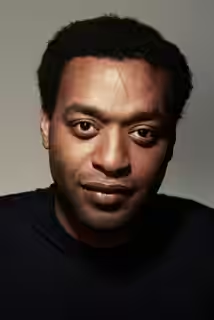
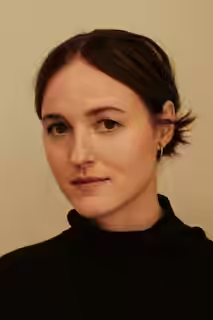
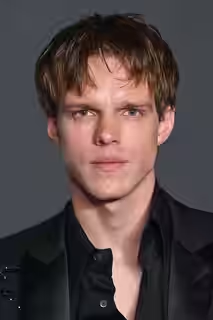
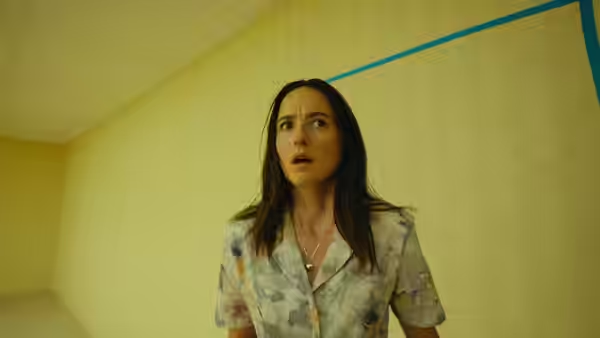
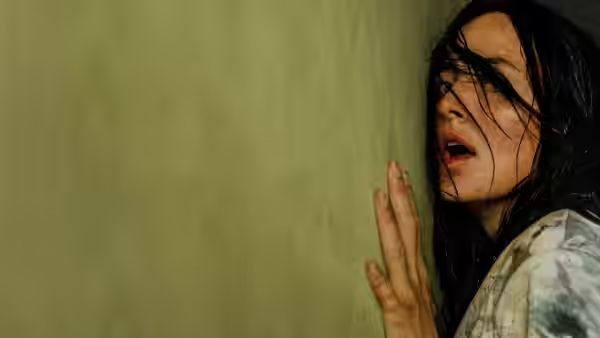
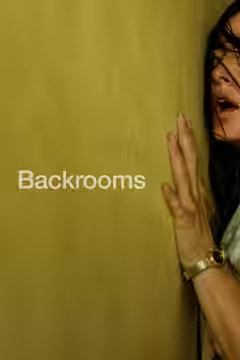
Chiwetel Ejiofor plays Clark as a man who has decided the place is a punishment and is trying to work out what for. He is heavy and still, and he does the film’s best acting with his shoulders. Renate Reinsve’s Mary is his opposite, brittle and quick and unable to stand in one spot, and the film keeps flashing back to her as a child (Ember Ambrose) in a house that is not quite the one she remembers. There is one effects shot in those flashbacks, a room rearranging itself as she tries to recall it, that is the cleverest thing in the picture. Finn Bennett and Lukita Maxwell, as Bobby and Kat, carry the camcorder half and behave like people who grew up filming everything, which is the point. Mark Duplass turns up as Phil and is, briefly, a relief.
We should own our reaction. About forty minutes in there is a stretch in which nothing happens except a corridor and the hum, and Greg Ng holds the shot well past the point of comfort, and we found we had stopped breathing properly. Nothing was in the corridor. That was the problem. The film understands, for a while, that an empty room is worse than anything you could put in it.
Then it stops trusting that. The second half of Soodik’s script sets out the rules of the place, and each answer makes the rooms a little smaller. Bobby and Kat never become more than the people holding the camera. The two ways of seeing, camcorder and clean, are cut together faster and faster as the film goes on, and the faster Ng cuts the less frightened we were, because dread needs time and the film had started to hurry. Robert Bobroczkyi, credited as Pirate Clark, is effective at the far end of a corridor and rather less so when the film brings him close and asks us to have a look.
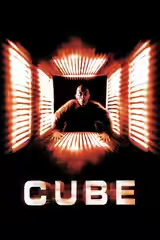
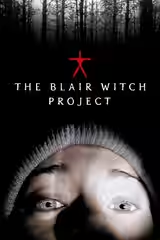
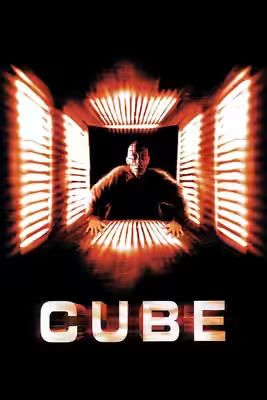
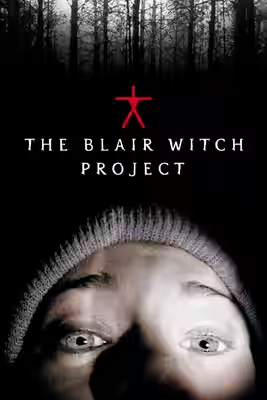
The genre has been here before and knew what to leave out. The Blair Witch Project (1999) pointed a camera at a dark wood and told us nothing. Cube (1997) put six people in a maze and let them argue instead of explaining. Parsons’ own shorts worked because they never said what the place was. The feature cannot resist, and the split among critics comes down to that. Most have been warmer than we are, and we understand why, because the first hour earns it. The ones who found the second half thin have a point too.
See it in a cinema if you can, where the hum comes from all round you and the yellow fills the wall. At home it becomes a film about people lost in a building, which is a smaller thing. It runs 111 minutes and carries a 15, and the certificate is right: there is hardly any blood, and a great deal of waiting.