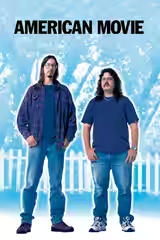
Michel Gondry’s comedy is lovely whenever Jack Black and Yasiin Bey are remaking Ghostbusters out of tinfoil and cardboard, and dull whenever it has to move its plot along. The remakes are worth an evening; the story around them barely holds together.
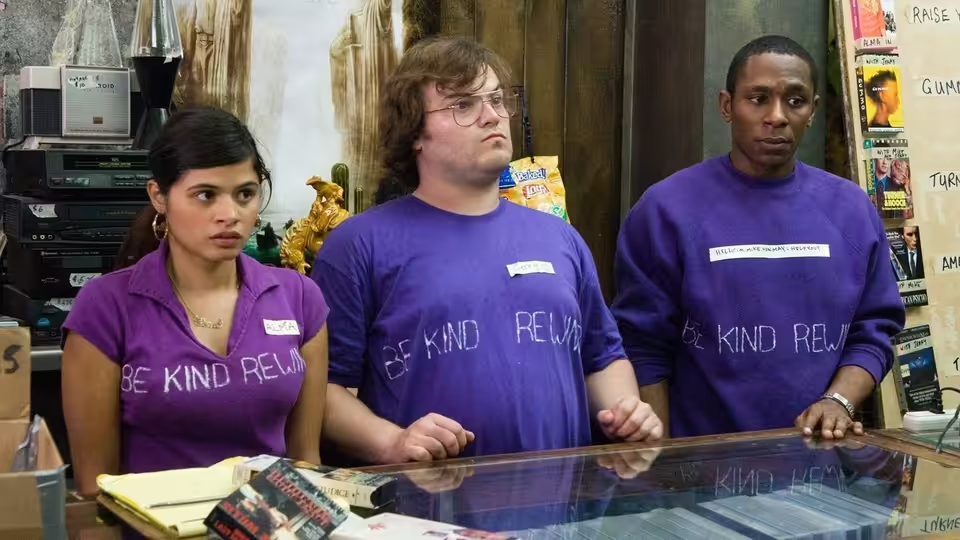
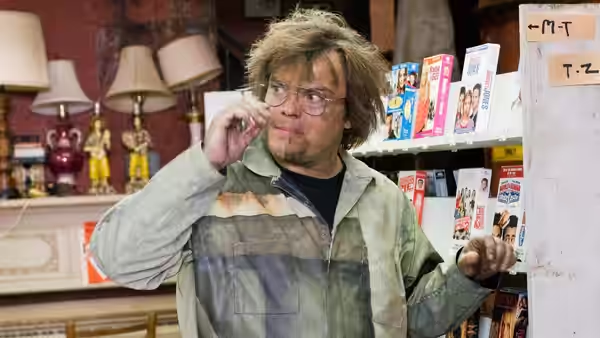
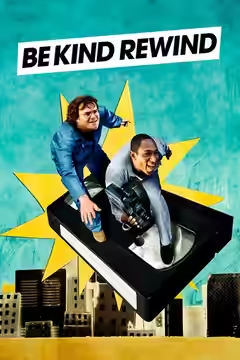
Michel Gondry, writing and directing, sets a comedy in a failing VHS shop in Passaic, New Jersey, and asks what happens when the customers start making the films themselves. It is a small, scruffy idea and he films it as one, on real streets in winter with the tapes stacked to the ceiling. For perhaps forty of its 102 minutes, whenever Jack Black and Yasiin Bey are running about with a camcorder, it is among the happiest things Gondry has made. The other hour is the plot.
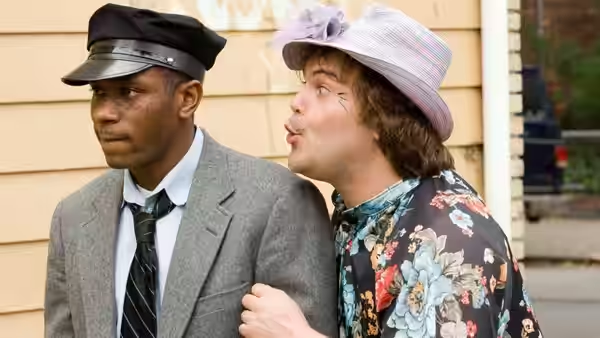
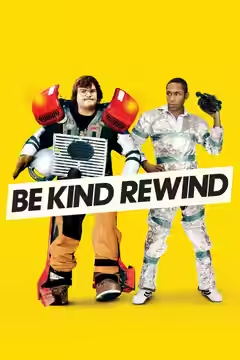
The remakes are the film. The first is Ghostbusters, shot in an afternoon with proton packs of tinfoil and cardboard and a logo painted by hand on the side of a car, and we laughed out loud at it, more than once. Then come Rush Hour 2, Robocop, Driving Miss Daisy, 2001: A Space Odyssey and a run of others, and the best stretch of the film is a montage that moves from one to the next as if in a single wandering take, a new cardboard set waiting every few steps. Dan Leigh’s production design does its real work here. Nothing on these sets looks bought, everything looks found, and if you squint it also looks like the film being copied.
Ellen Kuras shoots Passaic in flat grey daylight and the shop in the yellow of a bare bulb, and she lets the camcorder footage stay camcorder footage, smeary and overexposed, so the two kinds of picture sit side by side. Jeff Buchanan cuts the remakes fast and the connective scenes slowly, and the scenes about building codes did not need the time he gives them. Jean-Michel Bernard’s score is light, piano-led and content to stay out of the way. Rahel Afiley and Kishu Chand take the costume credit, and most of what they made is tinfoil.
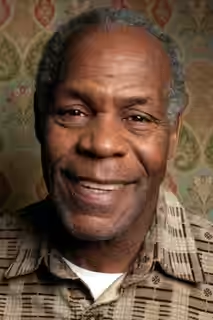
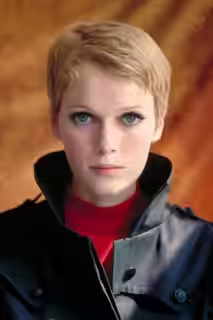
Black plays Jerry at full manic stretch for the first twenty minutes, and it is tiring, and then something odd happens: he calms down the moment he is in costume. He is a better actor in tinfoil than in his own clothes. Bey is the quiet centre, a straight man who never plays the joke, and he carries most of the feeling the story has. Danny Glover gives Mr. Fletcher a slow courtesy that makes the shop worth saving. Mia Farrow, as Ms. Kimberley, is dotty and rather touching. Melonie Díaz’s Alma arrives late, turns out to be the only one of them who can act or direct, and takes over.
The trouble is everything between the remakes. Jerry is magnetised by a power plant and wipes the tapes; Fletcher leaves town to spy on a DVD chain; the city wants the building brought up to code. Gondry writes these scenes as if hoping we will not look at them too hard, and we did look, because there was nothing else on screen. There is a moment about who should play whom in Driving Miss Daisy that raises a real question about race and casting and drops it inside a minute. When the outside world finally notices what the shop is doing, the film deals with it in a scene or two and hurries back to the cardboard.
And yet the last ten minutes, which we will not describe, caught us out. We had spent an hour mildly amused and faintly impatient, and then the neighbourhood was together in the dark watching something it had made, and our throat tightened before we had agreed to it. Gondry earns the moment by doing what the whole film has been about: handing a camera to people who have never held one and letting what they make be rough.
Set against his own record it sits where you would expect. Eternal Sunshine of the Spotless Mind (2004) had Charlie Kaufman’s script to hold Gondry’s inventions in place; The Science of Sleep (2006) did not, and drifted. This drifts too. It is also warmer than either, and it is the one you could show a ten-year-old.
Watch it at home, with someone who owns a camera, and accept that the middle hour is a wait. You will be making something before the credits are done, which may be the point and is at least a result.