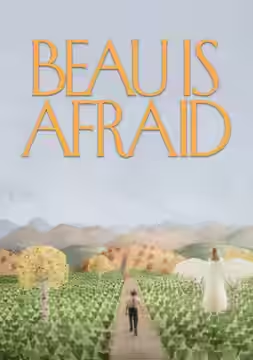
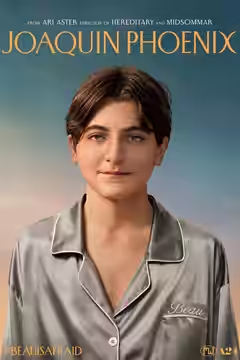
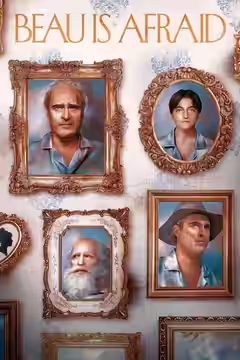
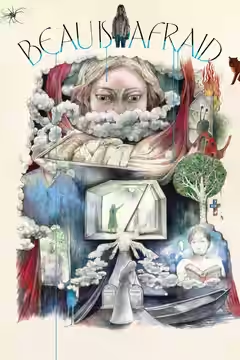
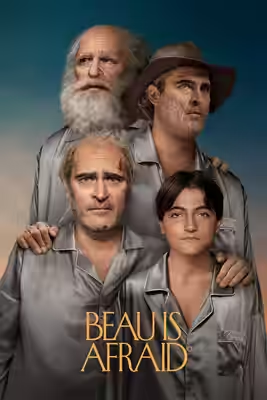
Ari Aster’s three-hour comedy of dread has the funniest and most frightening first hour he has made, and then keeps going. Joaquin Phoenix is superb throughout; the film around him loses its shape somewhere in the woods and never quite gets it back.
Ari Aster’s first two films, Hereditary (2018) and Midsommar (2019), were horror films about families. Beau Is Afraid is a comedy about a mother and son that follows a frightened middle-aged man from his flat to his mother’s house. Aster wrote, produced and directed it, and there is no sign anyone told him no. The first hour is close to the best thing he has done. The rest is long and handsome and keeps making the same point, and we came out tired.
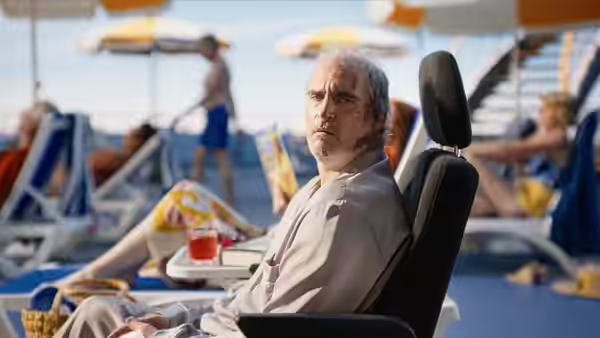
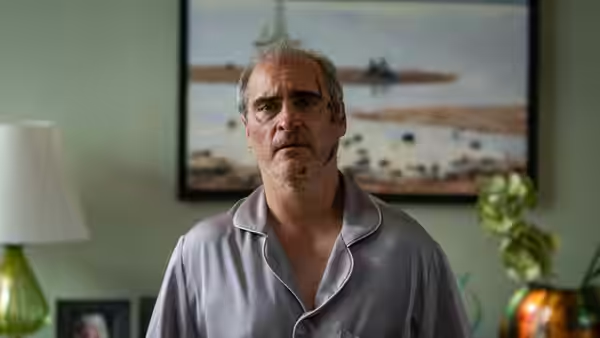
Beau Wassermann (Joaquin Phoenix) lives alone on a street Fiona Crombie has designed as everything a nervous man believes a city to be. A body lies on the pavement and people step round it. Beau’s flat is beige and cracked and lit like a dentist’s. He is due to fly home to his mother for the anniversary of his father’s death, and within a morning his keys and bag have vanished from the doorway and a phone call has turned the trip into an emergency. Pawel Pogorzelski shoots it flat and bright, so nothing can hide and everything stands too close. We laughed, nervously and often, and one moment in the bath made us yelp. It is the only time we were frightened of something rather than for someone.
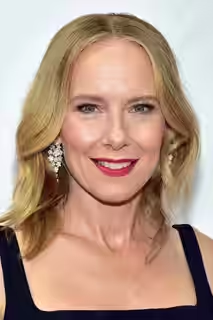
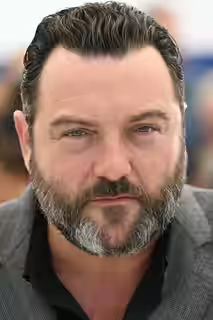
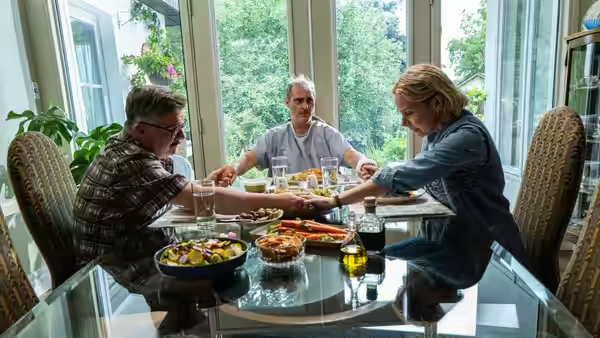
Then Beau is hit by a van and wakes in the pink, sunlit house of Grace (Amy Ryan) and Roger (Nathan Lane), a couple far too glad to have him. Their daughter Toni (Kylie Rogers) wants him gone and says so; a lodger, Jeeves (Denis Ménochet), is a veteran who does not always know which war he is in. This is the best-written stretch of the film. Ryan and Lane play kindness as something with a bill attached, Rogers is a properly nasty teenager, and Crombie puts the whole house in pastel so that Beau, in borrowed grey, looks like a stain on the sofa.
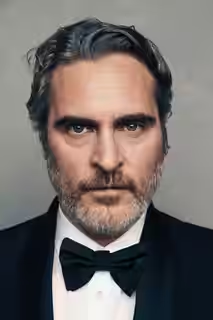
Phoenix plays Beau with his shoulders up and his mouth slightly open, a man who apologises to furniture. The part gives him almost no range on purpose, and he finds a different flinch for every scene and keeps it up for three hours, which is harder than it looks. Stephen McKinley Henderson, as his therapist, has one early scene of soft, leading questions that tells us more about Beau than the following two hours manage. Patti LuPone, as Mona, is a voice on the telephone for a long while, and does a great deal with a few lines.
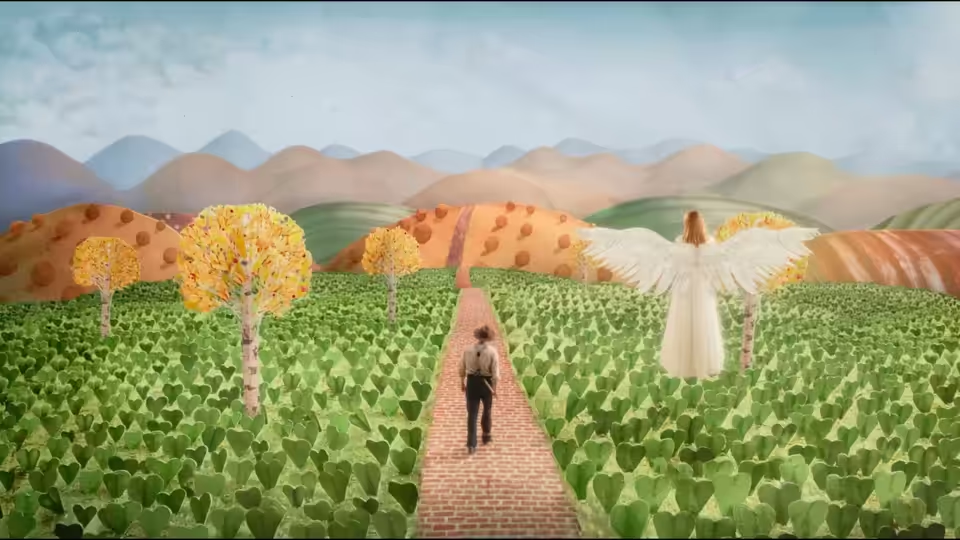
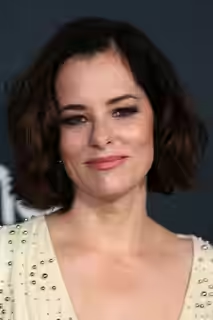
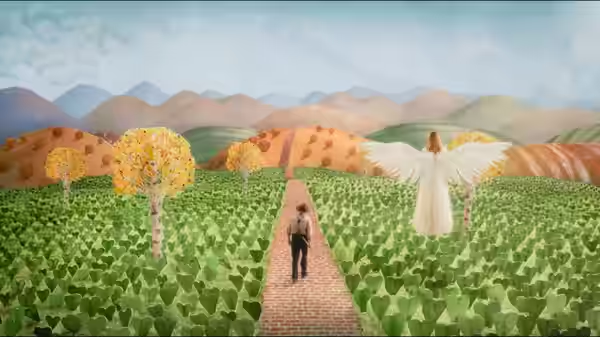
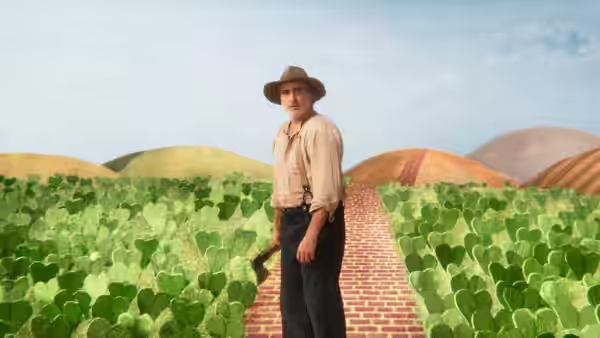
After the pink house the film goes into the woods, and here it stalls. There is a long set piece in the middle that we will not describe; it is the loveliest thing here and it stops the film dead. Bobby Krlic’s score, a nervous hum in the city, fills out with strings and asks us to be moved; we were looking at our watches instead, which may be what Aster wanted and is not a defence. Lucian Johnston’s cut lets every section run long, and this one longest. Parker Posey turns up late as Elaine Bray and is welcome.
The final stretch we will not describe. Aster is good at dread and good at jokes, and Hereditary trusted us to put them together ourselves. Here he does it for us, again and again, until the point stops being one. LuPone, when she arrives in person, is worth the wait. The film keeps her waiting too long.
It carries a 15 and runs 179 minutes. See it for the first hour, the pink house and Phoenix, and see it at home, where you can pause when the trees start, make tea and come back. The film will not have moved.