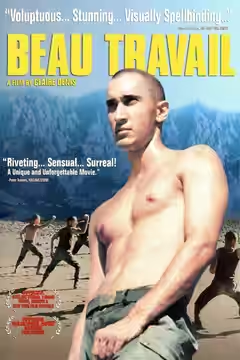
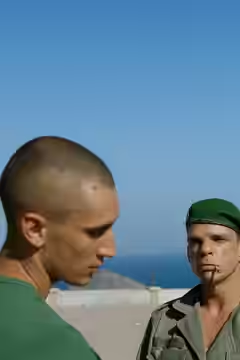
Claire Denis makes a compelling military drama out of drills, glances and things left unsaid. Denis Lavant is quietly distressing to watch, though the slow, spare storytelling sometimes holds us too far away.
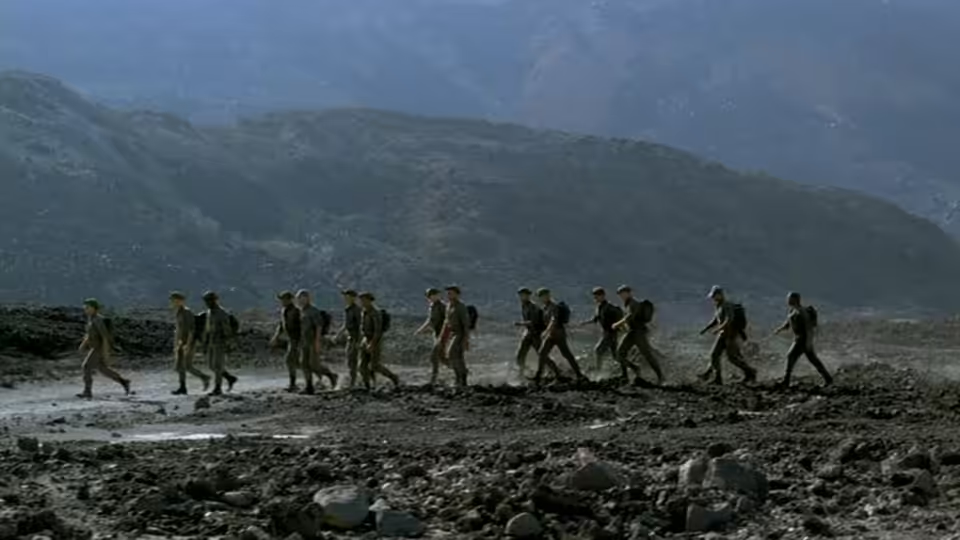
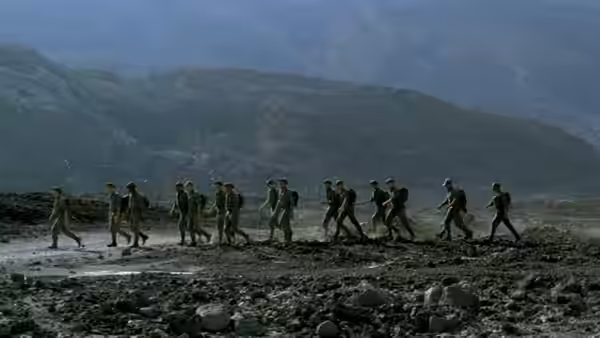
Beau Travail is a demanding, affecting military drama, and we recommend it with one warning: it is much more interested in the men’s physical routines than in keeping the story moving. The legionnaires drill, repeat movements and submit themselves to the group. Claire Denis gives these exercises enough attention for us to start noticing the strain beneath their orderliness. What looks at first like professional discipline becomes uncomfortable to watch.
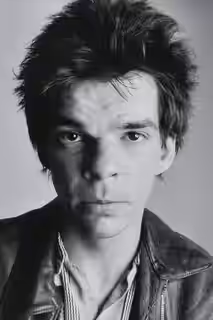
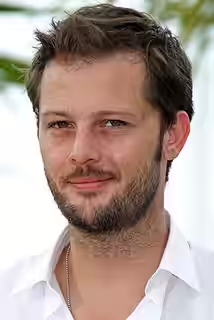
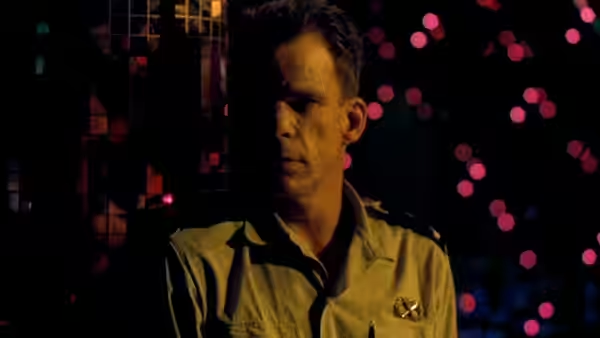
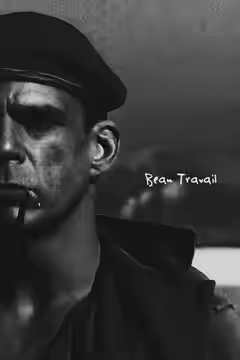
Denis Lavant gives Galoup a composure that seems to require constant effort, and that effort is the performance’s most affecting feature. Alongside Michel Subor’s Commander Bruno Forestier and Grégoire Colin’s Gilles Sentain, he makes us attentive to who is watching whom, and who can appear at ease. There is little dialogue to tidy these relationships into clear statements of allegiance or desire. We have to read the men through the way they carry themselves, which usually tells us enough.
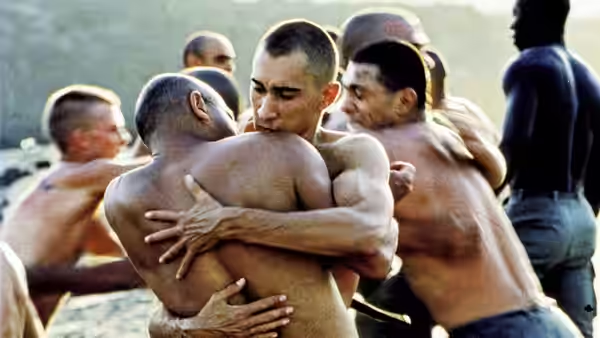
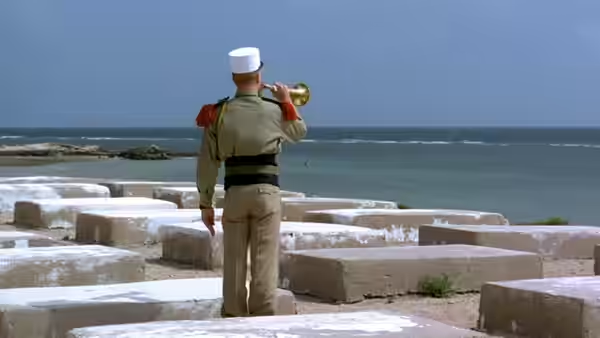
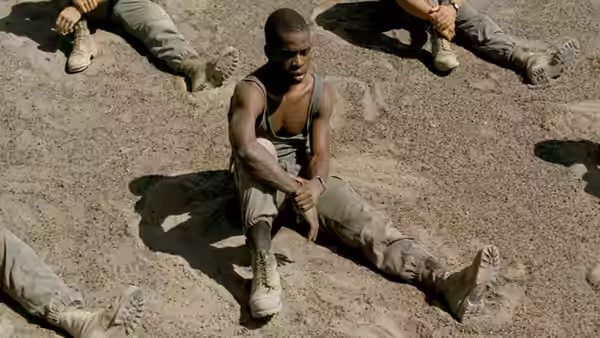
Agnès Godard photographs the drills with a concentration that makes it difficult to look casually at any of the men. The clear colour and emphasis on physical exertion encourage us to appreciate how precisely they move together. Arnaud de Moléron’s production design stays secondary to those arrangements of bodies, which is right for a film so concerned with men watching other men. The images allow pleasure in these bodies without letting us forget how insistently they are being trained.
We felt uneasy watching the drills, because the men move so well together that their obedience starts to look frightening. It is possible to enjoy the precision and dislike what it seems to demand from them. The film allows both responses, and its sympathy for Galoup stops the men becoming illustrations in a lecture about military life. His difficulty in remaining composed is something we can recognise without needing him to explain it.
Nelly Quettier’s editing builds relationships by placing gestures beside one another, leaving us to work out their significance. That gives the physical sequences their accumulating tension, although the same method can make the quieter passages feel remote. The music credited to Eran Zur and Charles Henri de Pierrefeu deepens our unease around the apparently controlled exercises. The combination works because sound and movement keep directing our attention towards men whose feelings are difficult to read, even when their bodies are being watched so closely.
There are limits to this approach, and the film sometimes reaches them. The screenplay by Claire Denis and Jean-Pol Fargeau leaves so much to posture and suggestion that we occasionally struggle to understand how one man feels about another. We wanted a little more of the men beyond their physical presence, particularly when the slow pace allows plenty of time to consider what has been left out. The film’s sympathy for Galoup helps, but does not entirely remove that distance.
At 93 minutes, it can still feel slow; that is worth knowing before settling down. The reward is a performance we keep trying to read, and images that make routine behaviour increasingly troubling. This is a strong recommendation for an evening with few distractions. Do not choose it because a military setting promises a brisk chain of events.