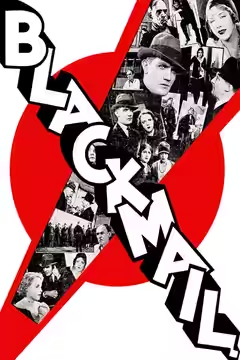
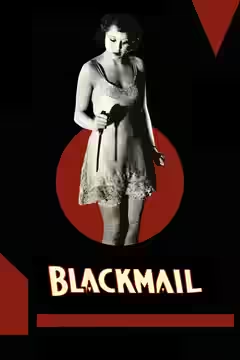
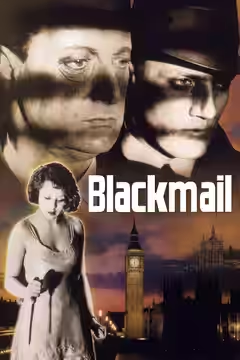
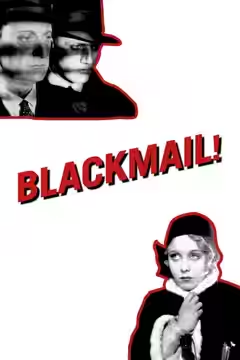
Alfred Hitchcock’s first sound film is stiff in the joints and slow through the middle, and it still holds two sequences that unsettled us far more than we expected. Anny Ondra, dubbed live from just off camera, somehow keeps it together.
Alfred Hitchcock’s first sound film was begun as a silent one and reworked for talk part way through, and you can hear the join. Blackmail runs 86 minutes and carries a PG, and a fair stretch of the middle is three people around a table waiting for the plot to come back. It is also, at its best, as frightening as anything he made before the war, and we would rather have a creaky film with two sequences like these than a smooth one with none.
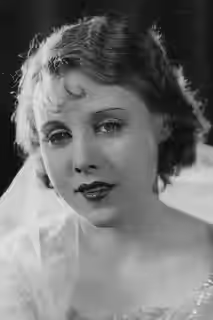
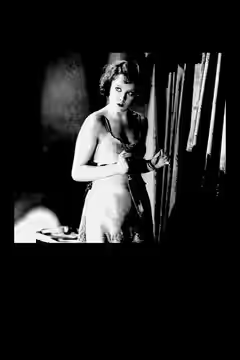
The opening reel is pure silent cinema. A police van, a flat above a shop, a man reaching for a gun under his pillow, then fingerprints, a line-up, the cells: nobody says a word and nobody needs to. Then Alice and Frank sit down in a tea room and the sound arrives, and the actors slow as if it weighed something. Anny Ondra’s voice belongs to Joan Barry, who stood out of frame and spoke the lines while Anny Ondra mouthed them, and it should be a disaster; mostly it is not. There is a faint lag between face and word that gives Alice a dazed, not-quite-present quality, and for a woman about to be absent from her own life for an evening, it fits.
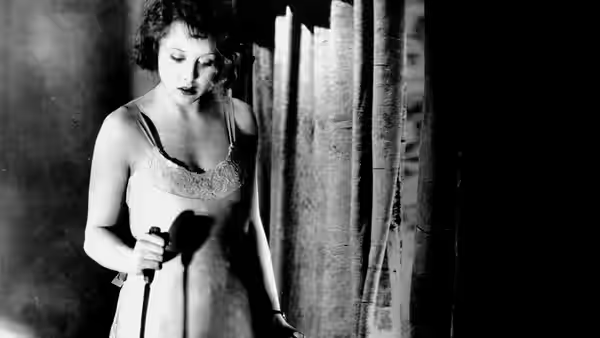
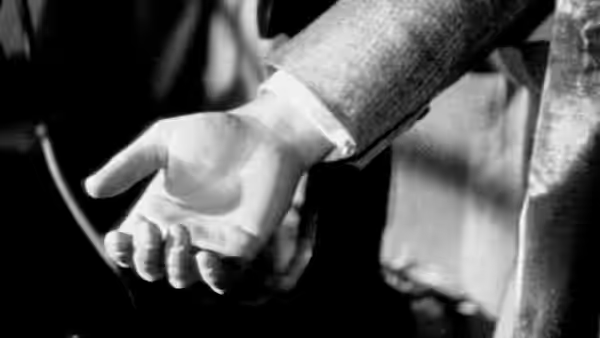
The studio scene is the film’s first great passage. Cyril Ritchard plays the artist as charm with a clock running on it, and the room is full of things that will matter later: a canvas on which he guides Alice’s hand to paint a face on a nude, a painting of a jester laughing straight out at us, a ballad he sings at the piano. Jack E. Cox shoots it warm and close, and then the struggle happens behind a curtain, with only a hand groping out for the bread knife and the curtain going still. We watched it with dread, and we were not sure, for a moment, which of them was going to come out.
What follows is better still. Jack E. Cox tracks Alice through London at night in long takes, and everything she passes seems to hand her back the knife. A sleeping tramp’s arm hangs off the kerb the way the artist’s did. Then breakfast, and a customer in the shop chatters about the murder until her voice thins to mush and the one word knife comes through, again and again, and Alice’s father asks her to cut the bread. We flinched with her.
Donald Calthrop’s Tracy is the best performance in the film. He arrives with a glove, sits at the Whites’ table, helps himself to a cigar and orders a breakfast he cannot pay for, and Donald Calthrop plays him as a small man delighted to have, at last, a large morning. John Longden’s Frank is stiffer, and the script, credited to Alfred Hitchcock with Michael Powell among the writers, hands him a real moral problem and then does little with it. Sara Allgood and Charles Paton bustle about the shop and are exactly as much as the parts need.
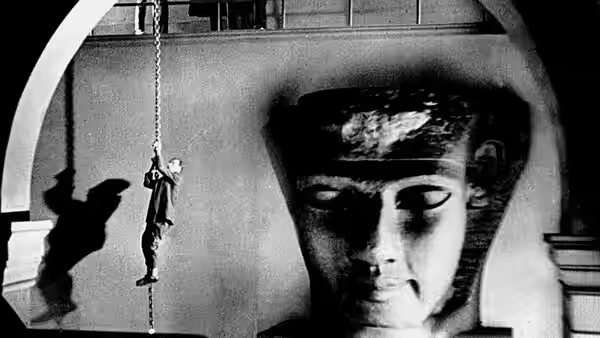
The middle sags. Once Tracy has sat down, the film sits down with him, and Emile de Ruelle’s cutting, brisk in the first reel, goes slack in the parlour talk. Hubert Bath’s music does most of its work at the top and tail and leaves the long conversations to fend for themselves. It moves again for a chase through the British Museum, which we will say nothing more about beyond that it is worth the wait.
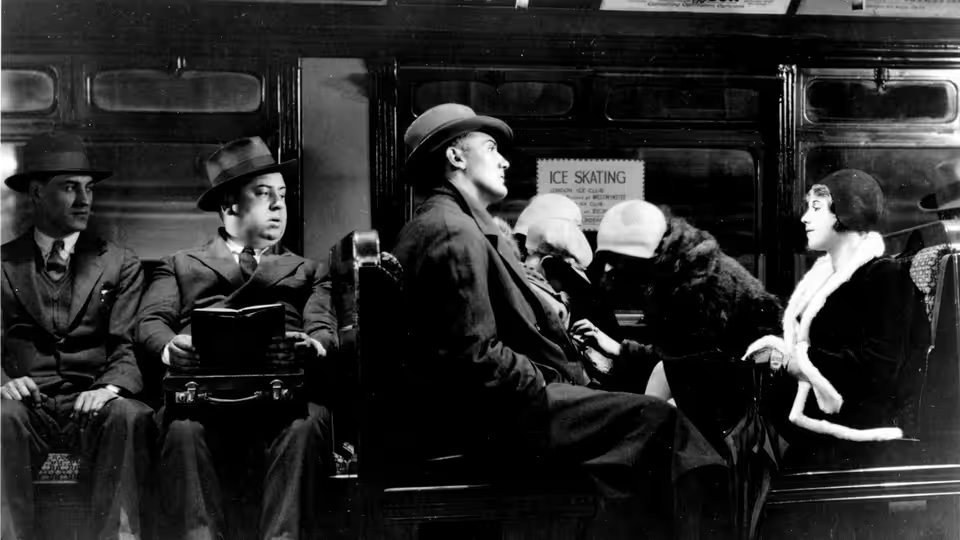
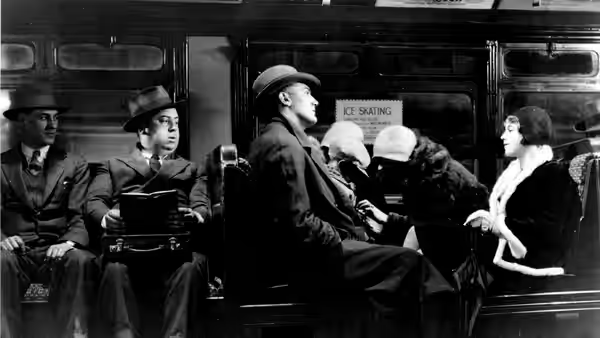
The silent version survives and some critics prefer it. We understand why: the images are cleaner and the pacing is less bruised. But the repeated word knife needs sound, and it is what stays with us. Alfred Hitchcock turns up himself on a train, pestered by a small boy, and it is a fair picture of the whole enterprise, a man trying to read while something new keeps tugging at his sleeve. Watch the sound version first, for the knife, and forgive it the parlour.