Zoë Kravitz’s first film as director looks handsome, is well cast and is funny about rich men who talk like their therapists. It borrows its shape from Get Out and, once the mystery is out, has less to say than it thinks.
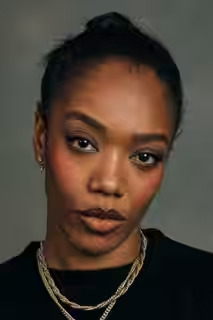
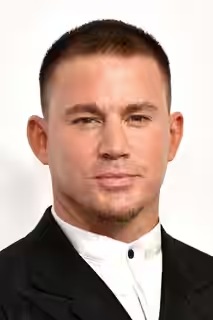
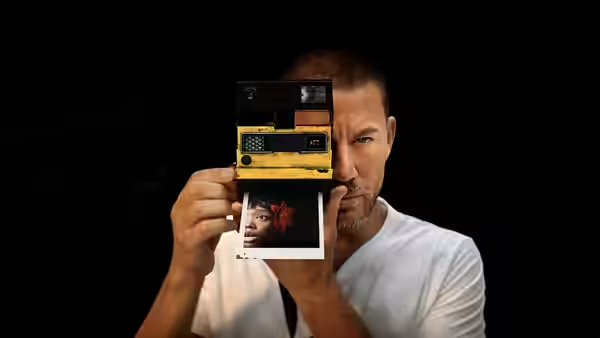
Zoë Kravitz’s first film as director, written with E.T. Feigenbaum, puts a young woman who wants to be chosen on a billionaire’s island. Frida (Naomi Ackie) has watched Slater (Channing Tatum) on her phone for years, mostly the clip of him apologising. When he asks her along she says yes before he has finished the sentence. It is a good-looking, well-acted 103 minutes that spends an hour laying a careful trap and half an hour letting off fireworks, and it is the trap we would send you for.
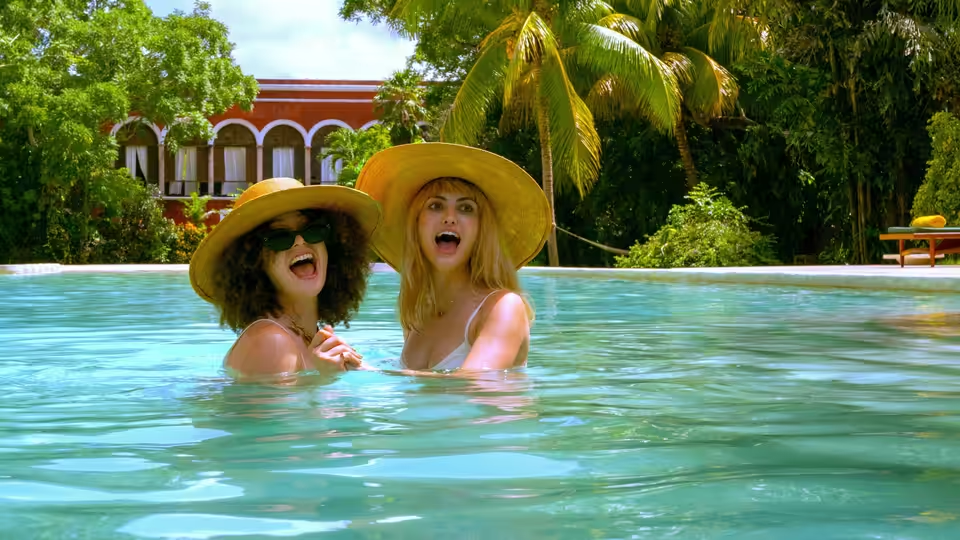
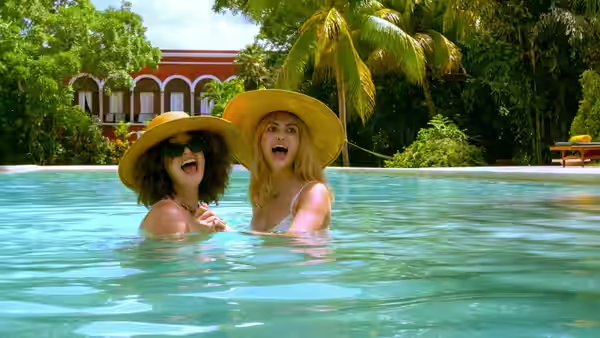
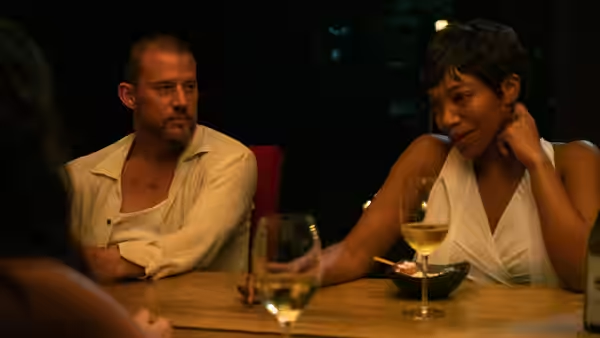
The island is where Kravitz shows she can direct. Adam Newport-Berra shoots it in hard sun, white walls against turquoise water, so bright the shadows under the palms look black. Roberto Bonelli gives the villa low white buildings, a long outdoor table and guest rooms that all match, and Kiersten Hargroder puts every woman in the same white dress, so the guests look like staff. Kathryn J. Schubert cuts the days as a loop: a dive into the pool, a glass filled, a dinner, a waking. By the third loop we could not count them either, and that is the point. Chanda Dancy’s score stays low and uneasy under the daylight and steps aside for pop at night, which is the right way round.
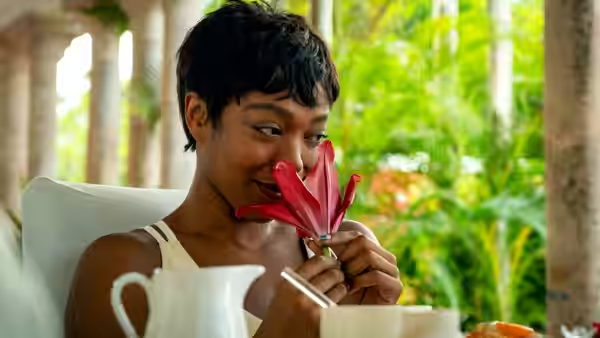
Tatum is the film’s best joke and its best argument. He plays Slater as a man who has done the work, who says he hears you before you have spoken, who cries neatly and thanks you for holding space. He has learned the vocabulary of harm and uses it as a passkey, and Tatum never winks. Ackie is eager and watchful, and makes Frida’s need to be picked drive every scene; she is at her best when she is not sure whether she is being flattered or handled. Adria Arjona, as Sarah, a woman Frida recognises from television, is quick, funny and the first person on the island to behave like an adult when things go wrong.
Here is what we felt. We laughed at Tatum, often and without guilt. A little past the hour Frida stands by the pool trying to count the nights she has been there and cannot, and we felt a proper chill, the earned kind, because the cutting had been doing to us what the island was doing to her. It lasted about twenty minutes. Then the film changed into something louder, and we watched the chill drain away.
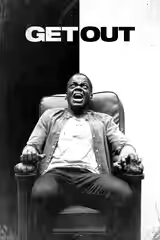
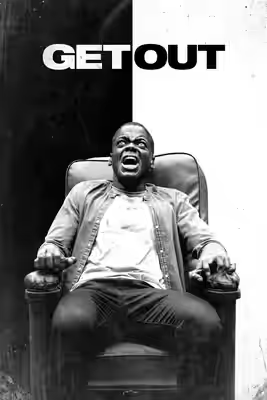
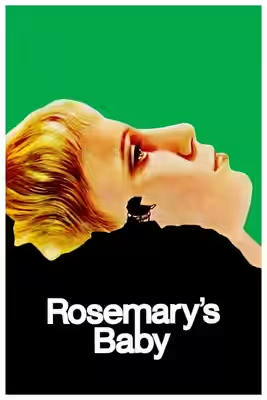
The second half takes a turn we will not describe. Its shape is borrowed, almost gesture for gesture, from Jordan Peele’s Get Out (2017): the smiling hosts, the outsider who notices, the thing wrong that the poster has already told you about. Kravitz shows her hand early, explains it, then explains it again with a flashback in case anyone missed it. The final stretch is bloody and fast and plays as wish fulfilment, and we understood the wish; we also found the film had stopped asking anything of us and was simply cheering.
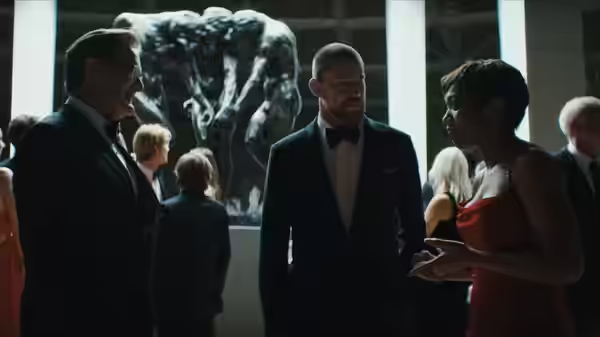
The smaller trouble is the men around Slater. Vic, Cody, Tom and Lucas are types the script recognises and never gets to know. Christian Slater and Simon Rex do what they can with a line apiece. Geena Davis is better served as Stacy, forever mislaying something and apologising for it, and gets laughs and a real shiver from a handful of lines. Kyle MacLachlan’s therapist is on screen for minutes and says almost nothing, which may be the joke.
The film is more interested in Slater than in Frida, and that is the fault that matters. She has no life we see outside her wanting him, so when the story asks us to care what she chooses, we take her mostly on Ackie’s face. Ackie’s face is good. It is not a script.
Worth an evening if the genre is yours; it carries a 15 and does not outstay its welcome. Go for the first hour, for Tatum, for Arjona, and for how well Kravitz makes the not-knowing look. Do not expect to be surprised by what is wrong on the island, only by how long it takes everyone to say so.