Ruben Östlund’s comedy about the super-rich contains one sequence, a captain’s dinner in a storm, as funny as anything we have seen in years. Around it sits a long, blunt film that repeats a point it made in the first ten minutes.
Ruben Östlund has spent two films, Force Majeure (2014) and The Square (2017), watching comfortable people fail small tests of character. Triangle of Sadness moves the experiment up the income scale, puts the subjects on a superyacht, and runs it in three chapters. It is his broadest and loudest film: one sequence in the middle is as funny as anything we have seen in years, and the two hours around it keep making a point that was clear before the boat left harbour.
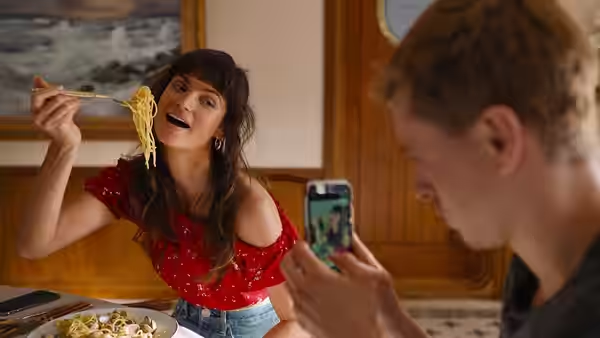
The first chapter is the sharpest written. Carl (Harris Dickinson) stands in a line of shirtless men at a casting while a presenter asks them to switch between a scowl for the expensive label and a grin for the cheap one, and Dickinson does both on command with a face that has learned what it is worth. Then he and his girlfriend Yaya (Charlbi Dean) go to dinner, the bill arrives, and she looks at her phone. The row runs from the table to a taxi to a hotel bed, and Östlund refuses to cut away from any of it. Dean is excellent, sweet and cold in the same breath, and Dickinson plays a man who knows he is losing and cannot work out which principle he is defending.
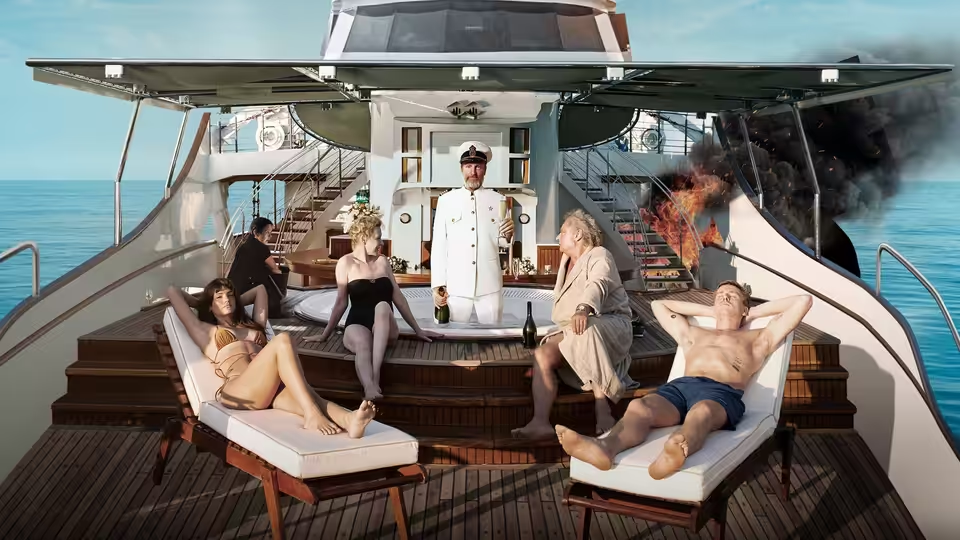
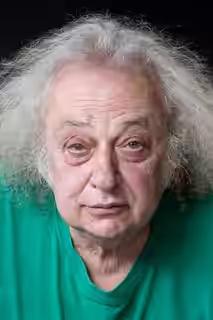
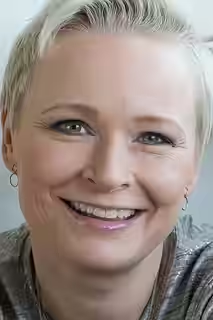
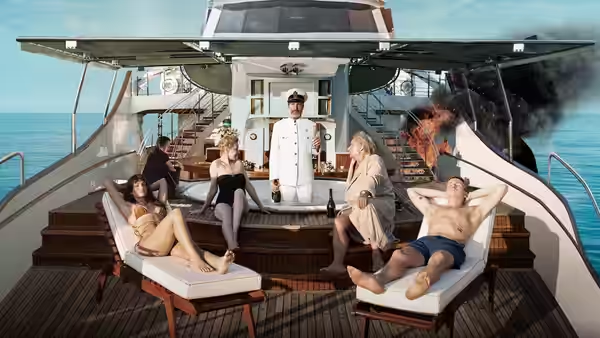
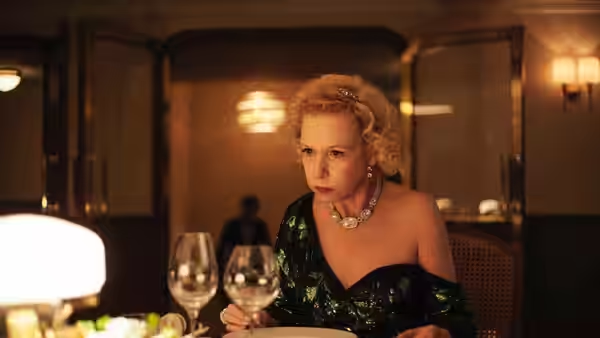
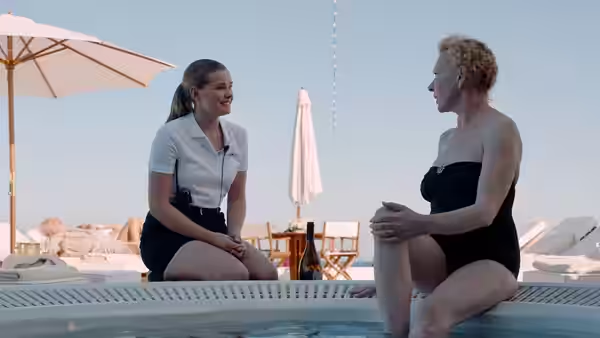
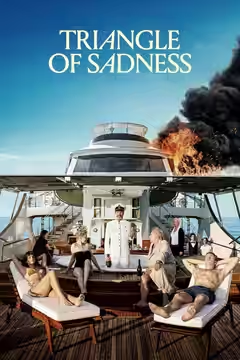
Then the yacht. Josefin Åsberg gives it white leather, blond wood and light coming off the water, so nothing on board can cast a shadow or hide a stain. Sofie Krunegård puts the crew in identical white and the guests in whatever they woke up in, so you can tell at a glance who works. Vicki Berlin’s Paula drills her staff to say yes to everything. The guests are Dimitry (Zlatko Burić), a Russian who made his fortune in fertiliser; his wife Vera (Sunnyi Melles); Winston and Clementine (Oliver Ford Davies and Amanda Walker), an English couple who make hand grenades; and Jarmo (Henrik Dorsin), a lonely tech millionaire. Burić is the pick, having a wonderful time.
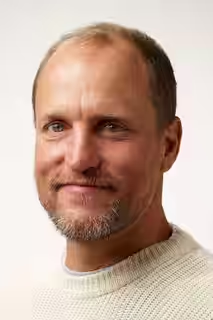
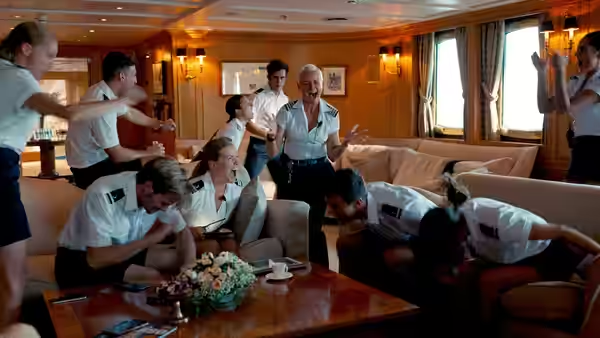
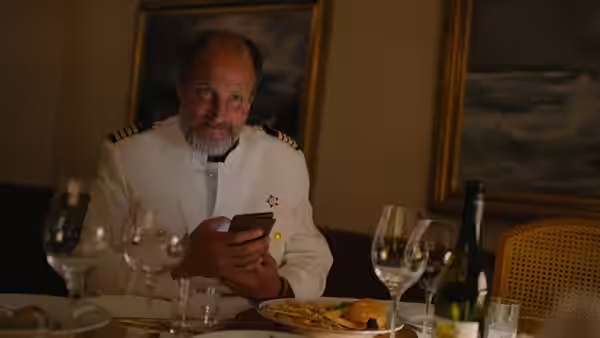
Woody Harrelson’s Captain stays in his cabin, drunk, until he is made to host the Captain’s Dinner, and Östlund schedules it for the night of a storm. What follows is about twenty minutes of physical comedy staged with rare precision. Fredrik Wenzel fixes the camera to the ship so the whole dining room tilts with it, and waiters skate across the frame with trays while the guests turn grey over their oysters. The soundtrack is retching, breaking glass and a tannoy over which the Captain reads Marx and Dimitry answers with Reagan, the two getting on famously while the guests are past caring. We laughed until it hurt, and afterwards felt slightly grubby about it. Sunnyi Melles, on the floor of a sliding lavatory, deserves some kind of medal.
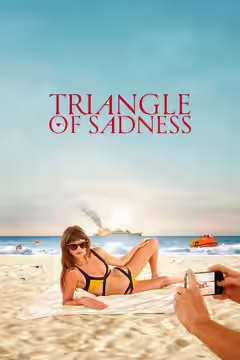
The third chapter puts a handful of survivors on a beach. We will not say how they get there. Dolly de Leon’s Abigail, who cleaned the yacht’s toilets and was invisible to everyone aboard, is the only one who can catch a fish or light a fire, and she notices what that makes her worth. De Leon is the best thing in the film, watchful and unsentimental. But the chapter is long, and Östlund and his co-editor Mikel Cee Karlsson let it run past the point where the material is doing anything new. Somewhere on that beach we started checking the time.
The complaint most critics make is that the targets are easy, and they are right, but that is not the problem. Force Majeure was also about a man behaving badly; the difference is that it let us think we might have done the same. Nobody watching this will mistake themselves for Dimitry, and the film knows it, and settles for letting us enjoy the disgrace of people who are not us. That is a good night out. It is not, as the film keeps implying, a diagnosis.
It runs 147 minutes and carries a 15, chiefly for the dinner. See it with people who do not mind being sick, and be ready, once the beach arrives, for the film to keep telling you something you already knew.