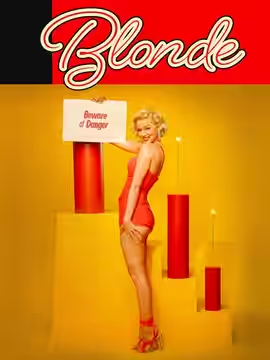
Ana de Armas is moving as Marilyn Monroe, but Andrew Dominik gives her too little to play beyond pain. Precise visual reconstructions cannot make 167 minutes of repeated suffering a satisfying portrait.
Andrew Dominik’s Blonde is a punishing, often skilfully made film that gives Marilyn Monroe too little to do beyond suffer. Adapted from Joyce Carol Oates’s novel, it treats her life as material for a nightmare rather than an orderly biography. That is a reasonable choice for a film about a woman overwhelmed by the image other people make of her. What is harder to accept is how seldom this 167-minute account becomes curious about the woman doing the work.
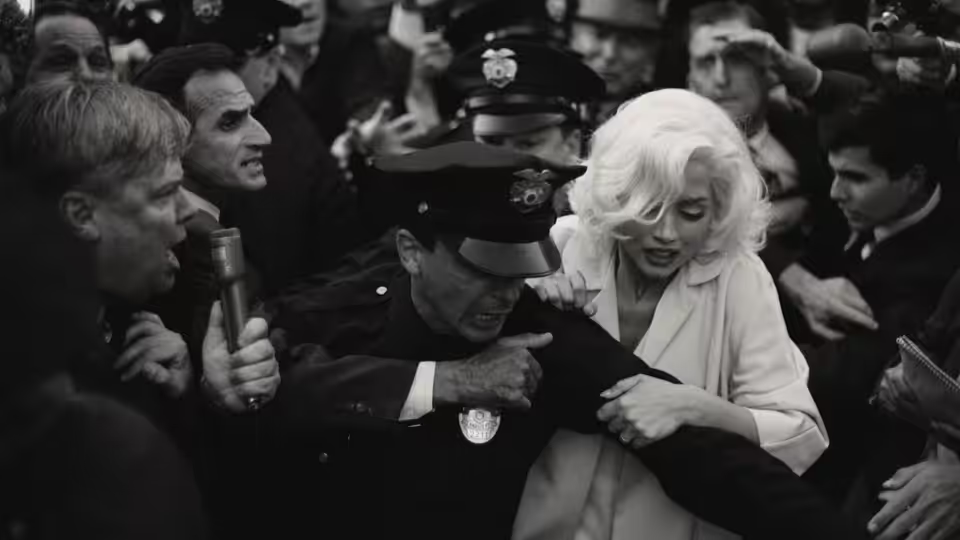
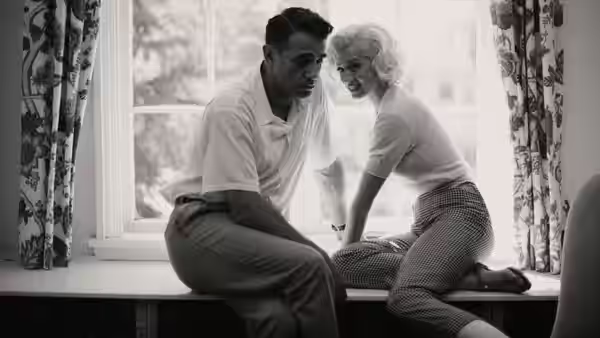
Ana de Armas makes the distance between Norma Jeane and Marilyn Monroe feel painful. Her performance allows us to see vulnerability without mistaking it for stupidity, and there is more sensitivity in her work than the role appears to permit. She gives us reason to want to spend time with this woman when the film seems interested chiefly in watching her be hurt. That is a substantial achievement in a part so restricted by the script.
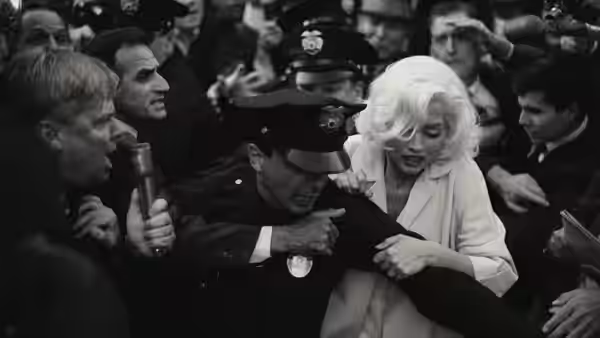
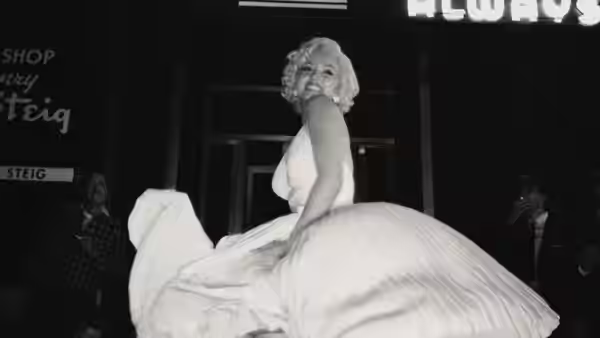
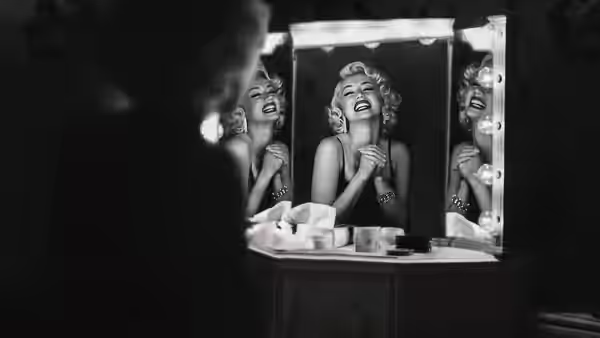
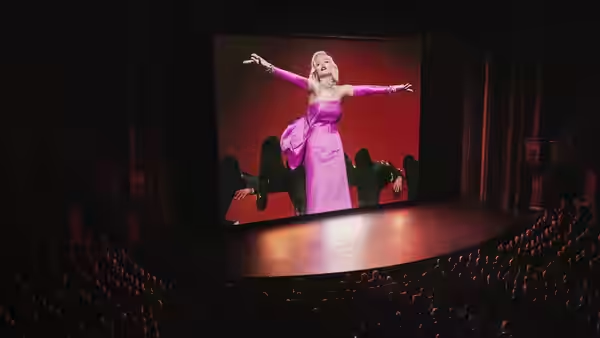
Chayse Irvin’s cinematography gives the recreated Monroe images a troubling familiarity: we recognise the picture before we have considered the person inside it. Florencia Martin’s production design and Jennifer Johnson’s costumes help make that recognition almost immediate. The reconstructions are exacting, and the unsettling effect suits a film about someone whose appearance attracts so much attention. We can appreciate the care without finding the results any more revealing about Monroe.
Adam Robinson’s editing arranges the material as a restless collage, which suits the film’s disturbed view of celebrity. The difficulty is that another passage of suffering tends to confirm what the previous one has already told us, however differently it is presented. Nick Cave and Warren Ellis provide music with more emotional range than the writing gives its central character. The score can make the sadness affecting, but it cannot make each return to it necessary.
We grew angry at the repeated sight of Monroe weeping, because the film gives those tears so much time and her intelligence so little. Suffering belongs in this story; the problem is the narrowness of the part Andrew Dominik has written for her. Humour, curiosity and the satisfaction of being good at a job would complicate that part, and the film seems unwilling to allow much of them. Ana de Armas remains sensitive even when the writing gives her little beyond distress.
The psychological horror in Blonde is forceful. Its cruelty and visual distortions can convey the fear of being watched, judged and used, and a reassuring account of fame would scarcely be more honest. But even a nightmare needs some variation if it is to hold us for this long. The repeated emphasis on helplessness makes the film less disturbing as it goes on, because there is increasingly little left to discover about its subject.
The performance and the care of the reconstruction will be enough for some viewers, and we would not dismiss either. Nor do we need a flattering portrait, or a checklist of professional achievements. We do need a film that can imagine Monroe having an interest beyond her own pain. Come for Ana de Armas only if you can tolerate the repetition.