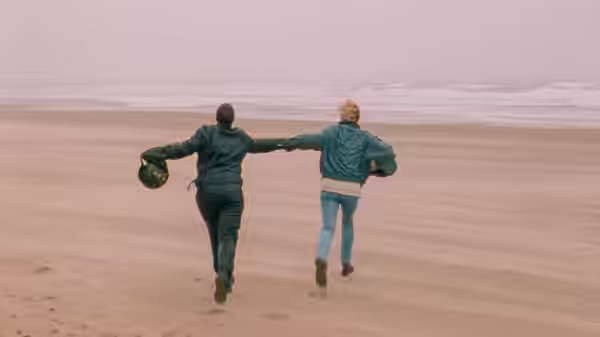
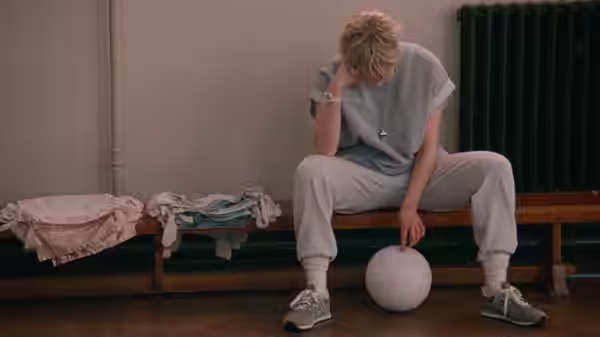
Georgia Oakley’s first film puts a closeted PE teacher in a Tyneside school in 1988, with Section 28 on the staffroom radio, and lets Rosy McEwen carry the fear on her face. It is precise and quietly angry, and once or twice it explains its own symbols to us.
Jean Newman teaches PE at a secondary school on Tyneside in 1988. In the staffroom the radio is discussing Section 28, the clause that told councils they could not promote homosexuality and told teachers like Jean exactly how welcome they were, and her colleagues chat across it about the weekend. Jean says nothing. Georgia Oakley’s first film, which she wrote as well as directed, is about what saying nothing costs a person over a term, and it is good enough that we would send you to it if the subject is anywhere near your interests.
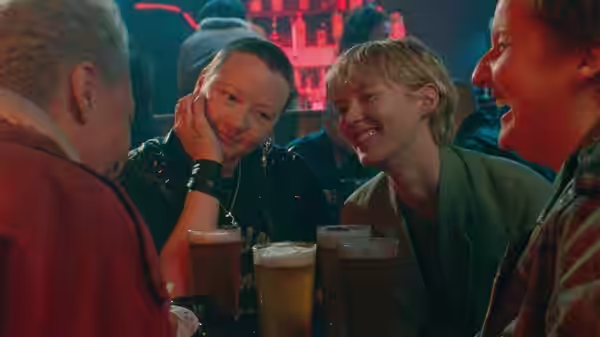
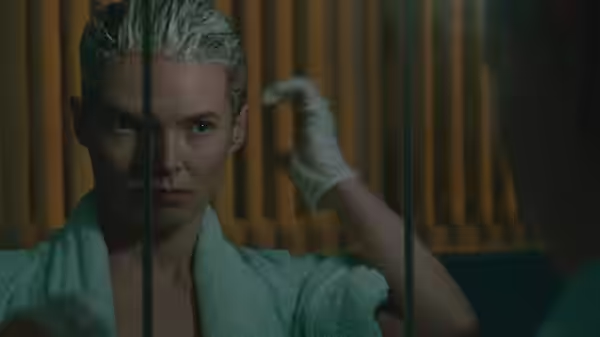
Most of the film is Rosy McEwen’s face, and it can take the weight. Jean has a bleached crop that she maintains at the bathroom mirror, and McEwen checks the roots the way other people check a locked door. Her voice changes between the school and Viv’s flat: clipped and pleasant in the corridors, lower and slower at home. Kerrie Hayes plays Viv as someone who came out years ago and has run out of patience with people who have not, and the two of them argue like a real couple, which is to say about small things standing in for the large one. Their scenes at the bar, where the women know each other’s names and someone is always at the pool table, are the warmest in the film.
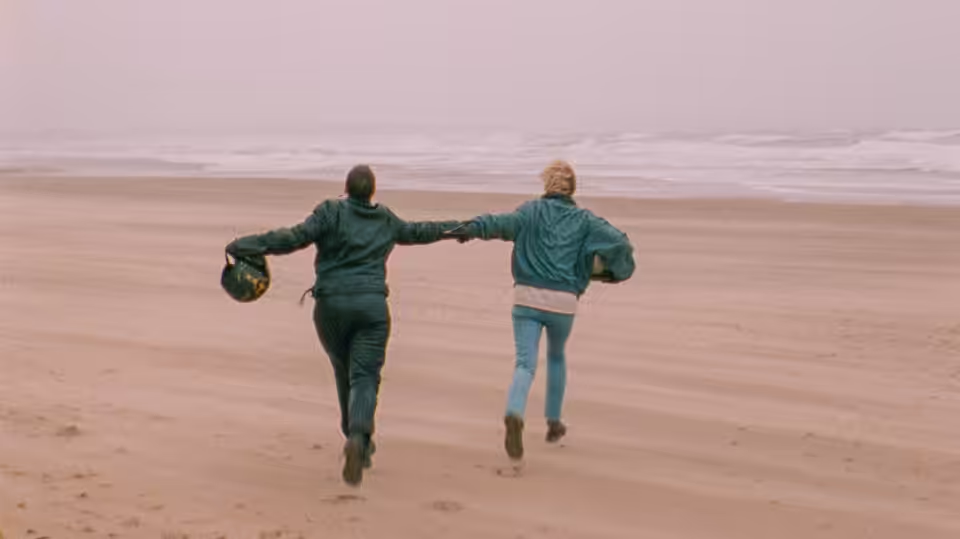
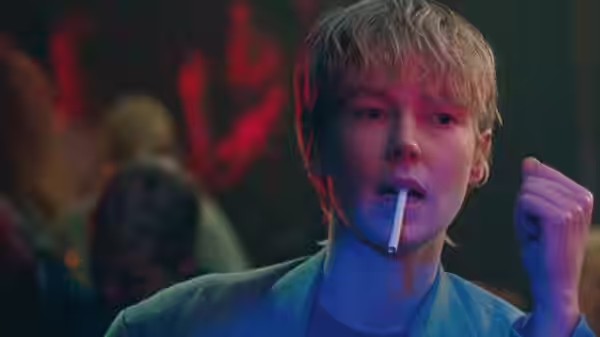
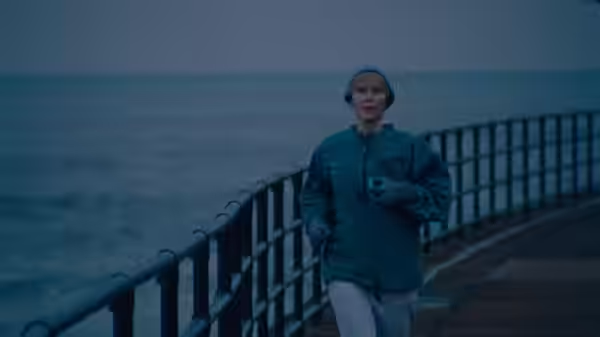
Victor Seguin shot it on 16mm, and the grain earns its keep. The school is green-grey and fluorescent, the changing rooms tiled and echoing, the bar lit orange and close. Soraya Gilanni Viljoen’s production design keeps Jean’s flat sparse, a television in the corner with Blind Date on it, a bed, not much on the walls, so that Viv’s place, with its posters and its women on the sofa, looks like somewhere a person could actually live. Izabella Curry cuts the school scenes short, in and out before Jean can be caught, and lets the bar scenes run, and the difference in rhythm does more to explain Jean’s two lives than any line of dialogue.
The scene that got us comes early, when someone from the school side of Jean’s life turns up on the other side of it, and we will not say who. Seguin holds on McEwen at a distance, with no music under her. Our stomach dropped before Jean’s face had finished changing. We knew, and she knew, that the wall between her two lives had just been walked through, and that nothing she did next would be free.
What holds the film back is a habit of saying things twice. The hair is a good image for a woman who keeps painting over what she is; the film then has a character remark on it. Blind Date on the television is a neat joke about a country that liked its courtship straight and public; the film returns to it until the joke is a thesis. Chris Roe’s score is low synthesiser, mostly, and it is right for the drive to the bar, but in the staffroom it presses on moments McEwen has already carried. And Lucy Halliday’s Lois, who is good, is written as a problem for Jean before she is allowed to be a girl, so that the pupils remain slightly less real than the adults.
The second half puts Jean in a position where protecting herself means failing someone else, and we will not say how. The turn is the right one for the film to make. It lands, though, a little like a lesson, with Jean’s choices arranged to demonstrate a point Oakley had already made in the first hour. We were angry watching it, which is partly the point, but a portion of the anger was at the film for underlining.
British films about this period tend to be loud and communal, marches and picket lines and a brass band. Oakley has gone the other way: one woman, one school, one bad law heard through a wall. That is the harder film to make, and she has made most of it. It is a 15 certificate and 97 minutes, and it does not waste them. If you were in a British school in 1988, on either side of the desk, expect to recognise the staffroom.