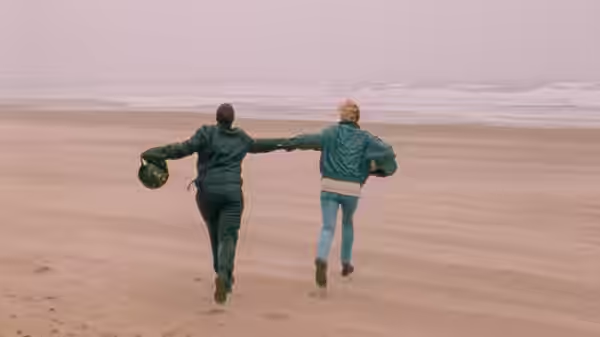
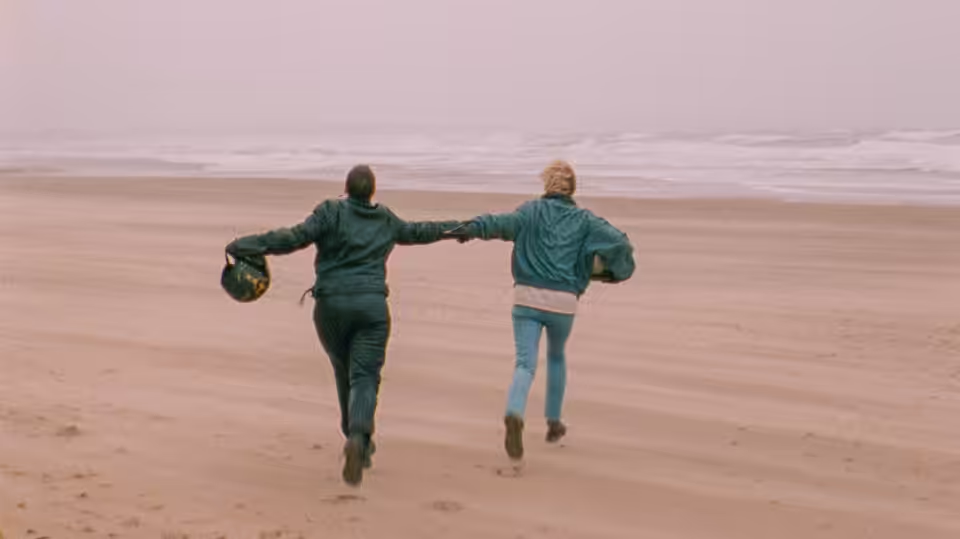
Two people run hand in hand across a broad, empty beach
Film review

Blue Jean

2023 · Directed by Georgia Oakley · 1h 37m

In a sentenceA teacher who bleaches her roots every week and still gets recognised in the wrong bar

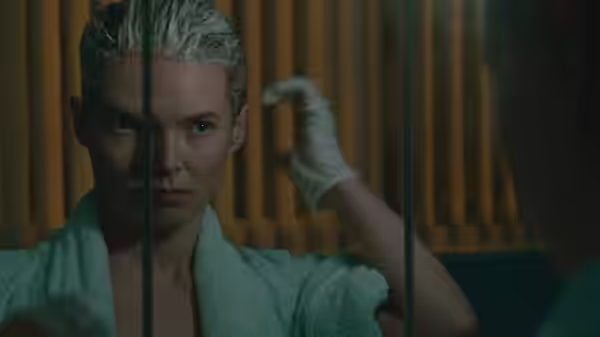
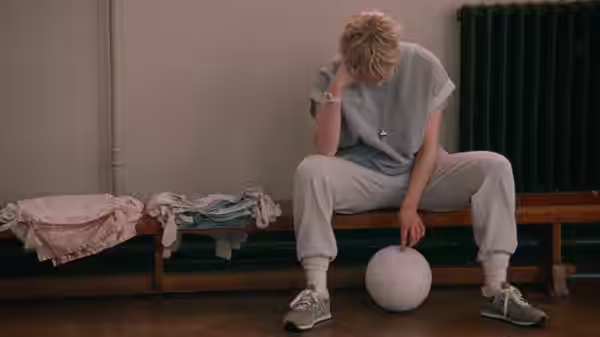
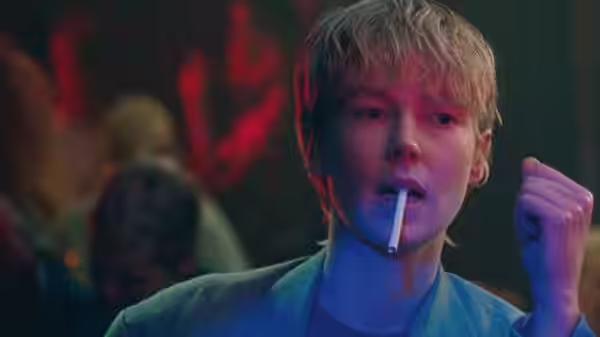
Tyneside, 1988. Jean Newman (Rosy McEwen) teaches PE at a secondary school, coaches the girls’ netball team and bleaches her hair blonde at the bathroom mirror. In the staffroom the radio carries the debate over Section 28, the clause that will forbid councils from promoting homosexuality, and her colleagues talk over it. Jean keeps quiet. At night she drives to a lesbian bar with her girlfriend Viv (Kerrie Hayes), who is out, shaven-headed and tired of Jean’s caution, and whose friends treat the bar as a second front room. A new pupil, Lois Jackson (Lucy Halliday), joins Jean’s class and is picked on by Siobhan Murphy (Lydia Page). Jean wants her two lives kept apart; a new law and a fifteen-year-old make that harder by the day.

Plays from YouTube when you press play; nothing loads from them until then.

Fi1m review

Georgia Oakley’s first film puts a closeted PE teacher in a Tyneside school in 1988, with Section 28 on the staffroom radio, and lets Rosy McEwen carry the fear on her face. It is precise and quietly angry, and once or twice it explains its own symbols to us.

Jean Newman teaches PE at a secondary school on Tyneside in 1988. In the staffroom the radio is discussing Section 28, the clause that told councils they could not promote homosexuality and told teachers like Jean exactly how welcome they were, and her colleagues chat across it about the weekend. Jean says nothing. Georgia Oakley’s first film, which she wrote as well as directed, is about what saying nothing costs a person over a term, and it is good enough that we would send you to it if the subject is anywhere near your interests.

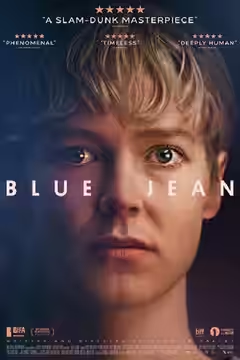
Most of the film is Rosy McEwen’s face, and it can take the weight. Jean has a bleached crop that she maintains at the bathroom mirror, and McEwen checks the roots the way other people check a locked door. Her voice changes between the school and Viv’s flat: clipped and pleasant in the corridors, lower and slower at home. Kerrie Hayes plays Viv as someone who came out years ago and has run out of patience with people who have not, and the two of them argue like a real couple, which is to say about small things standing in for the large one. Their scenes at the bar, where the women know each other’s names and someone is always at the pool table, are the warmest in the film.

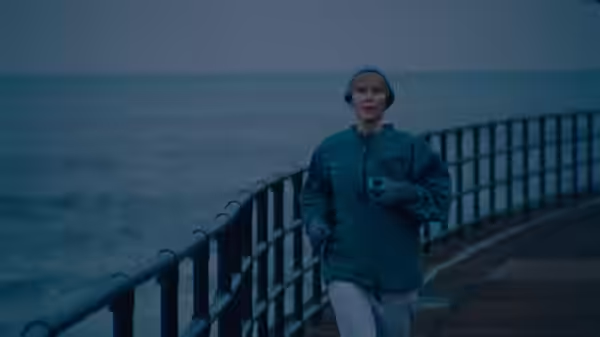
Victor Seguin shot it on 16mm, and the grain earns its keep. The school is green-grey and fluorescent, the changing rooms tiled and echoing, the bar lit orange and close. Soraya Gilanni Viljoen’s production design keeps Jean’s flat sparse, a television in the corner with Blind Date on it, a bed, not much on the walls, so that Viv’s place, with its posters and its women on the sofa, looks like somewhere a person could actually live. Izabella Curry cuts the school scenes short, in and out before Jean can be caught, and lets the bar scenes run, and the difference in rhythm does more to explain Jean’s two lives than any line of dialogue.

The scene that got us comes early, when someone from the school side of Jean’s life turns up on the other side of it, and we will not say who. Seguin holds on McEwen at a distance, with no music under her. Our stomach dropped before Jean’s face had finished changing. We knew, and she knew, that the wall between her two lives had just been walked through, and that nothing she did next would be free.

What holds the film back is a habit of saying things twice. The hair is a good image for a woman who keeps painting over what she is; the film then has a character remark on it. Blind Date on the television is a neat joke about a country that liked its courtship straight and public; the film returns to it until the joke is a thesis. Chris Roe’s score is low synthesiser, mostly, and it is right for the drive to the bar, but in the staffroom it presses on moments McEwen has already carried. And Lucy Halliday’s Lois, who is good, is written as a problem for Jean before she is allowed to be a girl, so that the pupils remain slightly less real than the adults.

The second half puts Jean in a position where protecting herself means failing someone else, and we will not say how. The turn is the right one for the film to make. It lands, though, a little like a lesson, with Jean’s choices arranged to demonstrate a point Oakley had already made in the first hour. We were angry watching it, which is partly the point, but a portion of the anger was at the film for underlining.

British films about this period tend to be loud and communal, marches and picket lines and a brass band. Oakley has gone the other way: one woman, one school, one bad law heard through a wall. That is the harder film to make, and she has made most of it. It is a 15 certificate and 97 minutes, and it does not waste them. If you were in a British school in 1988, on either side of the desk, expect to recognise the staffroom.

Critical consensus AI synthesised

80
Positive
18
Mixed
2
Negative
0

The reviews for Blue Jean are almost uniformly warm. Eighteen of twenty critics come down on the positive side, and the praise settles on one thing before anything else: Rosy McEwen’s performance as Jean, a teacher hiding her sexuality in Thatcher’s Britain. Critic after critic reaches for words like restrained, precise and tightly wound, and several single out the way her guardedness comes apart late on. Beyond her, most admire Georgia Oakley’s period detail, the 16mm photography and the contrast between the airless school and the warmth of Viv’s home.

The reservations are small and recurring. Several find the metaphors heavy-handed, some hear dialogue that sounds too modern for the 1980s, and the Los Angeles Times thinks the score occasionally overbears. The spread is narrow; even the two mixed notices concede the acting. The clearest dissent comes from Little White Lies, which calls the film timid and says it is vague about what Section 28 actually did to people.

Radio Times
★★★★★ · Molly Moss
100

The review praises the film as a stirring, poignant portrait of a lesbian teacher concealing her identity in Thatcherite Britain. It singles out Rosy McEwen’s enthralling performance and her portrayal of Jean’s growing anguish.

Read the full review →
The Guardian
12 February 2023 · ★★★★★ · Wendy Ide
100

Ide praises the film as a supremely accomplished and powerful debut. She singles out McEwen’s finely detailed performance and the film’s convincing period atmosphere.

Read the full review →
IndieWire
8 June 2023 · A- · Jude Dry
90

Dry praises the film as a politically resonant drama that balances personal struggle with queer joy. She singles out Rosy McEwan’s performance, especially its revelatory late scene.

Read the full review →
Variety
9 September 2022 · Critics Pick · Guy Lodge
85*

Lodge finds the film a quietly powerful, morally clear account of systemic homophobia, though it sometimes hesitates to make bolder choices. He particularly praises Rosy McEwen’s precise, restrained performance as Jean.

Read the full review →
Empire
6 February 2023 · John Nugent
82*

Nugent finds Blue Jean a stirring, gorgeously presented portrait of queer history, despite occasional lack of subtlety. He singles out Rosy McEwen’s striking, sensitive performance and screen presence for praise.

Read the full review →
Evening Standard
10 February 2023 · ★★★★ · Charlotte O'Sullivan
80

The critic finds the film brilliant and hopeful, with only minor issues in its metaphors and ending. She singles out Rosy McEwan’s compelling, exhilarating performance for particular praise.

Read the full review →

Straight answers AI written, from our review

Is Blue Jean worth watching?
Blue Jean is worth watching for anyone with an interest in Thatcher's Britain, Section 28 or a quiet drama built on one performance, and we scored it 77. Rosy McEwen carries the fear on her face and Georgia Oakley's film is precise and angry about what silence costs. It does, once or twice, explain its own symbols to us.
How long is Blue Jean, and what is it rated?
Blue Jean runs 1h 37m. It is a drama film.
Where can I watch Blue Jean in Mexico?
Blue Jean is streaming on Amazon Prime Video in Mexico, and it is also available to buy from Apple TV and Amazon Prime Video from MX$99.00. Availability is checked daily; the links above go straight to each service.
How violent or frightening is Blue Jean, and is it suitable for children?
Blue Jean is a 15 certificate, and its weight comes from fear and unkindness rather than violence: a closeted teacher, a bullied pupil, a law heard through a staffroom wall. There is nothing here to frighten the squeamish, but it is an adult drama about being found out, and younger children would be bored rather than upset. Older teenagers may recognise the school.
How does Blue Jean compare to My Beautiful Laundrette?
Blue Jean is the quieter and narrower of the two: one woman, one school, one bad law, while My Beautiful Laundrette is warmer, stranger and crowded with subplots and a romance nobody has planned for. The Frears film is the more generous evening and the funnier one. Oakley's is the tighter and more frightened, and it stays on a single face.
What should I watch after Blue Jean?
After Blue Jean, try My Beautiful Laundrette (1985, Fi1m 85): Thatcher’s Britain again, warmer and stranger, with a love affair nobody has planned for. Then Carol (2015, Fi1m 88): Another woman keeping a life in a separate drawer, shot with the same care for surfaces; and Weekend (2011, Fi1m 86): Nottingham, two men, forty-eight hours, and the same trust in a held face.

Cast

If you liked this, try…

  1. My Beautiful Laundrette (1985, Fi1m 85)Thatcher’s Britain again, warmer and stranger, with a love affair nobody has planned for.

  2. Carol (2015, Fi1m 88)Another woman keeping a life in a separate drawer, shot with the same care for surfaces.

  3. Rafiki (2018) · not on Fi1m yetTwo young women in Nairobi under a hostile law, filmed in colour rather than dread.

  4. Weekend (2011, Fi1m 86)Nottingham, two men, forty-eight hours, and the same trust in a held face.

  5. Pride (2014, Fi1m 82)The loud, communal version of the same decade, for when you want a march.