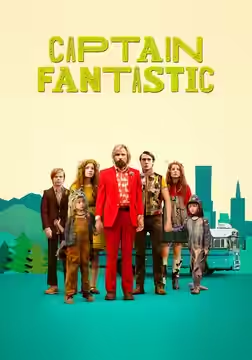
Viggo Mortensen is superb as a father who raised six children in the woods on Chomsky and knife drills, and the children are nearly as good. Matt Ross’s film likes him more than it should, and the last half hour cannot decide how to end.
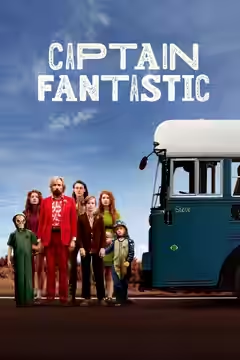
Matt Ross, who wrote and directed, has made a film about a man who took his family out of America to raise them properly, and about what happens when America gets them back for a fortnight. Ben Cash wants his six children strong, well read and unafraid of the truth, and by his own lights he has managed it: an eight-year-old can explain the Bill of Rights and the eldest can skin a deer. Captain Fantastic is warm, funny and well acted, and it is also a film that has decided its hero is right before the argument starts. That is the trouble with it.
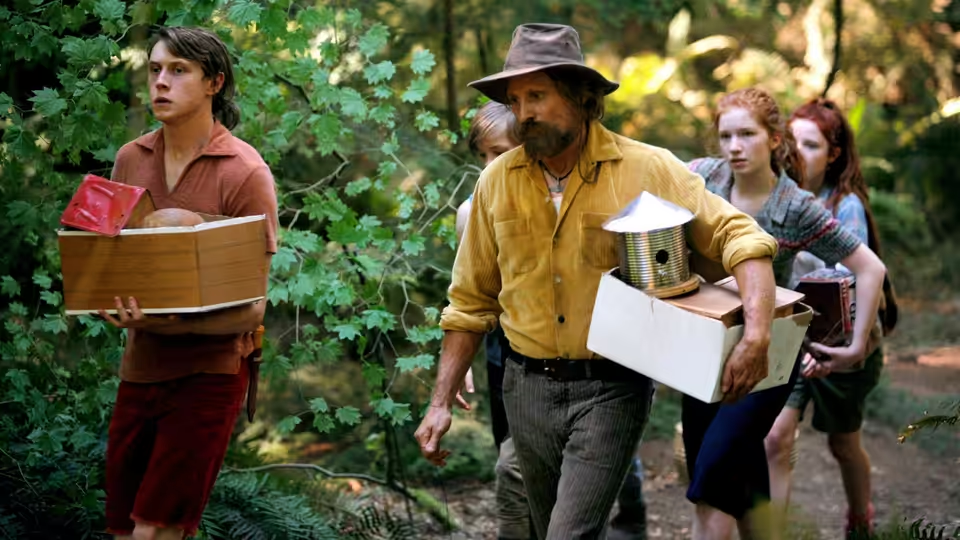
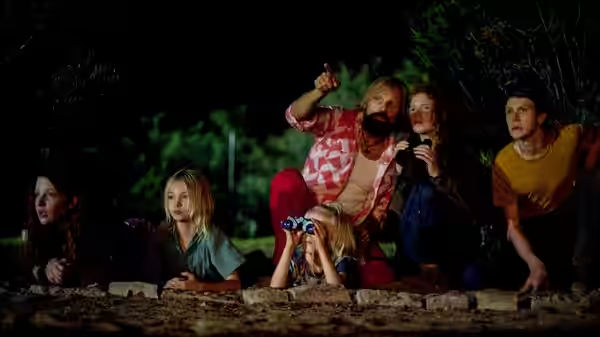
Mortensen is the reason to go. He plays Ben without a trace of the holy fool, a man who is intelligent and tender and also capable of sending a child on up a rock face with a hurt hand because pain is information. He listens to his children properly, which is rare on screen, and when he is wrong, as he often is, Mortensen lets us watch him hear it and refuse it. The children are nearly as good. George MacKay gives Bodevan a stiff, polite panic about every human being he meets who is not a relation, and Shree Crooks, as Zaja, delivers chunks of constitutional law with the seriousness of a child reading out a shopping list. Nicholas Hamilton’s Rellian is the one who wants out, and the film is at its best when it lets him say so.
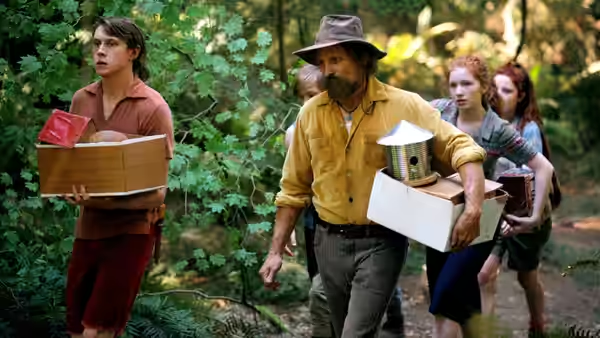
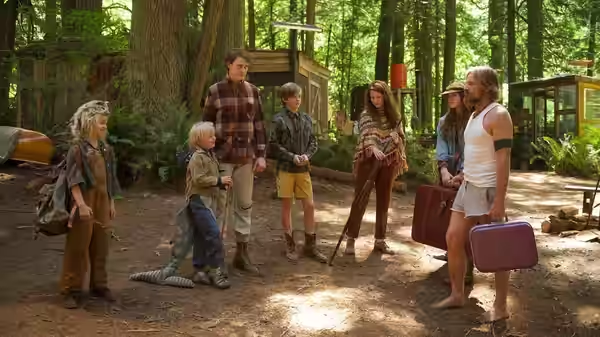
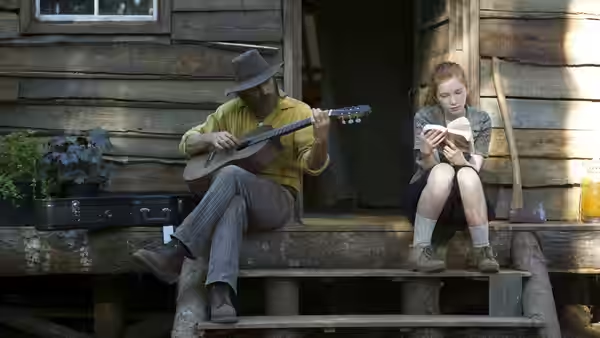
Stéphane Fontaine shoots the forest in green and gold, early light through high trees and a river that looks cold, and he gives the training runs the loose energy of home video. Russell Barnes builds the camp as a place people have lived in for years: hand-built shelters, a vegetable garden, shelves of split paperbacks under tarpaulin. Courtney Hoffman dresses the family in hand-stitched layers in the woods and then, for the funeral, puts Ben in a red suit and the children in colours that read as an insult to everyone in black, which is the intention. Alex Somers’s score is soft, chiming and reverent, and it tells us the woods are sacred rather more often than we needed telling.
The road is where the deck gets stacked. The family stops with Ben’s sister Harper (Kathryn Hahn) and her husband Dave (Steve Zahn), whose sons are handed a games console and a blank stare so that Zaja can out-argue them about the Constitution. We laughed, and then we noticed that nobody at that table had been allowed a sentence in reply, and the laugh went sour on us. It happens again in a diner, where the children gape at the size of the other customers, and again in a supermarket. The film keeps setting up rooms full of fools so that Ben can be the only adult in them.
Frank Langella’s Jack is the exception, and the film improves whenever he is on screen. He is rich, rigid and grieving, he believes Ben is dangerous, and Langella plays him so that we half believe it too. Ann Dowd, as his wife Abigail, gets even less to do than Hahn, and Leslie herself, the dead woman everyone is fighting over, is a photograph and a voice. For a film about a marriage that chose this life together, we learn remarkably little about the half of the marriage that was ill.
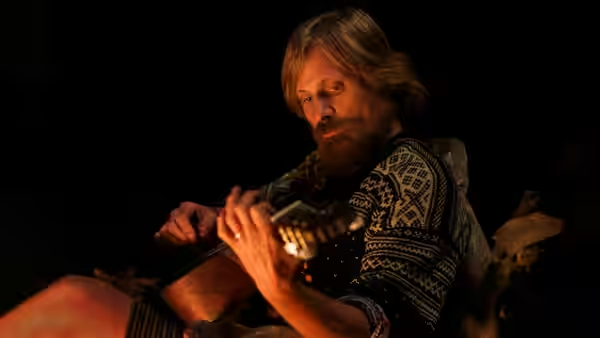
Joseph Krings cuts the forest half briskly and the last half hour as if the film cannot find the door. There are at least three points where it could stop, it stops at none of them, and each one softens the one before. And yet, somewhere in there, the children sing a song around a fire, and we were moved more than we had any right to be by a film we had been arguing with for an hour. It is the faces that do it, MacKay’s in particular, and for three minutes the film is about grief rather than about being right.
It is a comfortable film about an uncomfortable man. See it for Mortensen, for Langella and for the children, and bring someone who disagrees with Ben, because the film has not thought to. It runs 119 minutes and carries a 15.