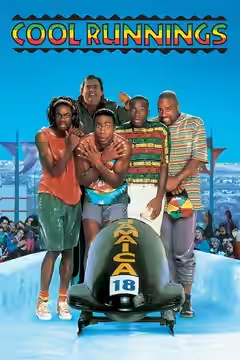
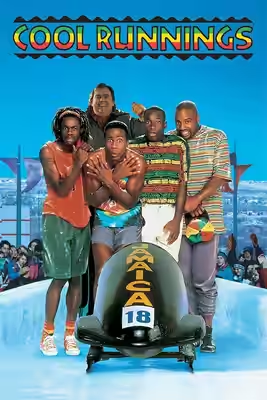
Jon Turteltaub’s underdog comedy about the Jamaican bobsled team is corny, loosely true and built from spare parts, and it works anyway. John Candy, playing it quiet, is the reason, along with four leads who refuse to be the joke.
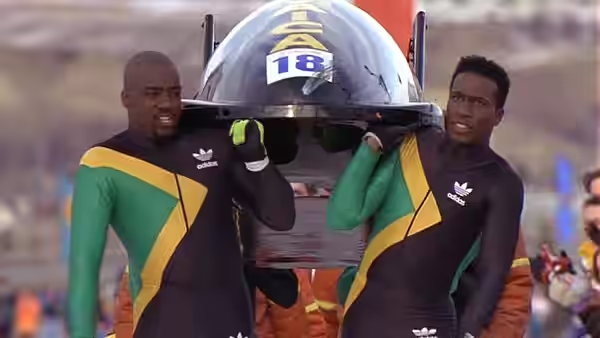
Jon Turteltaub’s film takes a true story that sounds like a joke, a Jamaican bobsled team at the Winter Olympics, and builds the most conventional underdog comedy it can around it. There is a disgraced coach, a rich boy with a disapproving father, a joker, a hard man and a sled painted in the national colours. Three writers share the screenplay, Lynn Siefert, Michael Goldberg and Tommy Swerdlow, with Siefert and Michael Ritchie credited for the story, and you can feel all of them agreeing that nobody should be surprised by anything. It reached British cinemas on 25 February 1994, it runs 98 minutes, and it goes exactly where you expect. We liked it a good deal more than that sentence suggests.
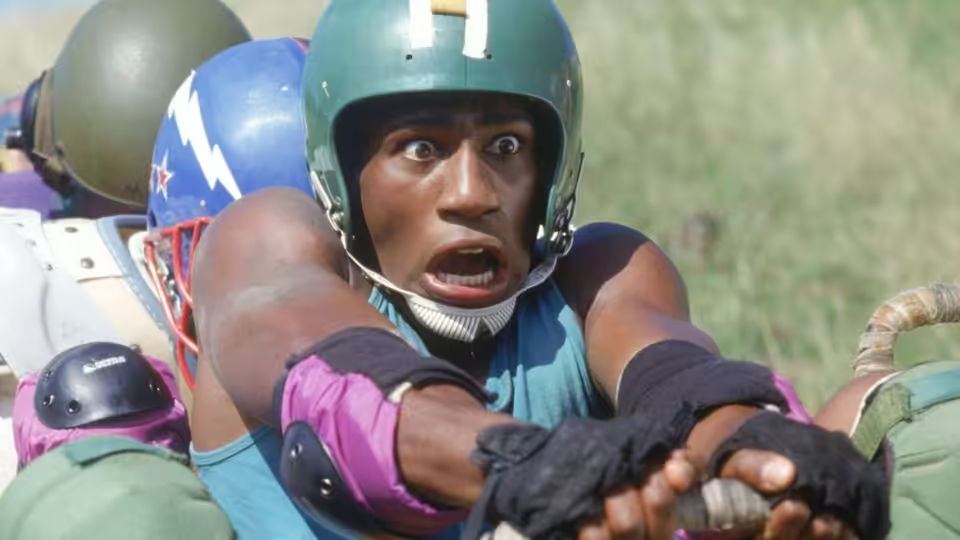
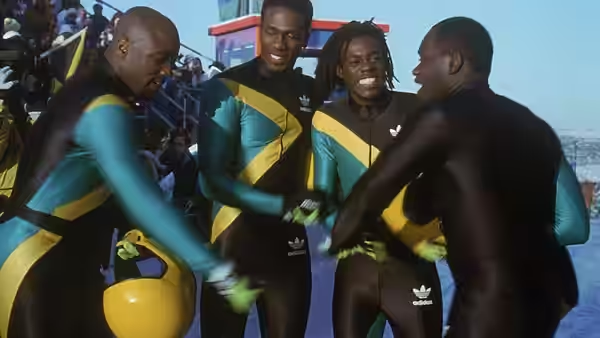
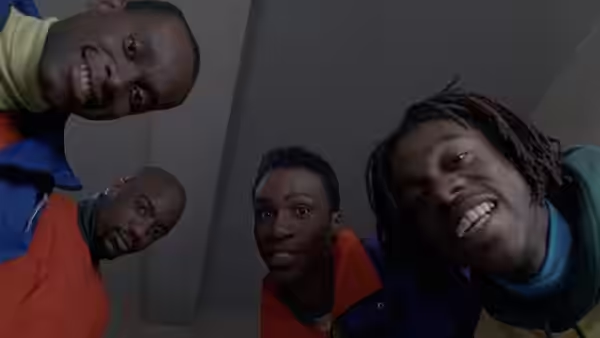
The four leads are the first reason. Leon Robinson plays Derice as a man who cannot picture not getting what he wants, and there is not a wink in the performance. Doug E. Doug’s Sanka has most of the jokes and plays them to his friends rather than to the camera. Rawle D. Lewis gives Junior a clipped, careful voice you can hear the father in, and Malik Yoba’s Yul Brenner, who keeps a picture of Buckingham Palace in his pocket, is the only one who seems to know the sport can hurt. The film lets them look foolish in a sled. It does not, mostly, ask us to laugh at where they come from.
John Candy is the second reason and the better one. Irv has lost his career and most of his self-respect and has stopped minding about either, and Candy plays him low and slow, with no pratfalls and hardly a raised voice. He is heavier and sadder here than the man who sold shower-curtain rings in Planes, Trains and Automobiles, and he lets the team’s noise go on around him without trying to match it. There is a conversation late on, which we will not detail, in which he tells Derice what a medal is worth and what it is not, almost in a murmur. It moved us more than a PG sports comedy has any business doing, and it did because Candy declined to sell the moment.
Phedon Papamichael shoots Jamaica in hot, saturated greens and yellows with the sea behind everything, then drops the team into a Calgary of white sky, grey concrete and strip lighting, so the cold looks colder for having seen the island first. Bruce Green cuts the runs from inside the sled, walls of ice slamming past at the edge of the frame, and they are the most exciting thing in the film; we gripped the arm of the sofa, and we had seen them before. Hans Zimmer puts steel pan and a reggae bassline under his rising strings, and the score knows to the second when to swell.
The flaws are the genre’s. The villains come off a shelf: Raymond J. Barry’s Kurt Hemphill is a committee man whose one trait is wanting the Jamaicans gone, and Peter Outerbridge’s Josef Grool is an East German who sneers in close-up. Bertina Macauley, as Derice’s wife Joy, gets a few scenes of encouragement and is then left on the island. There is a stretch in Calgary where the team tries to drive like the Swiss and has to learn to drive like themselves, and the lesson arrives when the schedule says it should. The story is based, loosely, on a real team, and the film’s interest in what actually happened stops at the premise. We laughed at Sanka shivering as he stepped off the plane, and then felt a little ashamed of ourselves, because the joke was built on nothing but the thermometer.
Set against the films it borrows from, it is a long way from The Bad News Bears, which Michael Ritchie directed in 1976 and which was a good deal less kind to its losers. Most critics have been about as warm as we are. The ones who called it predictable and the ones who called it cheering were both right.
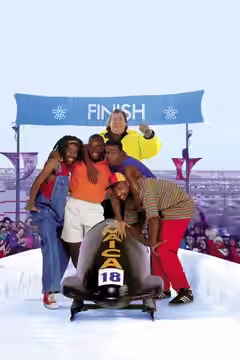
The finish is the part people remember, and we will not describe it except to say that the film gets there without a speech, which after everything before it counts as restraint. Watch it on a wet Sunday afternoon with somebody under twelve, and let them believe you do not know how it ends.