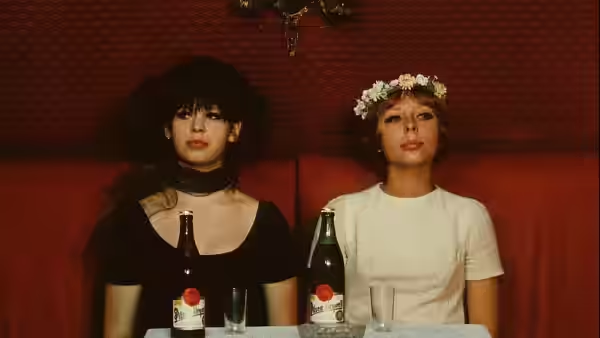
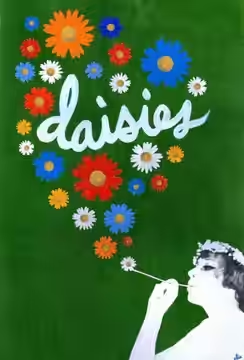
Věra Chytilová’s 1966 comedy about two young women who decide to be as spoilt as the world around them is 76 minutes of colour filters, scissors and enormous meals. It repeats itself and does not care; by the end, neither did we.
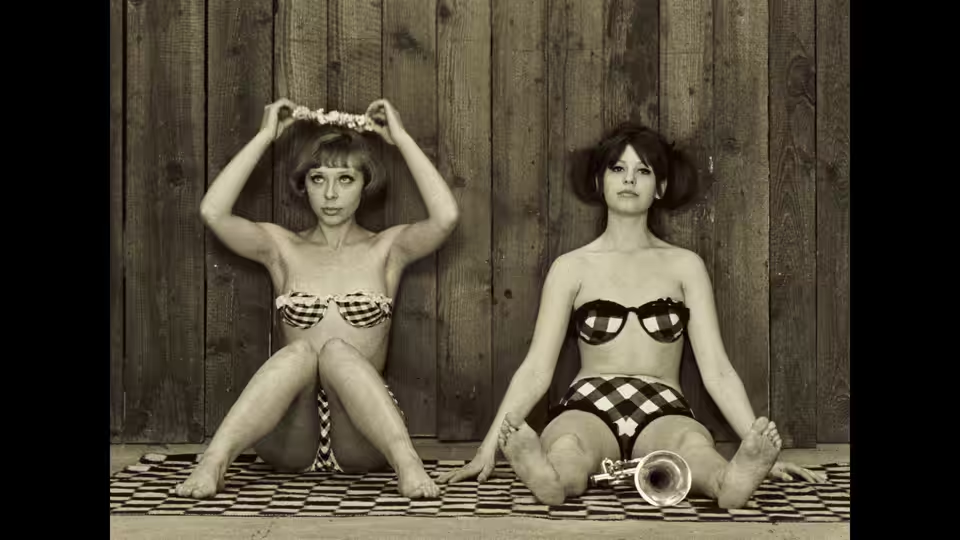
Daisies opens on a machine, a rusted wheel turning, intercut with aerial footage of bombs falling on a city. Then two girls in bikinis sit on a wooden deck, their arms creaking like an unoiled door, and agree that since everything in the world is going bad, they will go bad too. That is the premise of Věra Chytilová’s film, written with Ester Krumbachová from a story by Chytilová and Pavel Juráček, and she gets 76 minutes out of it without adding a plot. The two Maries want nothing but the next meal and the next man to pay for it.
We think it is one of the few films of its period that has kept all its nerve. Most critics rate it higher than we do, and our reservation is simple: it is a single joke told a dozen ways, and some of the ways are better than others. The good ones are good enough to carry the rest, and the film has the sense to be short.
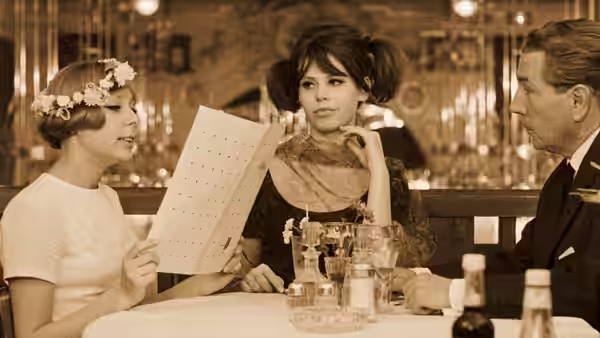
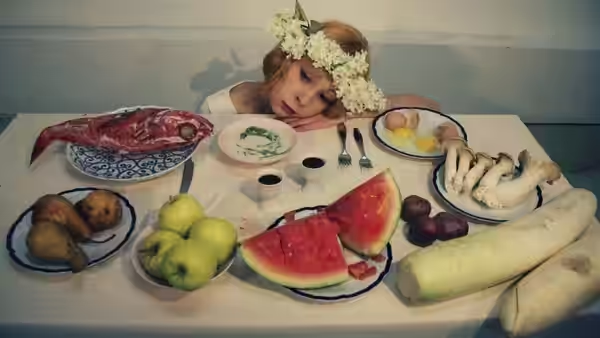
Jitka Cerhová and Ivana Karbanová play the two Maries, and neither of them acts in any ordinary sense. They squeal, pose, kick their legs in the air and speak in slogans. The routine they run on men is the film’s best gag. An Elderly Gentleman (Julius Albert) takes one Marie to a restaurant; the other arrives uninvited and orders everything she can see, and the two of them eat while he watches his money go. Then they walk him to the station and wave him onto a train with such sincerity that he believes it. We laughed hardest at the waving, and kept laughing each time it came round.
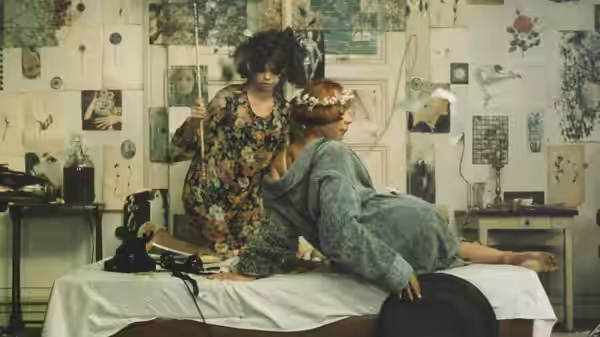
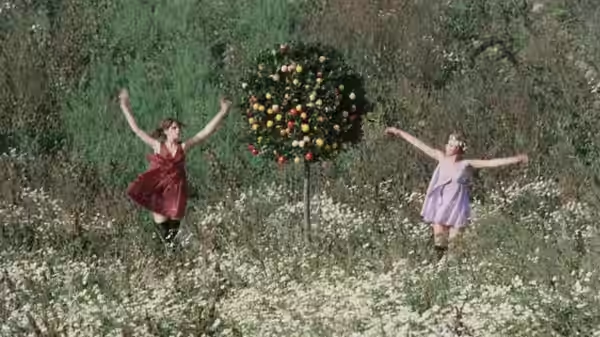
Jaroslav Kučera shoots almost every scene in a different colour. The film is in full colour, then black and white, then tinted red or blue or sepia, sometimes switching within a single shot, and Miroslav Hájek’s cutting refuses to smooth any of it over. There is a scene in the girls’ flat we will not describe, in which the game turns on the two of them, and it is the one moment the film stopped being funny for us and became alarming. Chytilová holds it long enough for that to land, then cuts.
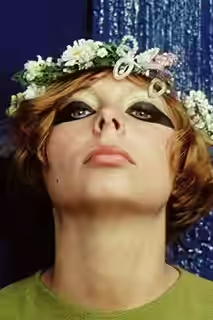
Jiří Šust and Jiří Šlitr’s music is brass and oom-pah and scraps of dance tune, undercut throughout by the sound effects: the hinge creak of the girls’ limbs, a train whistle. Krumbachová, designing the costumes, dresses the Maries like dolls someone has been careless with, short shifts and stockings and flower crowns, then puts them in evening gowns for a nightclub they cannot behave in. Karel Lier’s flat fills with the leavings of what they have eaten. Nobody clears up. Jan Klusák’s Young Gentleman, a butterfly collector who declares his love to a Marie hiding behind two of his glass cases, gets the film’s one tender scene, and then the same treatment as everybody else.
The faults are real. The men are props, and after the third has been put on a train the routine has said what it has to say. The nightclub sequence, in which the girls heckle a dancing couple, runs past the point where we were enjoying their rudeness; we found ourselves checking how much was left, which in a 76-minute film is not a good sign. And the politics are asserted rather than shown. The bombs at the start tell us that the girls’ appetite has something to do with a world that wastes people; the film never quite draws the line itself.
Among the films of the Czechoslovak new wave, Daisies is the wildest, more a collage than a story. It is sharper than the later films about two girls against the world because it does not like its heroines any more than it likes their victims. It watches them the way they watch a plate of cakes.
Do not eat beforehand. The food in it looks lovely or disgusting depending on the tinting, and by the end you will not be sure which. There is no BBFC certificate on record. We would show it to a teenager with an argumentative streak, and then put the scissors somewhere high.