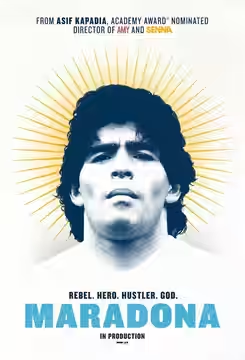
Asif Kapadia’s documentary is worth seeing for its football and its unnervingly intimate archive. It is less persuasive about Diego Maradona’s choices, and its 130 minutes could use a firmer cut.
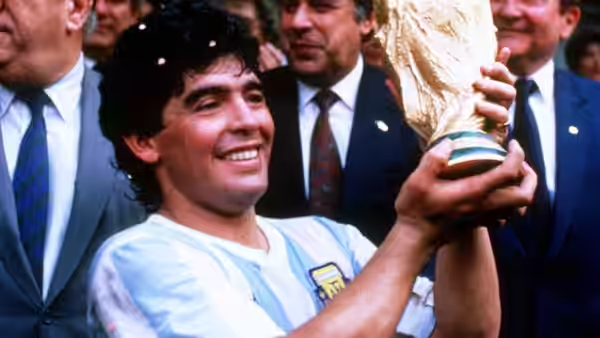
Asif Kapadia’s Diego Maradona is worth seeing for the football and for the unnerving closeness of its archive footage. We can watch the skill, understand why the attention gathers and sense how tiring it must be to remain its centre. The difficulty comes when the film wants to explain decisions made away from the pitch. Its sympathy is persuasive, but we finish with questions about its subject that a documentary of this length has had time to address.
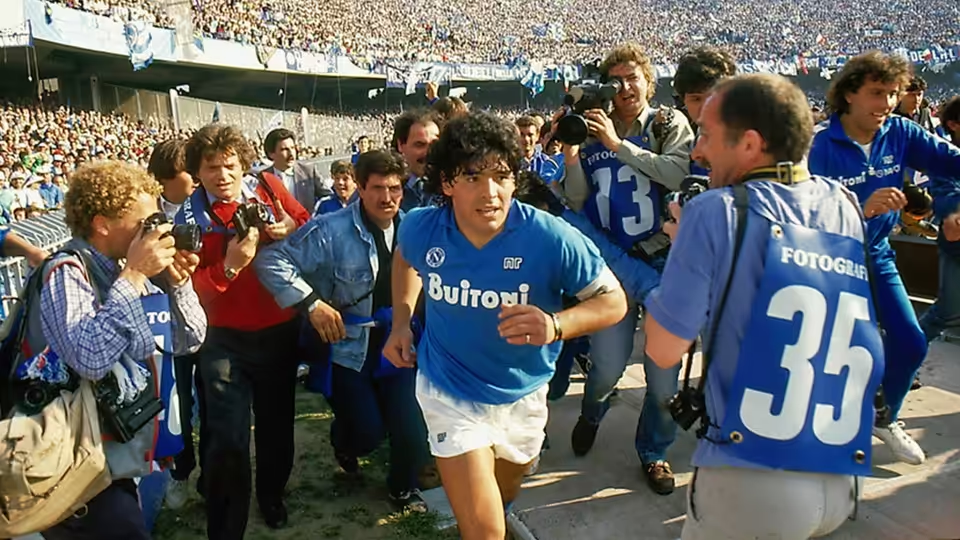
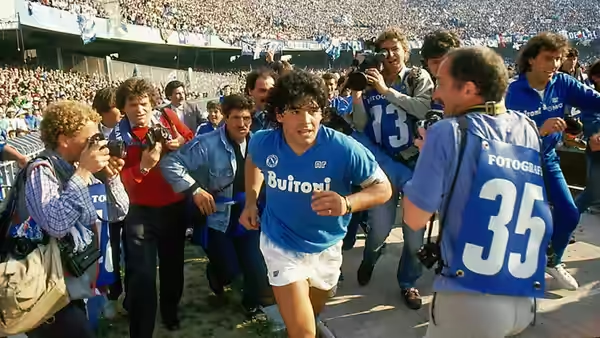
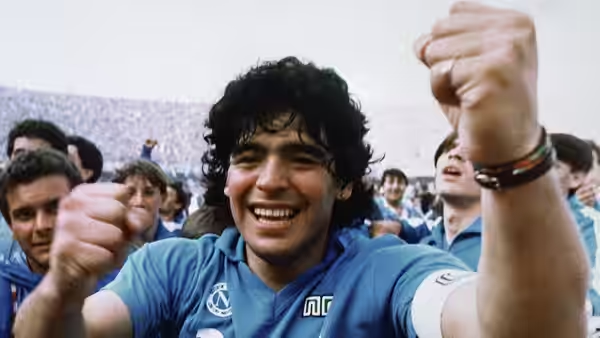
Editor Chris King gives the match footage urgency without reducing it to a hurried demonstration of greatness. The cutting allows us to appreciate why this player commands attention, rather than simply accepting that he does because a documentary has been made about him. That matters before the film asks us to worry about the demands that follow success. Amid the commotion around SSC Napoli, the skill remains clear enough to justify watching for the football alone.
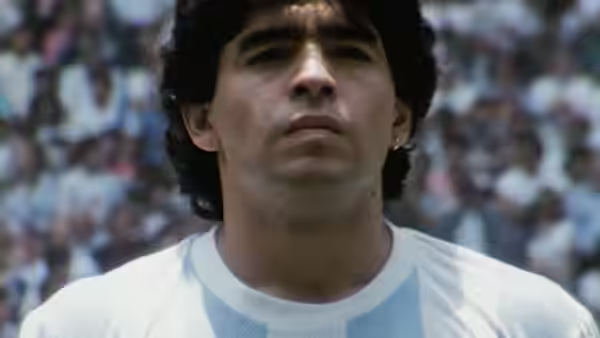
The quieter footage is where the film does its more affecting work. We were moved by the silent Christmas-party sequence, in which Diego Maradona looks painfully alone. Asif Kapadia gives that face enough attention for the excitement surrounding the football to recede, and the man’s unhappiness becomes difficult to overlook. It is an intimate moment, and it provides firmer grounds for sympathy than another account of how hard it is to be famous.
Antonio Pinto’s music is less useful when it underlines feelings already evident in the images. The score is not a serious obstacle, but we seldom need prompting to recognise the strain on a face. Asif Kapadia’s reliance on archive footage keeps us close to his subject, with few opportunities to settle into the comfortable distance of hindsight. The pictures sustain interest through some passages that would otherwise feel familiar.
The problem is how readily public pressure becomes an explanation for conduct off the pitch. Asif Kapadia is attentive to the demands placed on his subject, but we wanted more scrutiny of the choices that remain his own. Sympathy need not prevent difficult questions, and the film sometimes settles for making us feel the strain when it should be asking them. We are shown enough contradiction to resist a simple account of a gifted man damaged by fame, yet the documentary keeps nudging us towards one.
At 130 minutes, it also gives that explanation more time than it needs. Chris King’s energetic editing works within the individual passages, but the larger progression can feel repetitive: more attention, more pressure, another suggestion that nobody could bear it. By then, the accumulation is adding less to our understanding than the early footage promised. A shorter film would not necessarily answer the missing questions, but it might make the limits of what these images can tell us feel less frustrating.
The standard for a sporting portrait cannot be that it makes its subject entirely knowable. There is value in leaving us with an awkward look or an unanswered question, particularly when the available images resist a simple explanation. We would have welcomed more of that uncertainty here, instead of repeated reminders of the burden of celebrity. Football fans should make time for it, but should not expect every private choice to become clear.