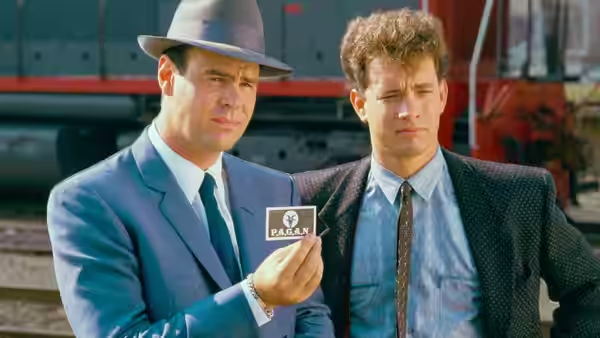
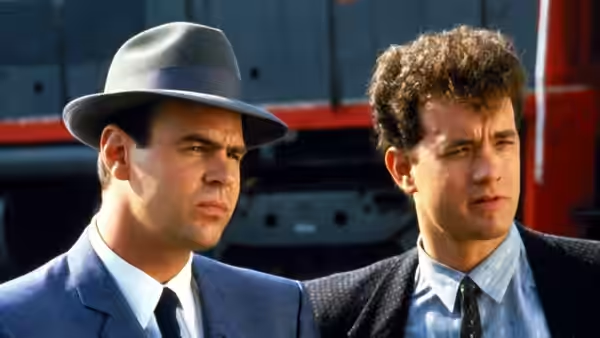
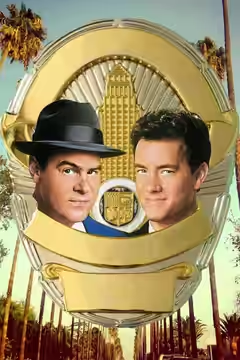
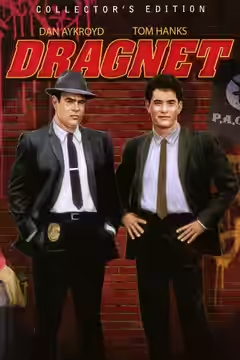
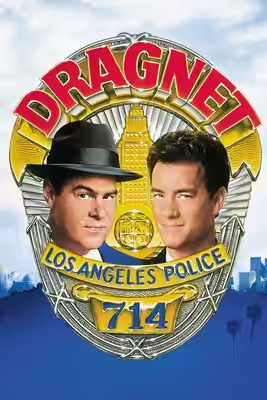
Dan Aykroyd and Tom Hanks find a workable comic rhythm in Dragnet, but the disguises, sacrifice plot and car chases keep interrupting it. There are laughs here, just not enough for a recommendation.
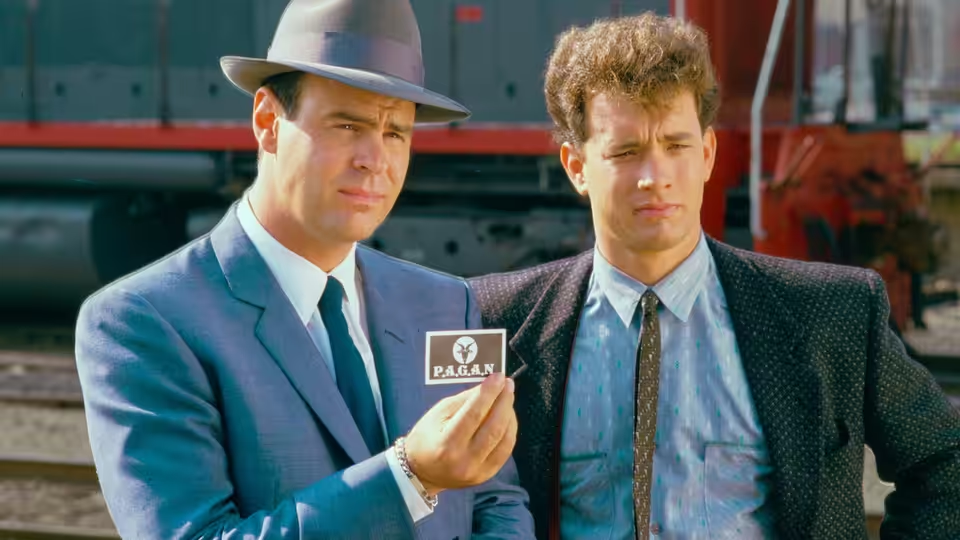
Tom Mankiewicz directs Dragnet as a police spoof that keeps finding things to do when it needs things to laugh at. Dan Aykroyd and Tom Hanks make an appealing pair, and their exchanges offer enough pleasure to suggest a better comedy. The pagan-sacrifice plot and car chases make the film harder work than it ought to be. At 106 minutes, this is a mixed evening, with good performers asked to keep weak material going.
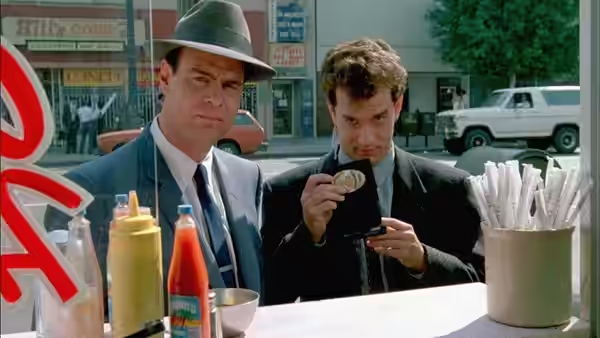
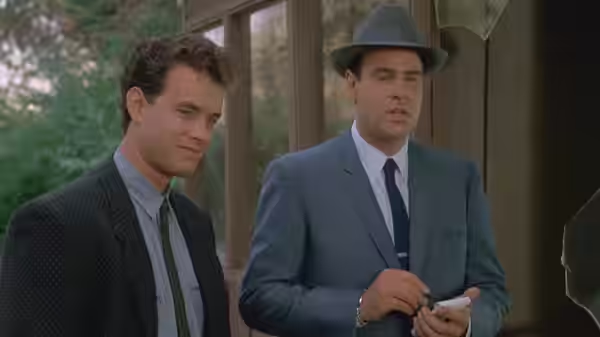
Dan Aykroyd gives Sgt. Joe Friday a solemnity that is funny before the writing has done much at all. We laughed at his urge to lecture: he makes Friday’s disapproval feel like a professional obligation. He does not need a disguise or a chase to establish the joke. The limitation is that the character’s old-fashioned certainty becomes tiresome when the script simply lets him go on, without finding a fresh reason for us to enjoy listening.
Tom Hanks helps because Pep Streebeck gives that certainty something to contend with. His less predictable presence keeps the pairing from becoming a prolonged demonstration of Friday’s peculiarities. Their chemistry is the film’s most dependable pleasure, though even a willing double act cannot make every detour worth taking. Christopher Plummer is another asset as Reverend Jonathan Whirley, bringing enough comic assurance to make us wish the supporting material gave him more useful work.
The screenplay, by Alan Zweibel, Dan Aykroyd and Tom Mankiewicz, has a habit of treating a new costume as a new joke. Disguises can be funny, but here they too often interrupt the verbal comedy without supplying much in return. The sacrifice material has the same difficulty: its oddness is asked to do most of the work. Police parody needs a sharper sense of what deserves to be mocked than the script consistently provides.
The car chases are a poor use of the film’s time, however much activity they provide. The cinematography, credited to Robert C. Thomas and Matthew F. Leonetti, serves these passages without giving us much comic reason to watch them. Robert F. Boyle’s production design has a similarly thankless assignment in supporting the pagan-sacrifice business. The trouble with these sequences is that their setting and activity command attention long after the jokes have stopped earning it.
William D. Gordean and Richard Halsey handle the editing, and the balance between conversation and action never feels settled. Too much time passes between the exchanges that make the partnership enjoyable. Ira Newborn supplies the music, but the difficulty sustaining a comic rhythm begins with the writing, beyond anything a score could repair. The film keeps asking its performers to recover our interest after another stretch of plot, which becomes a wearing way to spend a comedy.
Save it for an evening when a few good comic performances will be enough. Anyone looking for a tightly worked police spoof is likely to become impatient with the time spent getting from one laugh to the next. There is no need to give the car chases your undivided attention.