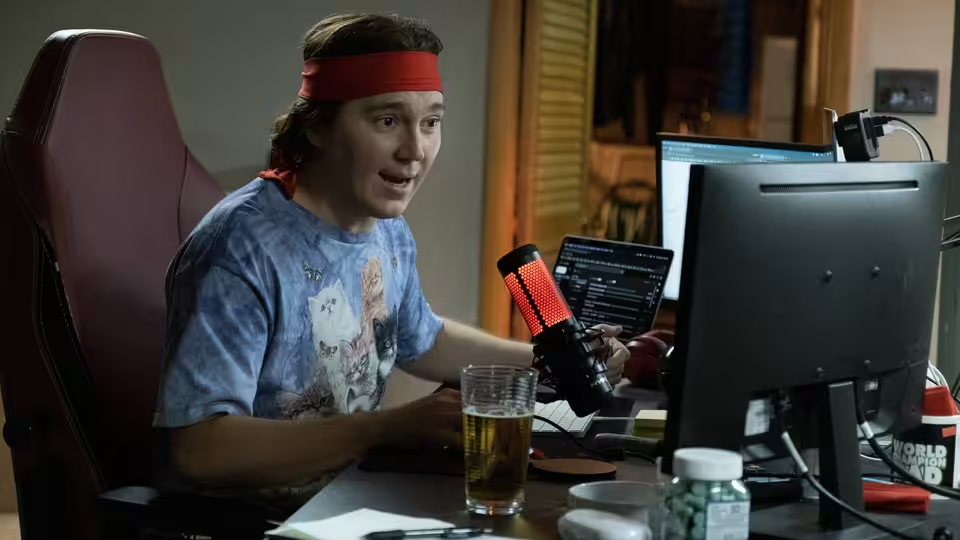
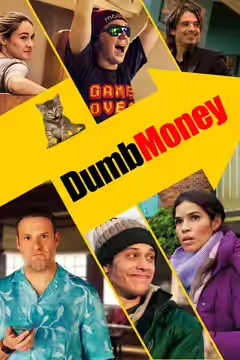
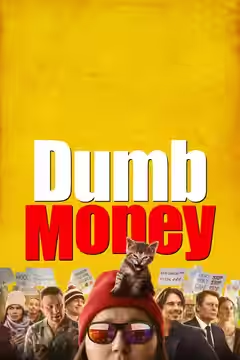
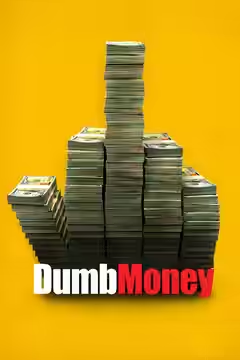
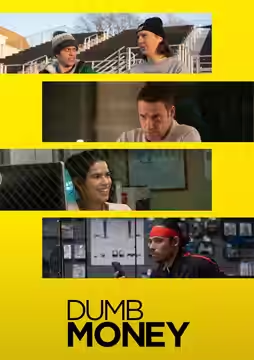
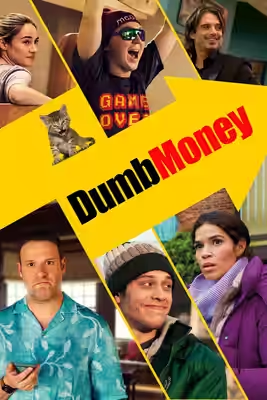
Craig Gillespie’s account of the GameStop squeeze is quick, well cast and easy company, with Paul Dano doing more with a headband and a webcam than the script gives him. It explains the numbers and has nothing to say about them.
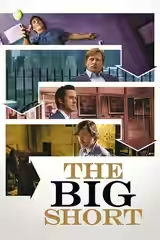
In January 2021 a video-game shop nobody had thought about in years became, for a few weeks, the most talked-about stock in America, because a man in a basement in a red headband said so on the internet and a great many people believed him. Craig Gillespie’s film tells that story quickly and cheerfully and from a dozen angles, in the manner of The Big Short (2015), with title cards for the jargon and cutaways to whoever is about to lose the most. It is easy to watch and easy to like. It is also thin, and it gets thinner the longer you think about it.
Paul Dano plays Keith Gill, a financial analyst by day and by night Roaring Kitty, who streams his GameStop thesis to a handful of viewers with a beer in one hand and a chicken tender in the other. Dano does the thing he does best, which is to make an awkward man seem entirely sure of one thing, and he does it without asking us to find Gill adorable. Watch him take a breath before he presses go live, or absorb his brother’s mockery without looking up from the spreadsheet. The film never quite explains why Gill believes in this company. Dano makes the believing look like work, and that carries the first hour.
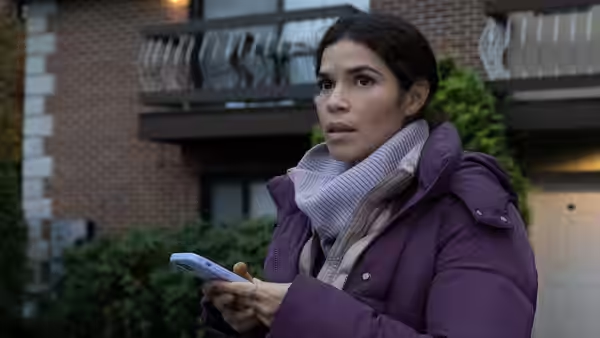
Around him Gillespie arranges the people who followed. America Ferrera’s Jenny is a nurse with two children who buys shares on her phone between shifts. Anthony Ramos’s Marcos works the till at a GameStop and is patronised by his manager. Myha’la and Talia Ryder play students who cannot agree on how much to believe. These strands are where the film is warm, and Ferrera has its best moment, standing in a hospital corridor in a mask, refreshing a number on her screen, saying nothing. It moved us more than we expected, because for once the film let a face do the work instead of a caption.
Nicolas Karakatsanis shoots rich and poor in the same flat winter light, so the difference is all in the square footage: Gill’s basement with its posters and cables against Gabe Plotkin’s kitchen, which is being extended while he is on the phone losing money. Scott Kuzio’s sets make the film’s point better than its dialogue does. Everyone is at home, everyone is in front of a screen, and what changes from room to room is what the screen cost. Kirk Baxter, who cut The Social Network (2010), keeps it all moving at a pace that suits a story told in hourly price updates. The trouble is what he is asked to cut to. Gillespie keeps splicing in the Reddit posts and memes that fed the squeeze, and on a cinema screen they land like someone reading their phone aloud. Will Bates’s score is mostly buried under pop songs chosen for swagger, and the songs are there to tell us this is exciting.
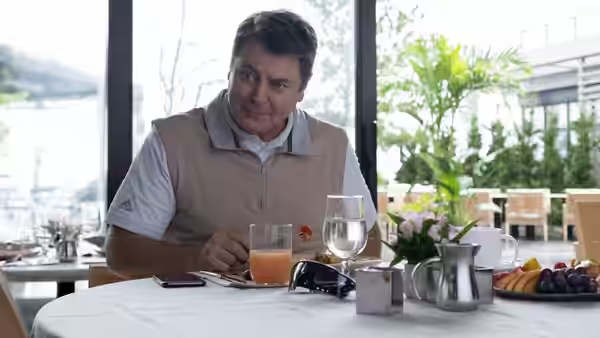
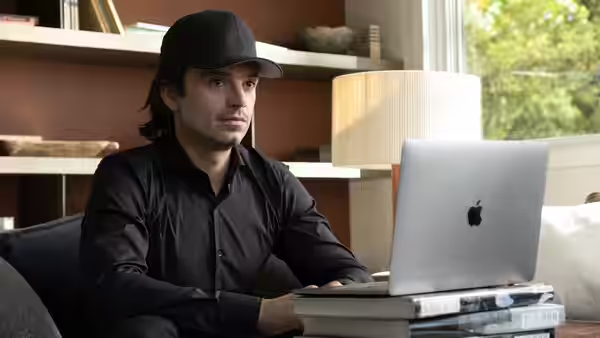
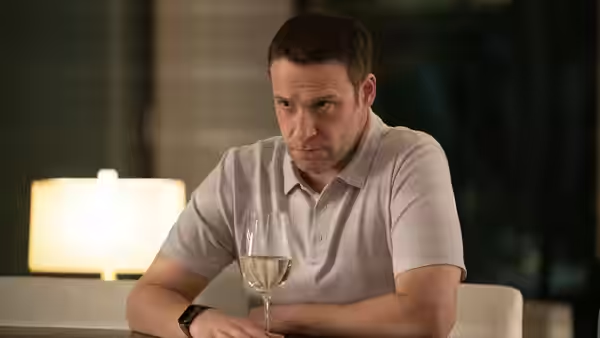
The other side of the trade is played as cartoon. Seth Rogen gives Plotkin a hangdog decency the film does not know what to do with. Nick Offerman’s Ken Griffin and Sebastian Stan’s Vlad Tenev, the man behind the Robinhood app, are men in good shirts saying calm things on calls, and we are invited to boo. Pete Davidson, as Gill’s brother Kevin, is given one running joke about delivering food and eating it, and it runs out after two appearances. Shailene Woodley, as Caroline Gill, has the job of worrying at the kitchen table, and does it.
Gillespie’s I, Tonya (2017) had a proper argument with its audience about who gets laughed at. This film has no argument with anyone. The script, by Lauren Schuker Blum and Rebecca Angelo, wants the small investors to win and the hedge funds to lose, tells us, correctly, that the market was rigged, and never asks whether a crowd wagering its savings on a dying shop has won anything. Most critics have been kinder than we are, and we understand why: the cast is good company and the running time is short. But by the last half hour we were bored of watching people look at phones, and then a little cross that a story about money had so little to say about it.
See it with someone who followed the story as it happened; you will have more to say afterwards than the film does. It runs 105 minutes and carries a 15 certificate.