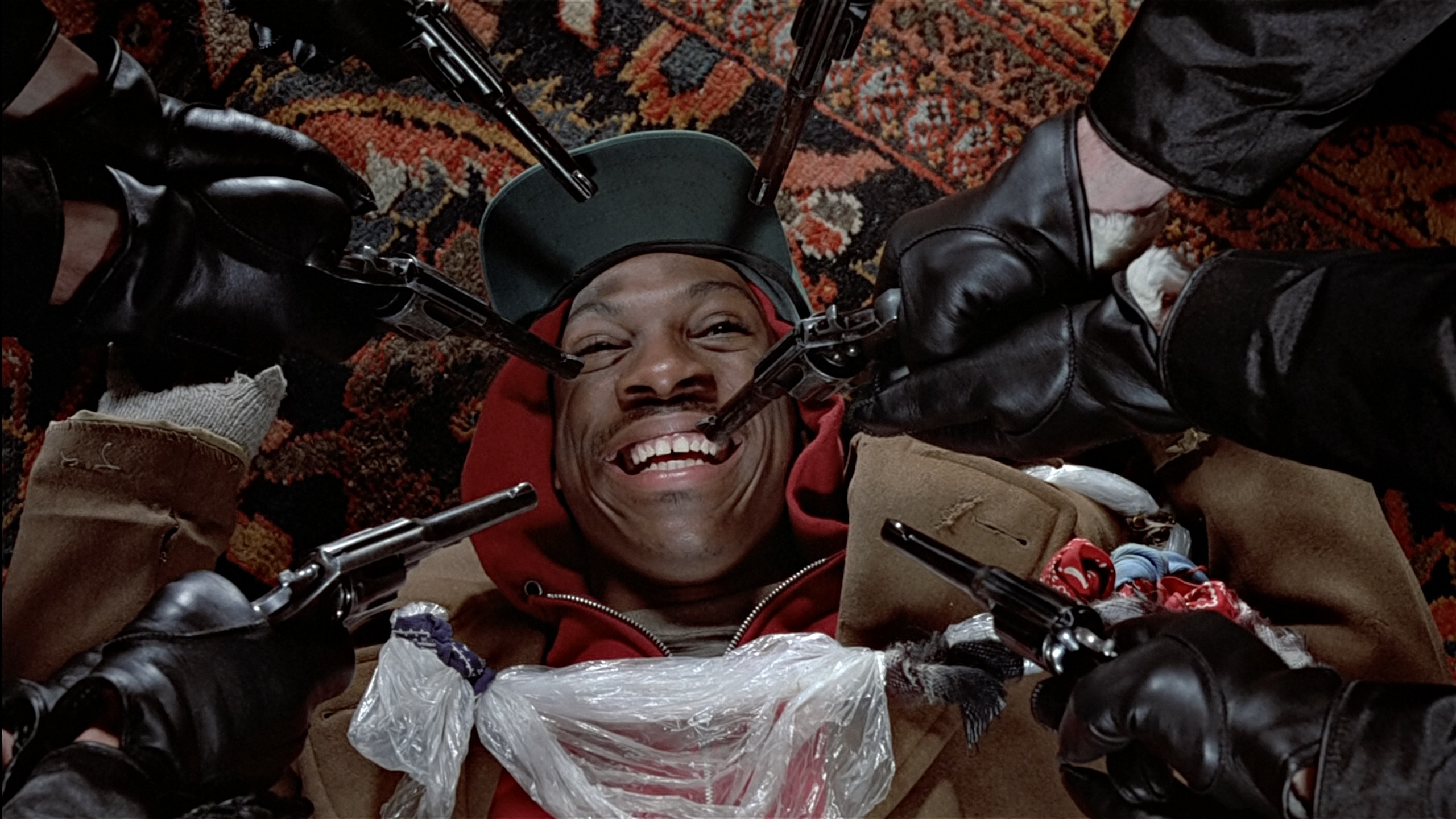
John Landis’s comedy of exchanged fortunes is funny enough to survive its timid politics. Eddie Murphy and Dan Aykroyd lead a cast that makes familiar jokes work, though the middle could use a firmer edit.
John Landis has a good comic subject here: rich men so accustomed to getting their own way that other people’s lives become material for a wager. Trading Places is a thoroughly enjoyable farce, with a cast that keeps finding laughs in this unpleasant arrangement. Its social criticism is less determined, and the slack middle is noticeable, but neither weakness ruins the pleasure of watching these actors work. The screenplay by Timothy Harris and Herschel Weingrod understands how much comedy there is in watching proud men adjust to being treated differently.
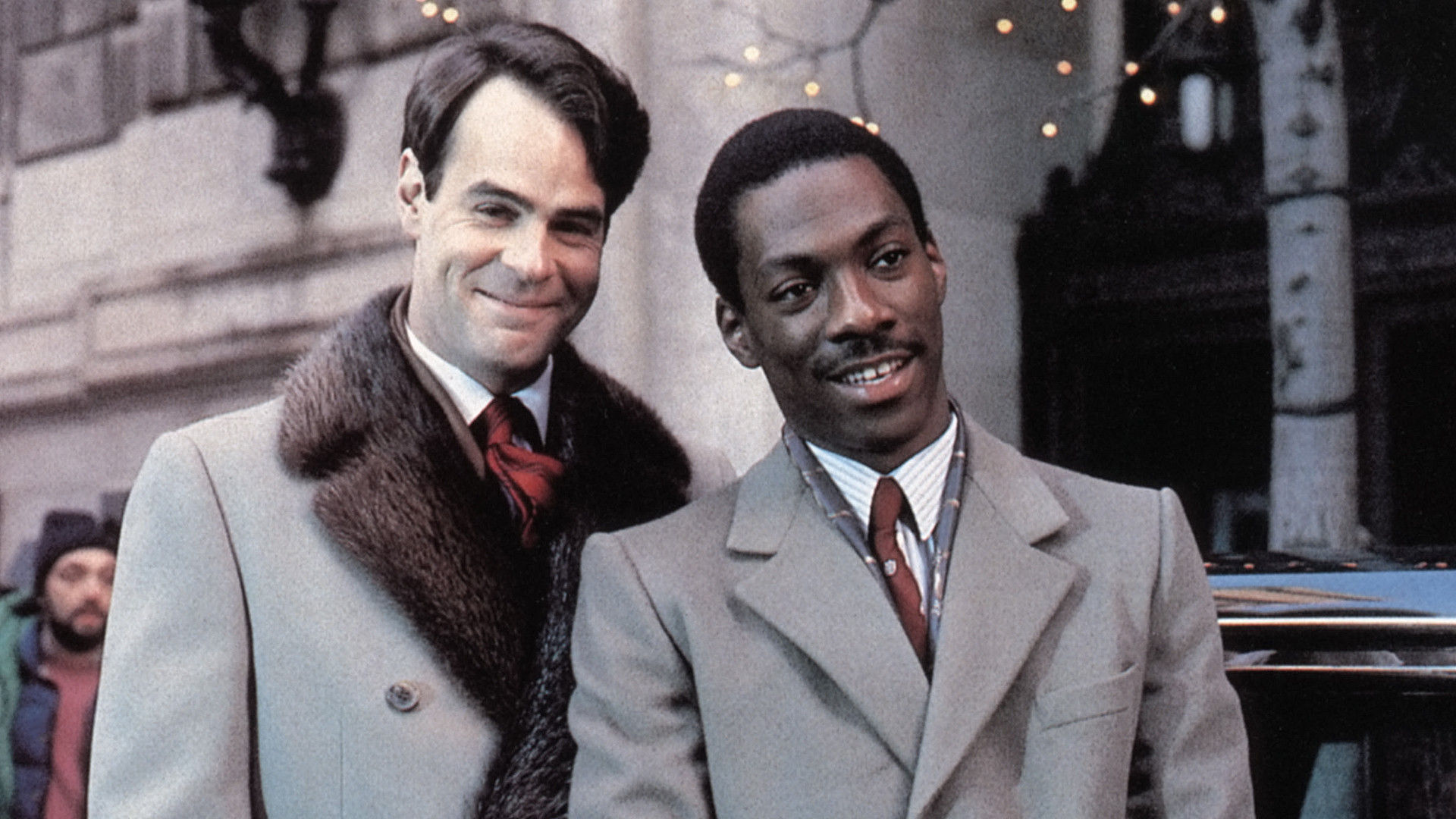
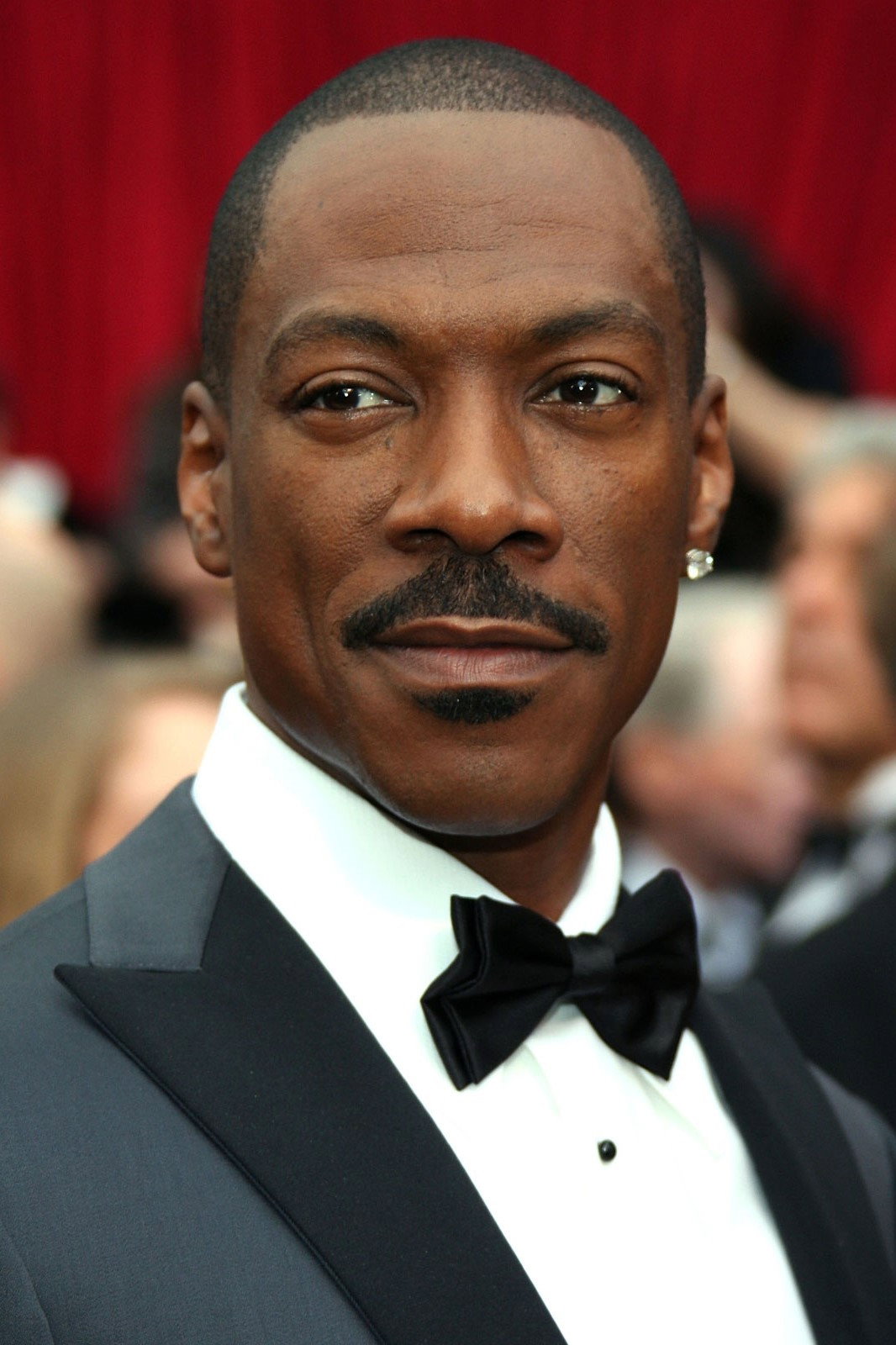
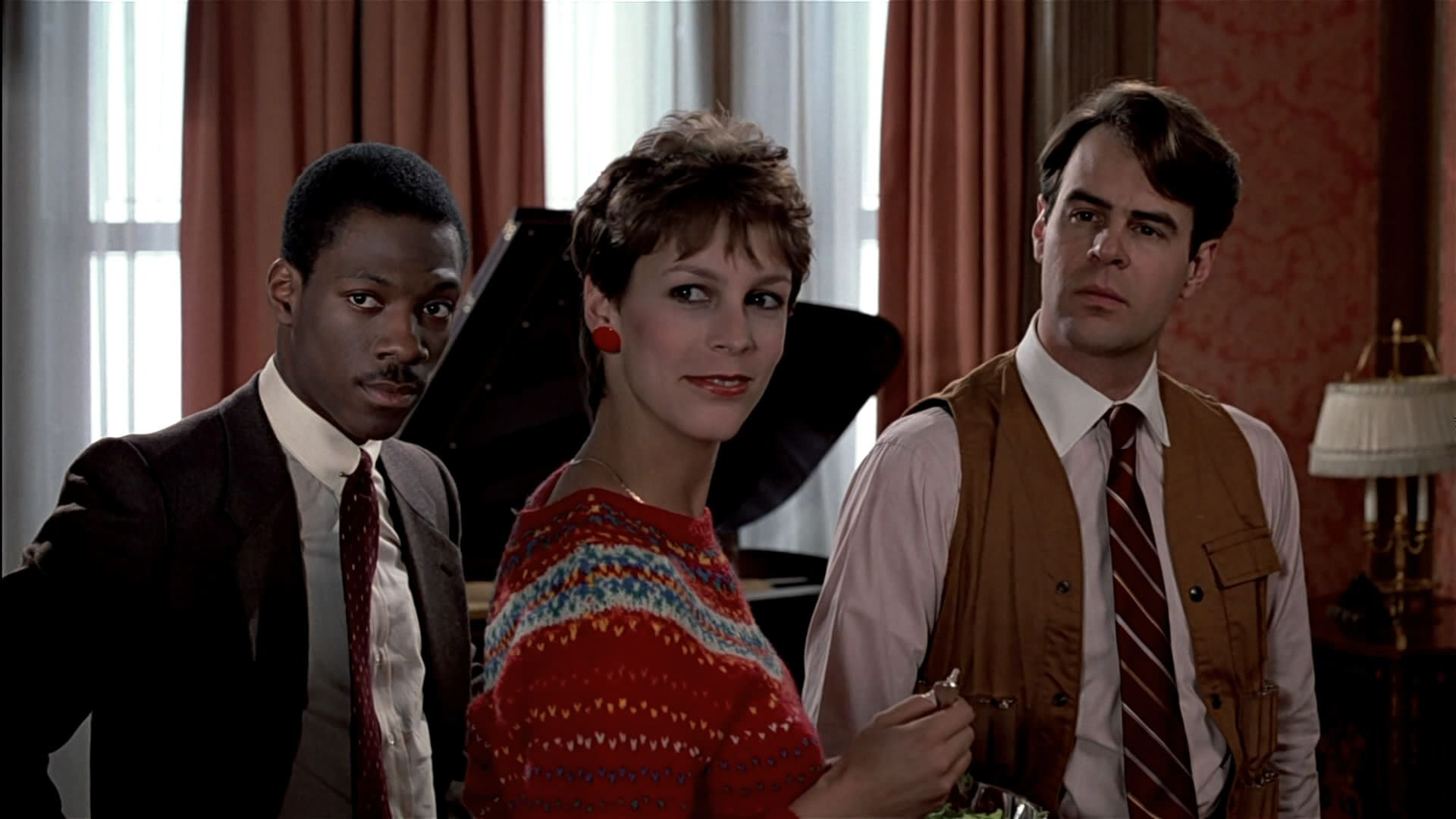
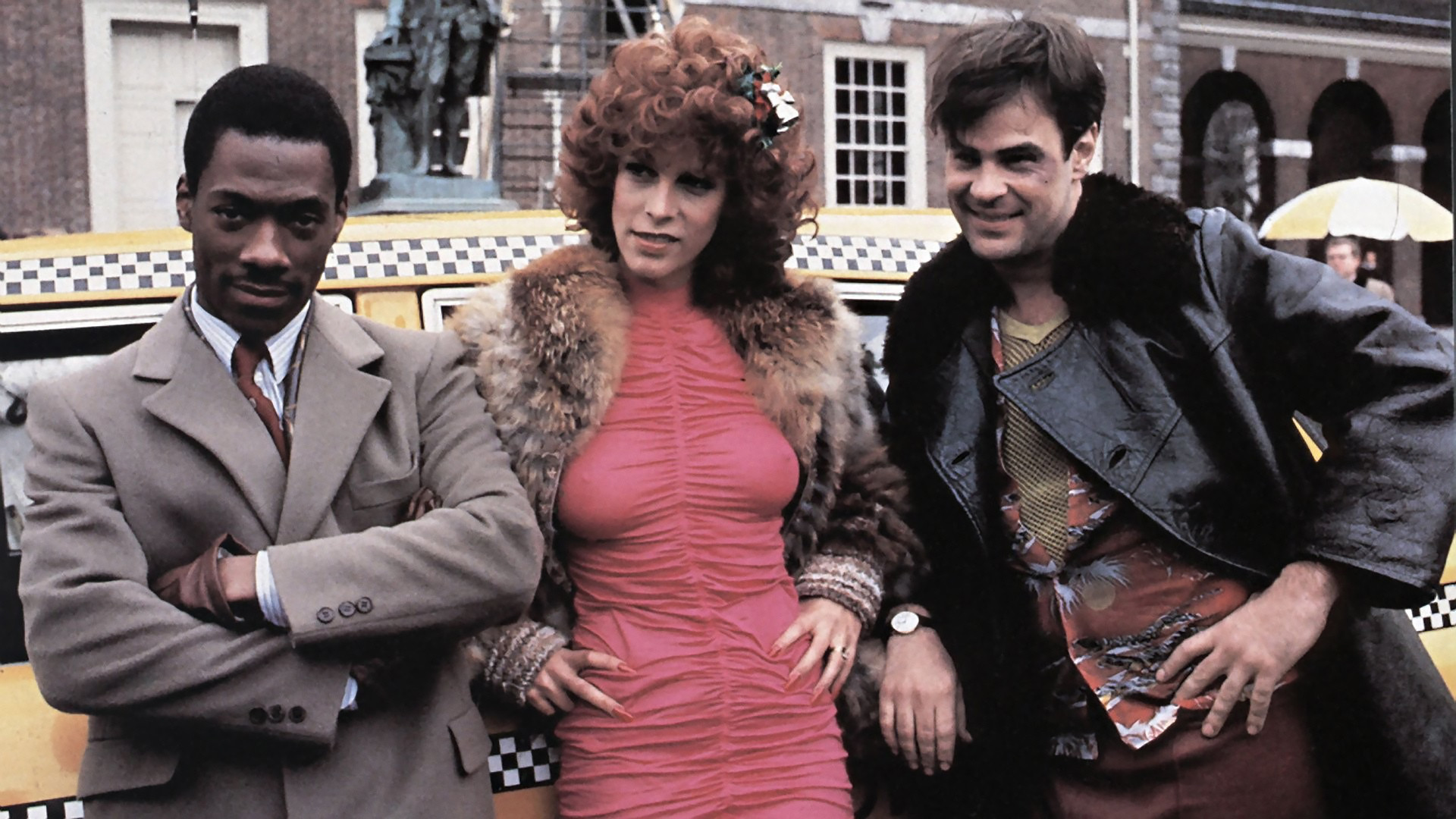
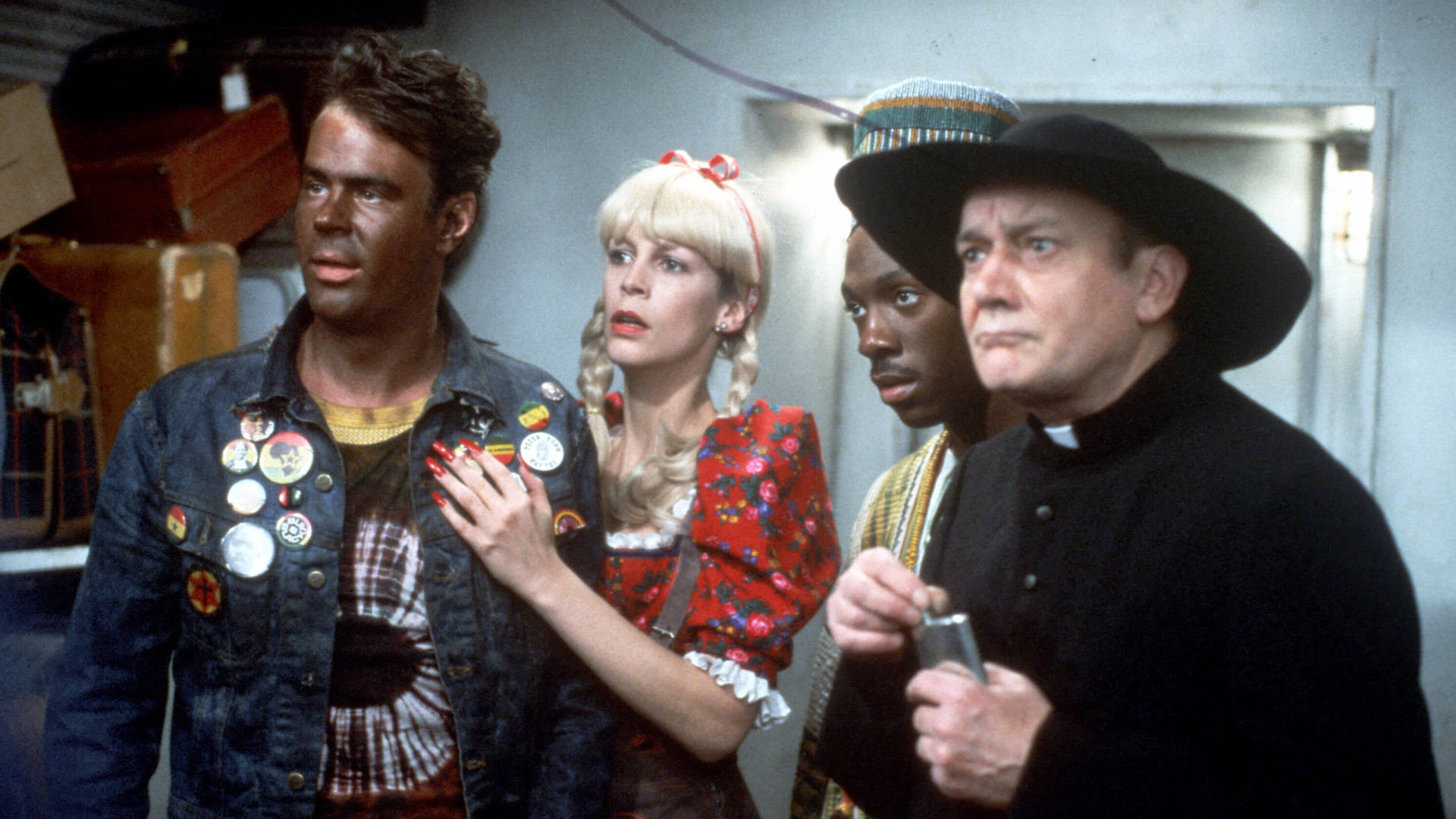
Eddie Murphy’s Billy Ray Valentine is the main reason it works so well. His confidence gives the exchanged fortunes some plausibility: we can believe that this con man would take quickly to his changed circumstances. Murphy is alert to how ridiculous the people around him are, but he does not spend every moment asking us to applaud him for noticing. There is room between his jokes for us to watch him think, and that makes the character worth following even when the next comic development is easy to predict.
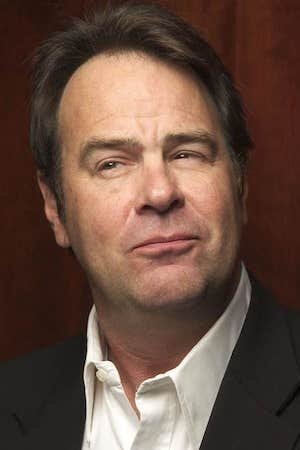
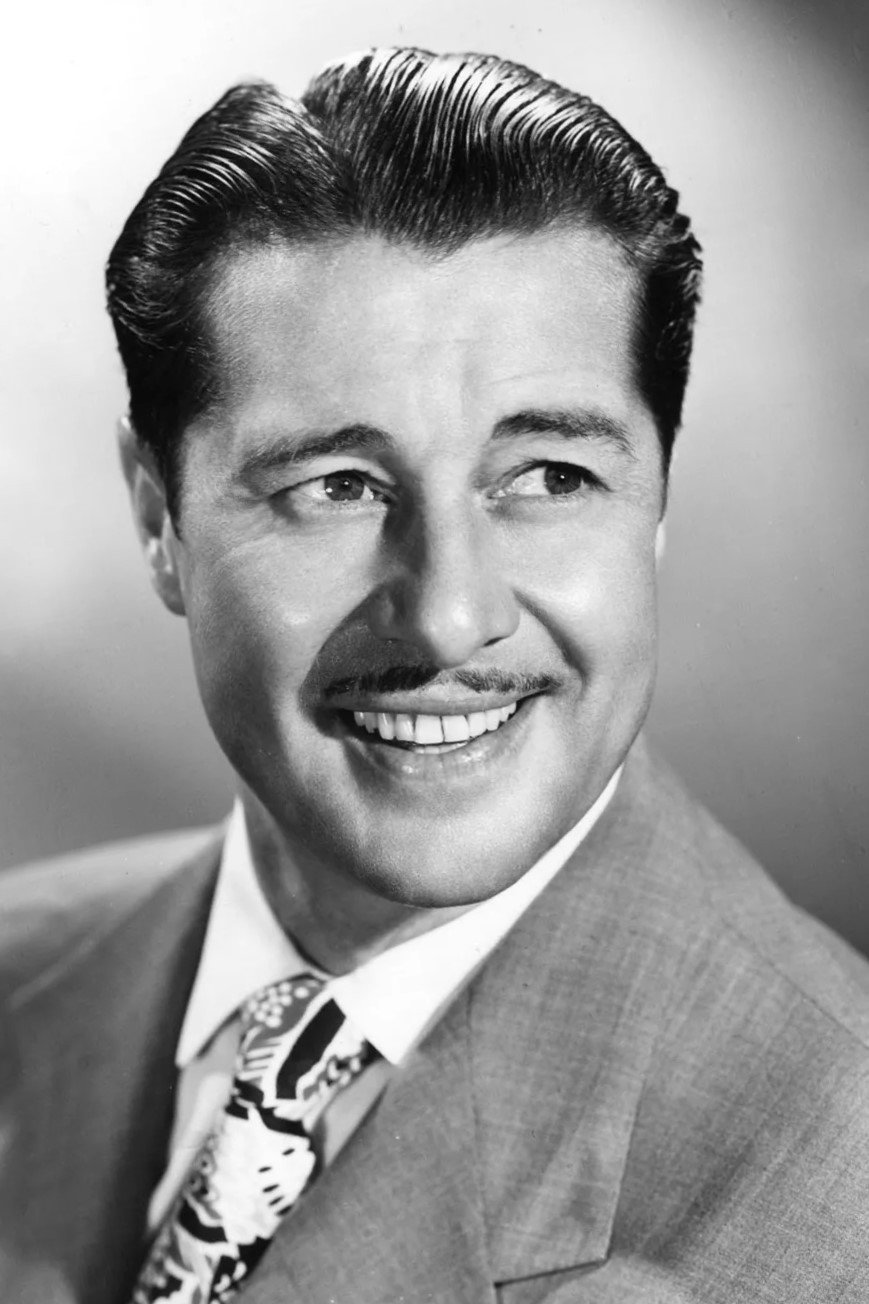
Dan Aykroyd gives Louis Winthorpe III a different problem: his assurance depends on everyone else continuing to treat him as important. The performance lets us enjoy the damage to his dignity without making him too empty to care about. Ralph Bellamy’s Randolph Duke and Don Ameche’s Mortimer Duke supply a particularly good contrast, Bellamy’s genial manner making Ameche’s impatience funnier. We laughed at their confidence in treating other people’s fortunes as a private amusement. They make the wager feel horribly ordinary to the men arranging it.
Robert Paynter’s cinematography gives the farce an old-fashioned grandeur that suits the businessmen’s self-regard. Gene Rudolf’s production design makes the differences in comfort easy to see, so the change in circumstances matters before the actors say anything. Elmer Bernstein’s music shares that grandeur, and the use of Mozart helps give these ridiculous people a measure of borrowed dignity. The presentation is formal enough for bad behaviour to be funny without additional encouragement from the camera.
Malcolm Campbell’s editing is less consistently helpful. A stretch in the middle gives us time to grow familiar with the reversal without supplying enough fresh laughs. Jamie Lee Curtis as Ophelia and Denholm Elliott as Coleman help because they suggest people with interests beyond the next gag. Landis seems reluctant to move on once a comic situation has yielded its obvious laughs, although the supporting cast usually makes the extra company welcome.
For a comedy built on swapped fortunes, the obvious question is why money should determine how much respect a person receives. Harris and Weingrod set that question up cleanly, then let it recede as Landis favours slapstick. The wealthy are easy to dislike, but the film rarely makes their advantages feel like anything more troubling than privileges held by the wrong people. We wanted it to press harder there, particularly because Bellamy and Ameche make casual cruelty look so respectable.
That limitation matters, but it need not spoil an evening spent with performers this responsive to one another. The comedy remains generous towards its displaced men even when the writing takes an easy route to a laugh. See it for the cast, and save the argument about capitalism for afterwards.