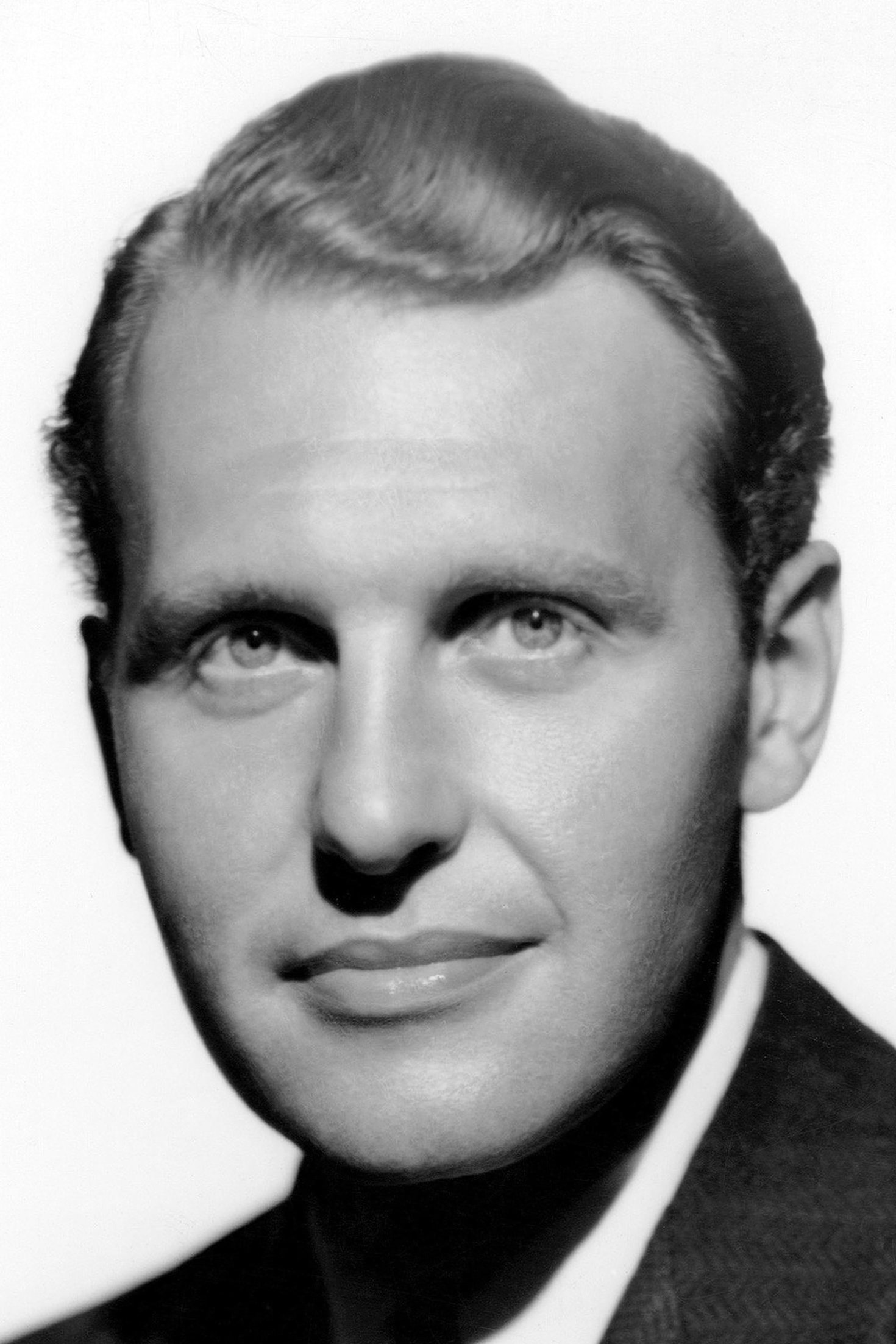
Ralph Bellamy made earnestness useful to comedy, then found further uses for his air of authority. We value his steady supporting work, though repeated casting as the square could leave him looking bland.
Fi1m perspective
In His Girl Friday (1940), Ralph Bellamy's Bruce Baldwin is the earnest rival to Cary Grant, and he gives that earnestness its due. We felt for him because his sincerity makes the comedy's preference for the more sophisticated man seem a little unkind. The Awful Truth (1937), in which he plays Dan Leeson, belongs to the same run of sympathetic suitors. Bellamy makes such men worth taking seriously, though repeated casting as the square can also make his work seem bland.
The change came through the stage, with his portrayal of Franklin D. Roosevelt in Sunrise at Campobello (1958), reprised on film in 1960. It gave him a substantial dramatic part beyond the romantic rival. His later screen work made use of older men with authority, including Dr Sapirstein in Rosemary's Baby (1968) and Randolph Duke, opposite Don Ameche, in Trading Places (1983). These parts gave his seriousness something else to do, after so many comedies had treated it as a disadvantage.
Pretty Woman (1990), his final screen appearance, gives him James Morse and a place in the business subplot. Garry Marshall's romance depends on Julia Roberts and Richard Gere, and Bellamy's contribution needs to be judged at that supporting scale. We recommend the film for the warmth and humour of its improbable courtship, while finding its faith in wealth harder to accept. That leaves Bellamy in a subplot we have more reason to question than the romance, however reassuring his presence may be.
There is a virtue in having an actor of his steady seriousness anchor that business subplot, but also a limit to what the casting can do. A dependable supporting performance cannot make a film's attitude to money persuasive by itself. We would not make Pretty Woman the chief reason to seek Bellamy out, enjoyable as the film is. For a clearer sense of what he contributes, start with His Girl Friday, where being the less sophisticated man gives him something more interesting to play than mere foolishness.
Biography
Ralph Bellamy was an American actor whose career on stage, screen and television spanned more than six decades. Born in Chicago in 1904, he made his film debut in the early 1930s and appeared in over 100 films, often in supporting roles.
He received an Academy Award nomination for Best Supporting Actor for his performance in The Awful Truth (1937) and later won a Tony Award for Sunrise at Campobello (1960). Bellamy is also known for roles in His Girl Friday (1940), Rosemary's Baby (1968), Trading Places (1983) and Pretty Woman (1990). He was awarded an honorary Academy Award in 1987 for his contributions to acting.