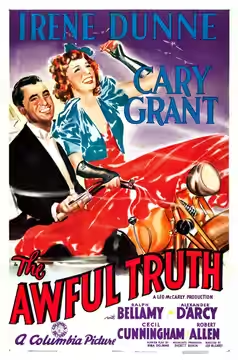
Leo McCarey’s comedy about a divorcing couple who spend the ninety days before the decree is final wrecking each other’s new romances is as fast and warm as anything Hollywood made in the decade. The plotting is contrived; nobody will mind.
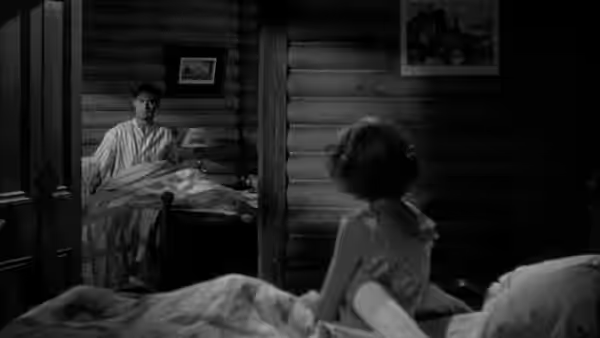
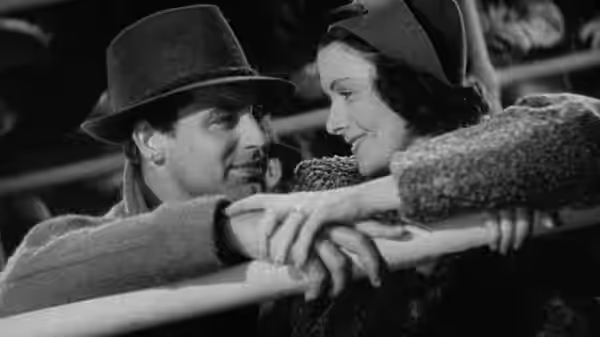
Leo McCarey’s comedy is about a marriage that ends on a technicality and takes ninety days to finish dying. Jerry Warriner (Cary Grant) comes home from a Florida trip he did not take, sun-lamp tan and all, to find that his wife Lucy (Irene Dunne) has been out all night with her singing teacher, Armand Duvalle (Alexander D’Arcy), whose car broke down. Neither believes the other. They file for divorce, the court sets a date for the decree to become final, and the film spends its 91 minutes watching two people who cannot stop turning up wherever the other one is.
Our verdict is uncomplicated. This is the fastest and most affectionate of the 1930s divorce comedies we know, and it has aged less than almost anything Hollywood made that decade. The screenplay is credited to Viña Delmar, though by most accounts McCarey worked out much of the business on the set, day by day: a scene takes a breath, someone does something with a hat or a door, and the others react as if it had happened to them. Al Clark, the editor, leaves the takes alone long enough for that to register, and cuts to Grant’s face at the moment Grant has decided not to say anything.
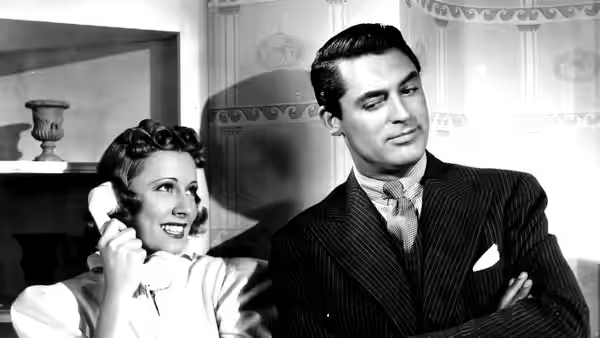
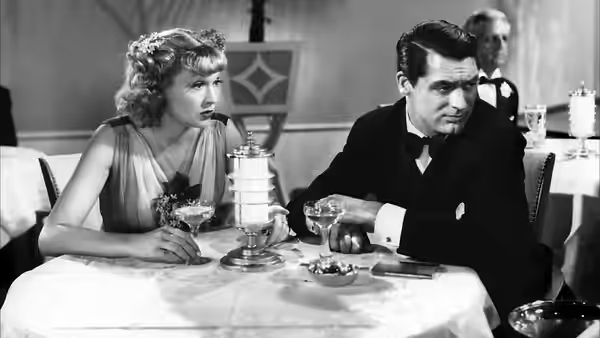
Grant is the discovery here. He plays Jerry as a man who thinks he is the wittiest person in every room and keeps finding out he is the second. His best moments are silent: sitting through a nightclub act, listening at a door, trying to leave a room with dignity while a dog has hold of his hat. Dunne has the harder job. Lucy has to be the one who is telling the truth and still be funny about it, and Dunne manages it by playing everything a shade too politely, so that the politeness becomes the joke.
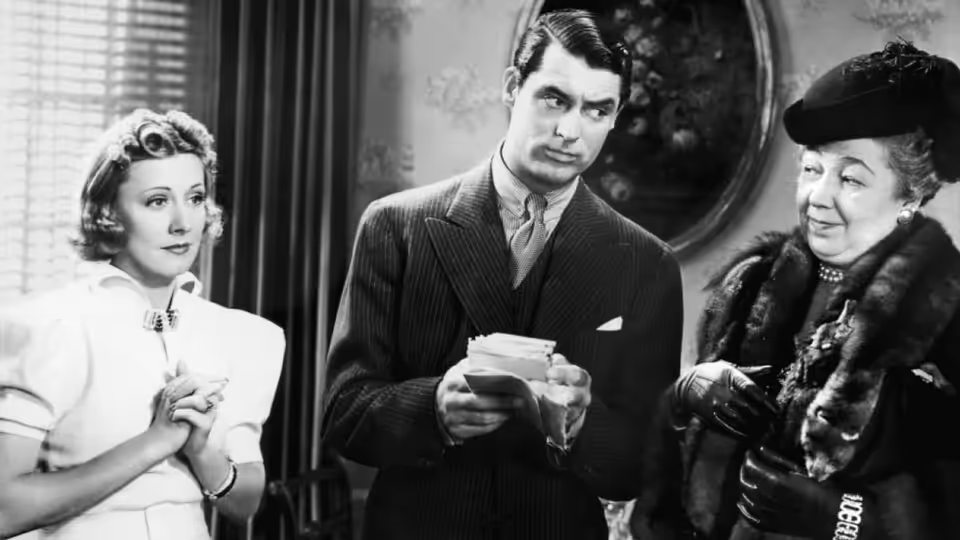
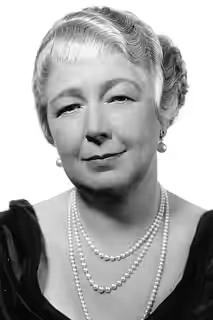
Ralph Bellamy is Dan Leeson, the Oklahoma oilman Lucy takes up with, and his mother (Esther Dale) is never far behind him. Bellamy is asked to be decent, dull and slightly damp, and does it with such good nature that we felt a bit sorry for him, which is what the film wants. Cecil Cunningham’s Aunt Patsy gets the driest lines and delivers them from the sofa. Joyce Compton has one scene as Dixie Belle Lee, a nightclub singer with a number involving a wind machine and a skirt. We laughed out loud at it, then noticed that the camera had stayed on Grant, watching his wife watch him, and that the laugh had a second, sadder layer under it.
Joseph Walker photographs it in the glossy, high-key Columbia style, white walls and polished floors, and lights Dunne so that she seems lit from inside. Robert Kalloch’s gowns for her are large, sculptural things she moves through as if they were nothing, and one hat with a veil does a fair amount of acting on its own. Ben Oakland’s music is mostly the songs the characters sing, one of them badly on purpose; there is little in the way of a score and the film does not miss it.
It has faults. The ninety-day decree is a device and the film knows it, leaning on the calendar whenever it needs a deadline. The stretch with the Vances (Molly Lamont, Robert Warwick, Mary Forbes), the rich family Jerry attaches himself to, is the thinnest writing in it, and the film gets through it rather than enjoying it. Dan Leeson is a straw man; nobody watching has believed for a moment that Lucy would end up in Oklahoma. And the dog, Mr Smith, a wire-haired terrier both parties want custody of, is used one time more than he is funny.
McCarey made Make Way for Tomorrow the same year, a quiet film about an old couple separated by their children, and this one plays like its comic twin: two people with every excuse to part who keep failing to. Against the other screwball comedies of the period it is less frantic than Bringing Up Baby and kinder than His Girl Friday, and it gives its supporting players more to do than either.
Watch it with someone you have been married to for a while. The argument about who left first will sound familiar, and the film’s answer to it, which we will not describe, is more grown-up than most films have managed since.