Preston Sturges makes an unruly, quick-witted romantic comedy, with Mary Astor and Rudy Vallee threatening to take it over. The farce sometimes feels overworked, but the performances make its complications worth following.
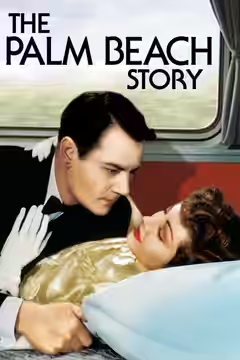
Preston Sturges’s The Palm Beach Story is a funny, quick-witted romantic comedy, warmly recommended with a warning about its appetite for complications. Sturges writes as well as directs, and occasionally seems too pleased with a comic idea to stop adding to it. The pleasure is in the actors, who make demanding dialogue sound like something they have just thought of. There is enough confidence in the playing to carry us through the moments when the farce begins to feel like hard work.
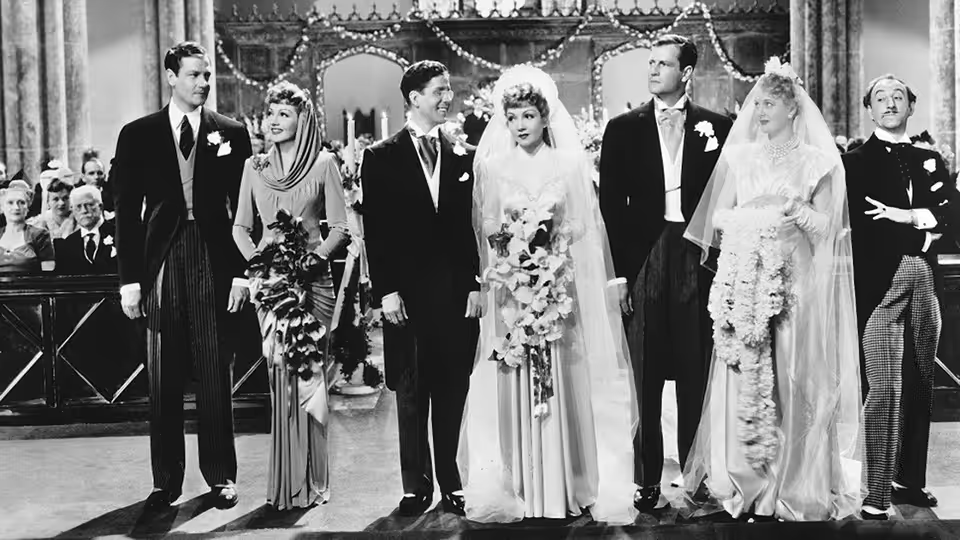
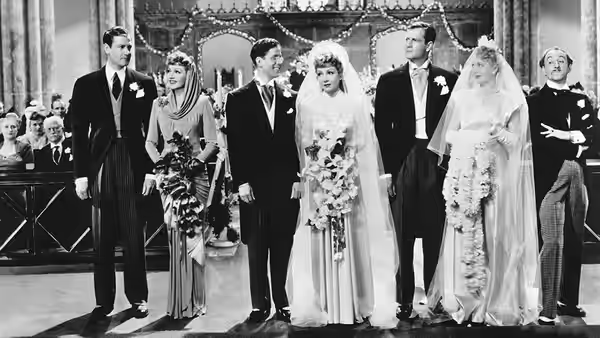
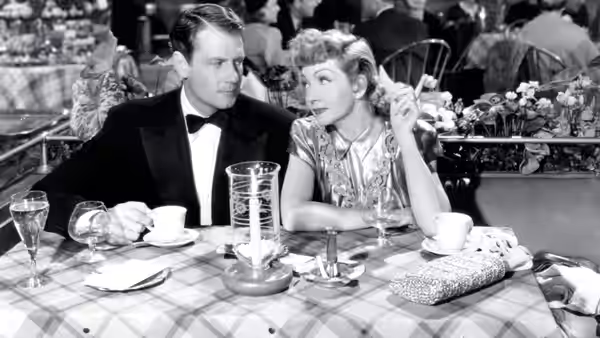
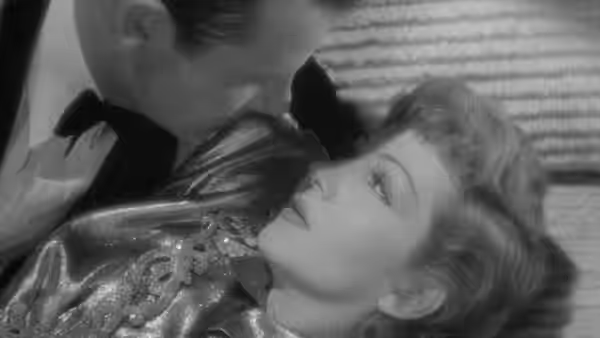
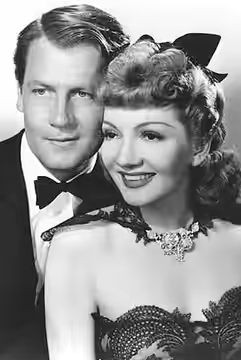
Claudette Colbert plays Geraldine ‘Gerry’ Jeffers with a composure that is useful in a film so fond of commotion. Her delivery gives the quick exchanges room to breathe, and she does not press every line for a laugh. Joel McCrea, as Tom Jeffers, supplies a steadier presence, though his part gives us less to enjoy. Together they keep the romantic comedy recognisable while Sturges tests how much eccentricity he can fit around them.
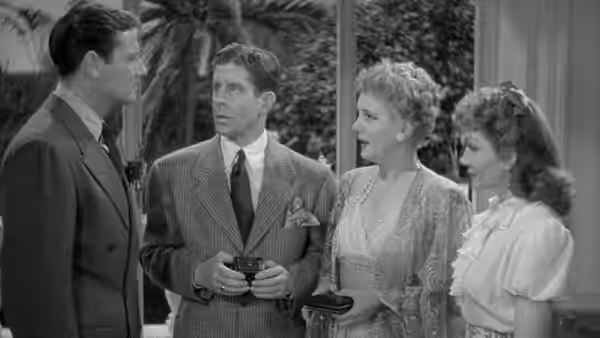
Mary Astor and Rudy Vallee are the stronger comic attractions. As The Princess Centimillia, Astor makes a character who might have been exhausting enjoyable through the assurance of her delivery. Vallee’s John D. Hackensacker III is drier, and the restraint is especially welcome in such busy company. We could happily spend longer with either of them, which is also a small reservation about the balance of the film: its supporting players can make the leads seem a little too sensible.
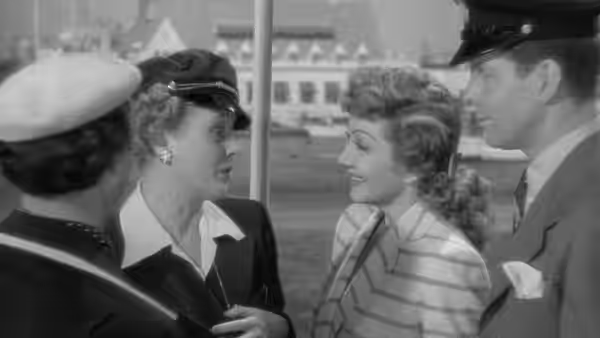
The train sequence is the clearest example of Sturges letting a comic situation get out of hand on purpose. We laughed at how long he sustains the disorder, then began to feel the effort of keeping it going. That slight overextension is the film’s recurring weakness: a complication can acquire another complication after the first has already done its job. Stuart Gilmore’s editing preserves the speed, although briskness cannot make every elaboration necessary. Still, there is pleasure in a comedy prepared to be this peculiar.
Victor Milner’s cinematography keeps our attention on the performers, giving their reactions enough weight amid the talk. Victor Young’s music is less memorable than the dialogue, but its lightness suits a comedy that would suffer from too much romantic encouragement. Irene Lentz’s costume design is another pleasure worth noticing when the exchanges briefly release our attention. None of these contributions distracts from the actors, which seems a sensible order of priorities. The cast supply enough activity without needing every other department to compete.
By screwball-comedy standards, this is notably willing to risk becoming tiresome for the sake of another laugh. It usually gets away with it, and at 88 minutes it earns the time it asks for, even if a few passages could be less insistent. The writing requires attention, but the performances make that attention pleasurable rather than dutiful. Choose it when there are two of you awake enough to catch the lines.