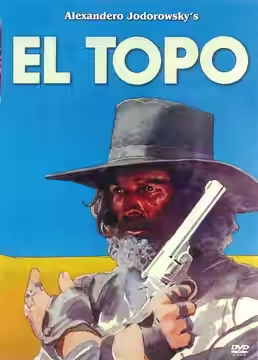
Alejandro Jodorowsky’s desert western has images that unsettle us and symbolism that wears us down. We recommend it for its strange conviction, with the warning that its 125 minutes can feel longer.
El Topo is worth seeing for its desert imagery and Alejandro Jodorowsky’s hypnotic presence, provided a western need not make much sense to keep us interested. Its bewilderment is often productive: we look harder because we cannot quite explain what we are looking at. But it also asks for patience it does not always repay. Across 125 minutes, the accumulation of symbols becomes tiring.
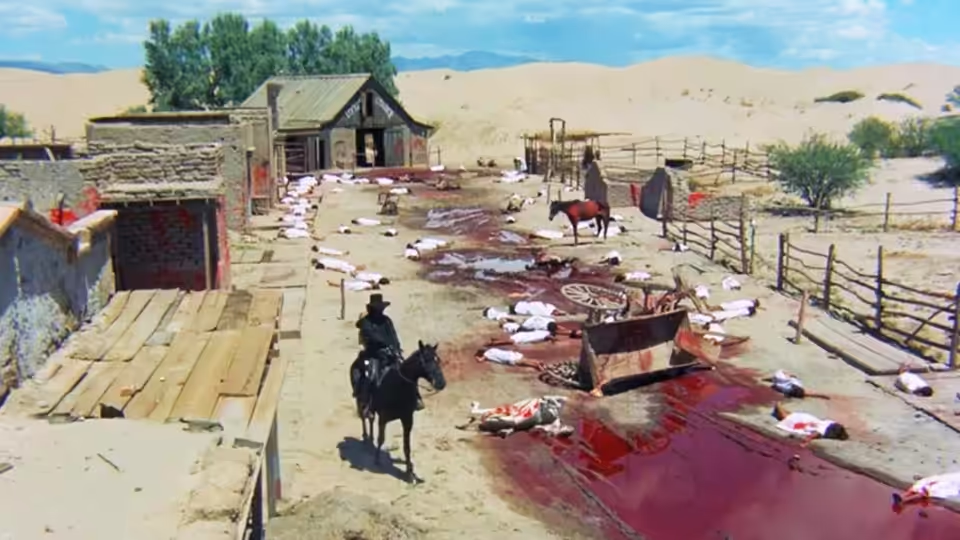
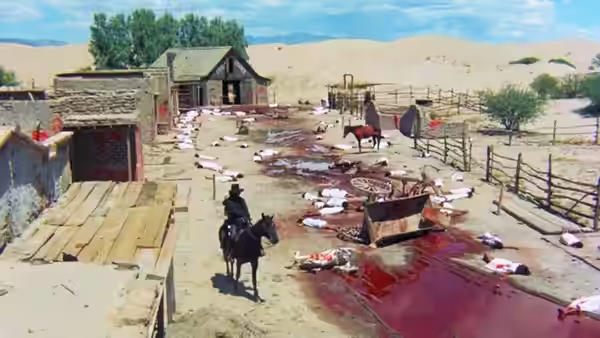
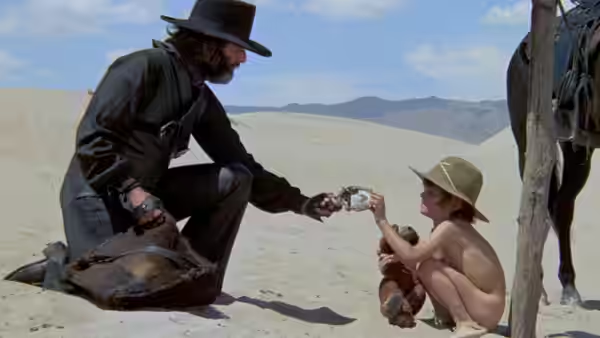
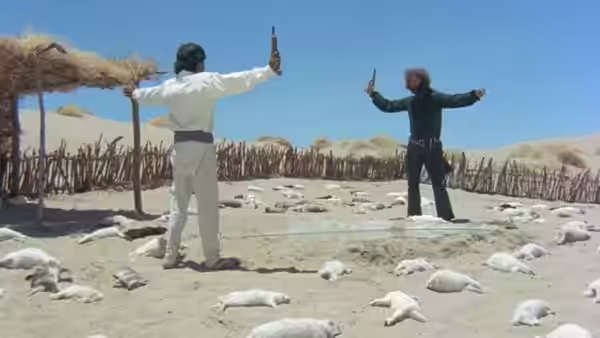
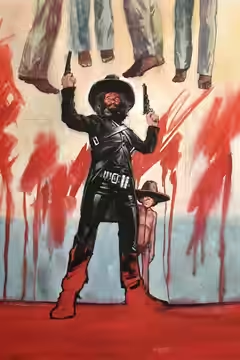
Rafael Corkidi’s cinematography gives us the strongest reason to persist. The desert images have a scale that makes the people seem vulnerable, and their force survives the effort to work out what they mean. We were unsettled by those landscapes, more than by the insistence of the cult-horror imagery. There is something persuasive about the desert itself, and the film is at its most absorbing when that is enough to hold our attention.
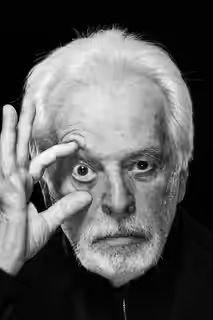
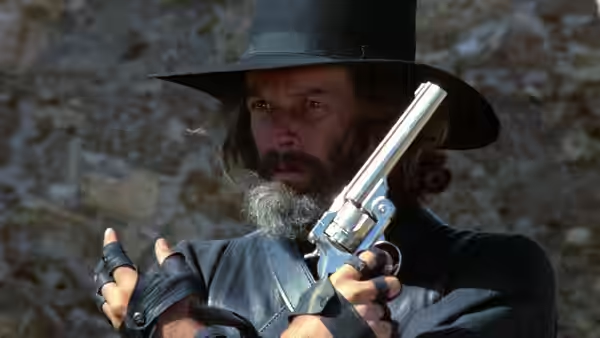
Alejandro Jodorowsky writes, directs and plays El Topo, bringing an assurance to the central performance that helps hold the film together. He can make its absurdity seem quite reasonable while we are watching him. That matters in a film whose private mythology gives us so little firm ground. His conviction keeps us watching, although we sometimes wanted another sensibility to question the importance he attaches to all this.
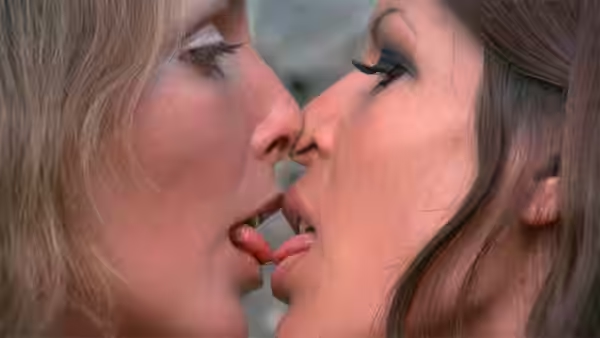
He also handles production design and costume design, so his control extends to what surrounds and clothes the performers. The resulting profusion of symbols is often intriguing, and there is pleasure in looking without immediately understanding. Too often, though, the images compete for attention. It becomes difficult to give any one of them much thought before we are asked to consider the significance of another.
The editing by Federico Landeros has to contend with that crowded material, and the film’s unevenness is partly the cost of preserving so much of it. Some of the bewilderment is invigorating, especially when an image catches us unprepared. Repeated exposure becomes wearing, however, and the length gives us time to notice the habit. We do not need every symbol explained, but we do need a reason to keep giving each new one our attention.
Alejandro Jodorowsky’s music helps sustain the film’s hypnotic quality, but it gives us little relief from the pressure of the images. The writing compounds the problem by making so much of its symbolism difficult to follow. Much of the critical enthusiasm rests on the force of those images, and we share it up to a point. We are less persuaded that difficulty alone makes the film worth sustained interpretation.
As a western, this asks us to accept unfamiliar priorities, and there is no reason the genre should be confined to orderly adventures. We can welcome the invention while remaining impatient with the self-indulgence. The film’s conviction and visual force make it worth the effort for anyone drawn to symbolic storytelling. Choose it for an evening when being baffled is an acceptable part of the entertainment.