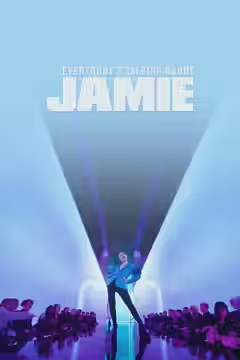
This warm, uneven musical is worth an evening for Max Harwood and Sarah Lancashire. The songs can sound much alike, and the antagonists are thinly written, but the mother-and-son relationship gives us something to care about.
Jonathan Butterell’s Everybody’s Talking About Jamie is a warm, uneven musical that gets enough right about affection to survive some ordinary songwriting. We recommend it for the people, especially Max Harwood and Sarah Lancashire. Its ambition is modest and worthwhile: to let a young person’s enthusiasm for drag be a source of pleasure rather than something for the film to apologise for. Tom MacRae’s screenplay becomes less persuasive when it makes the resistance to Jamie so easy to understand and dismiss.
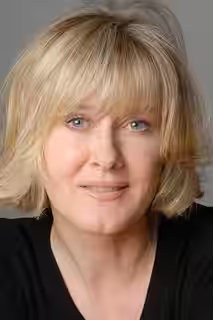
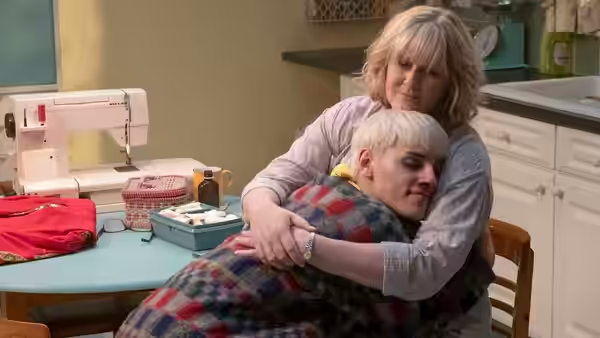
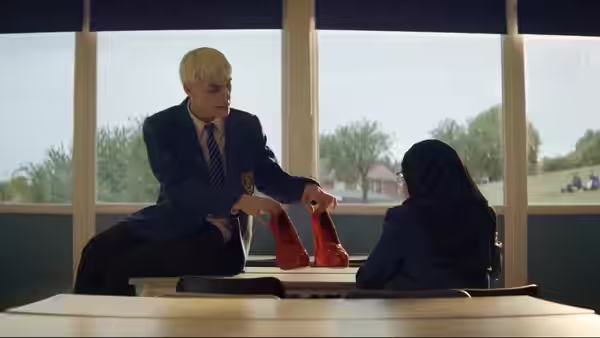
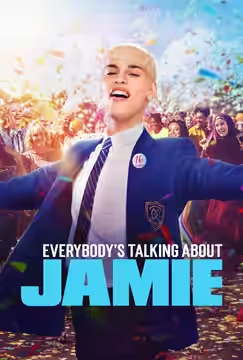
Max Harwood gives Jamie New enough vulnerability to keep his confidence interesting. His exuberance can carry the brighter numbers without making Jamie seem permanently immune to hurt, which matters when so much of the film is urging him onwards. Sarah Lancashire, as Margaret New, brings a quieter warmth to their mother-and-son relationship. We were moved by her singing because the care Margaret offers Jamie feels directed at one particular child, not at everyone who might need a little encouragement.
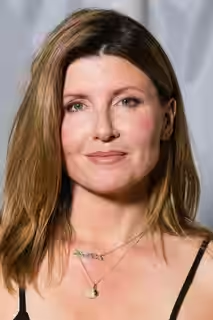
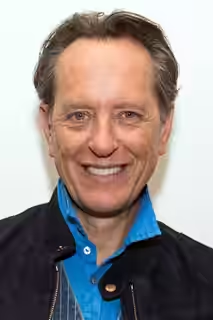
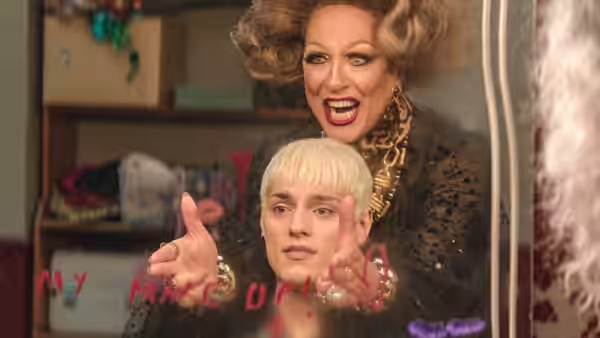
Richard E. Grant, as Hugo Battersby / Loco Chanelle, gives the film another welcome source of feeling. ‘This Was Me’ brings queer history into the story, allowing Jamie’s enthusiasm for drag to sit alongside an awareness of the lives that came before him. The number has a reason to be here beyond giving the audience another encouraging refrain, and it makes the surrounding songs seem less individual. Sharon Horgan also finds some personality in Miss Hedge, despite the writing’s tendency to simplify anyone who might obstruct Jamie.
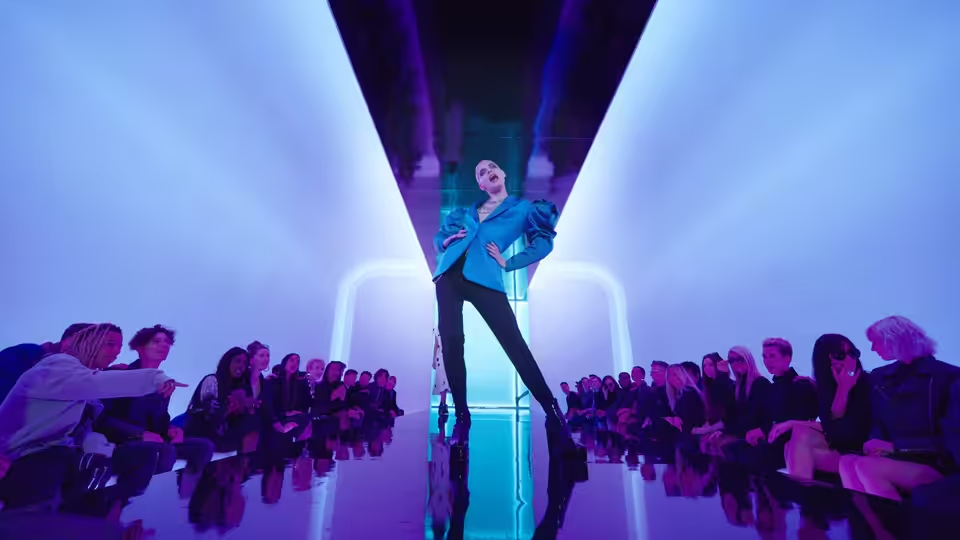
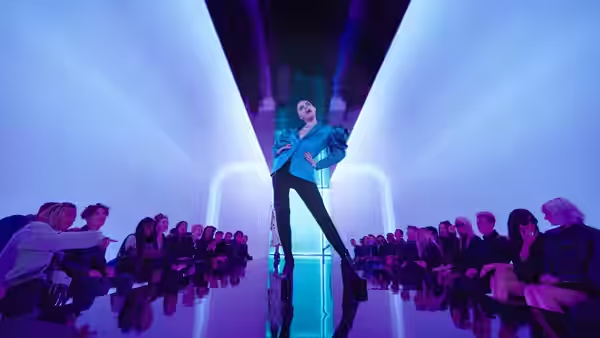
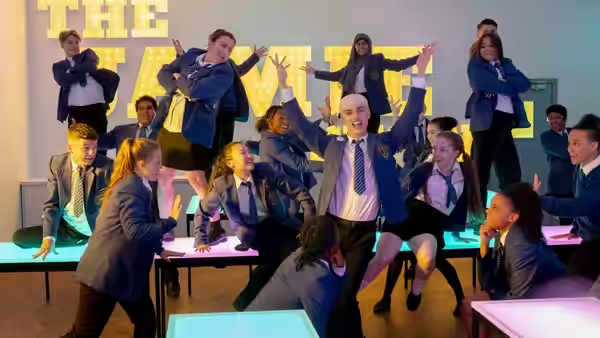
Christopher Ross’s cinematography makes the bright musical passages inviting, and Jane Levick’s production design contributes to the film’s polished appearance. The colour is pleasurable, though the gloss can make the setting feel too agreeable for the difficulties the story wants to discuss. Jonathan Butterell is comfortable with exuberance; we would have welcomed more time spent on drag as performance. For a film so keen to celebrate it, there is surprisingly little of it.
The music from Anne Dudley and Dan Gillespie Sells keeps things buoyant, but several of the pop anthems leave much the same impression. Their messages arrive clearly enough; their melodies are less likely to stay with us. Mark Everson’s editing has to negotiate between musical high spirits and family pain, and the changes of mood sometimes feel abrupt. When the second half loses pace, the less distinctive songs become harder to forgive, since they take time away from the relationships that most reward our attention.
Tom MacRae’s antagonists are the more persistent problem. Too often they are given a position on Jamie and left there, without enough curiosity about what else might make them human. A musical about acceptance can afford generosity towards the people doing the refusing, and might become more convincing for it. The cast gives us enough feeling to carry us through these thinly written conflicts, but the film makes its case a little too easy to win.
As a stage-to-screen musical, it works when the performers can make a familiar sentiment feel specific to the person singing it. There is enough of that here to make the weaker numbers tolerable, particularly if warmth matters more to you than surprise. Come for Max Harwood and Sarah Lancashire, and give the less memorable anthems a little patience.