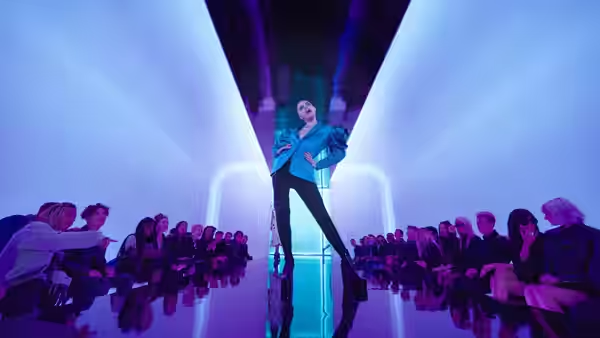
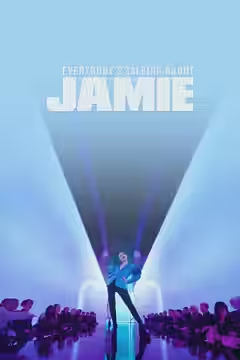
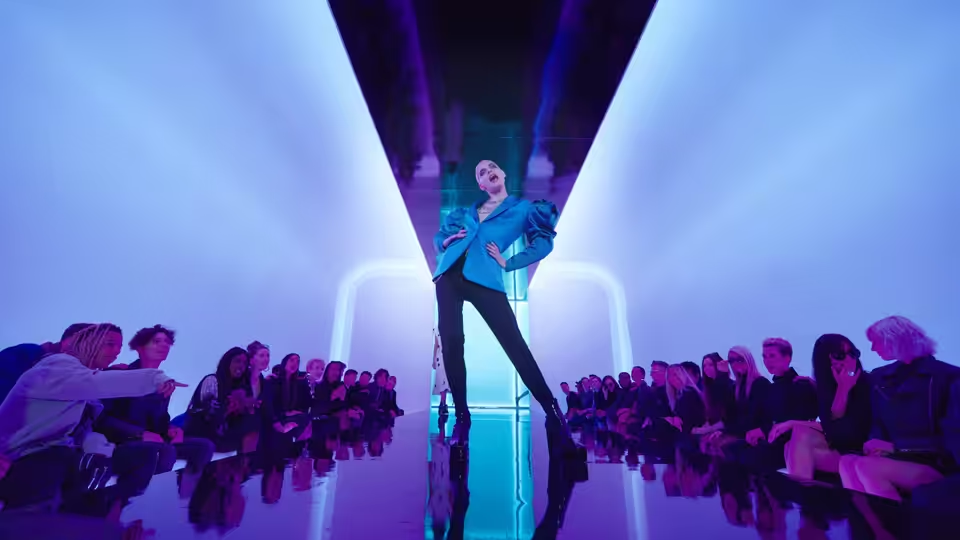
Jamie New (Max Harwood) models in drag on a runway between seated spectators
Film review

Everybody's Talking About Jamie

2021 · Directed by Jonathan Butterell · 1h 55m · FSK 16

In a sentenceJamie has better company than songs, and Sarah Lancashire is a good reason to stay for another number

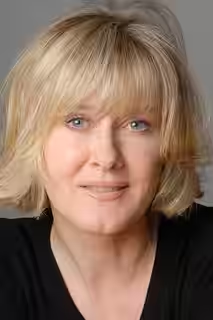
In Sheffield, Jamie New (Max Harwood) wants to express himself through drag, with his mother Margaret New (Sarah Lancashire) supporting him. Her encouragement does not mean everyone around him is equally accepting. Hugo Battersby / Loco Chanelle (Richard E. Grant) brings the experience of another queer generation into Jamie’s life. Adapted from a stage musical, the story follows Jamie’s ambitions through songs and drag performance, with his relationship with Margaret at its centre. Opposition from others puts his confidence under pressure as he seeks acceptance on his own terms.

Plays from YouTube when you press play; nothing loads from them until then.

Fi1m review

This warm, uneven musical is worth an evening for Max Harwood and Sarah Lancashire. The songs can sound much alike, and the antagonists are thinly written, but the mother-and-son relationship gives us something to care about.

Jonathan Butterell’s Everybody’s Talking About Jamie is a warm, uneven musical that gets enough right about affection to survive some ordinary songwriting. We recommend it for the people, especially Max Harwood and Sarah Lancashire. Its ambition is modest and worthwhile: to let a young person’s enthusiasm for drag be a source of pleasure rather than something for the film to apologise for. Tom MacRae’s screenplay becomes less persuasive when it makes the resistance to Jamie so easy to understand and dismiss.

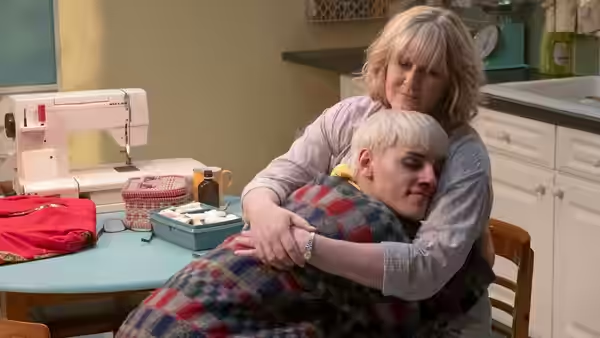
Max Harwood gives Jamie New enough vulnerability to keep his confidence interesting. His exuberance can carry the brighter numbers without making Jamie seem permanently immune to hurt, which matters when so much of the film is urging him onwards. Sarah Lancashire, as Margaret New, brings a quieter warmth to their mother-and-son relationship. We were moved by her singing because the care Margaret offers Jamie feels directed at one particular child, not at everyone who might need a little encouragement.

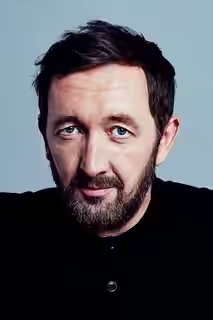
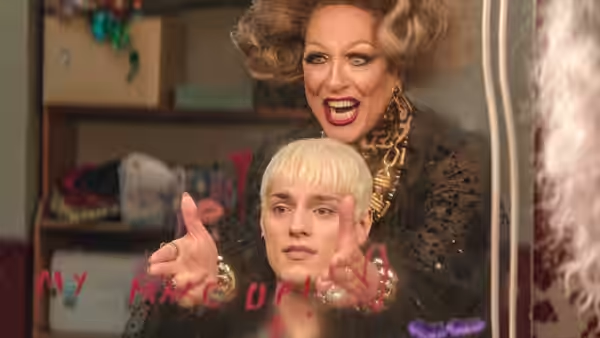
Richard E. Grant, as Hugo Battersby / Loco Chanelle, gives the film another welcome source of feeling. ‘This Was Me’ brings queer history into the story, allowing Jamie’s enthusiasm for drag to sit alongside an awareness of the lives that came before him. The number has a reason to be here beyond giving the audience another encouraging refrain, and it makes the surrounding songs seem less individual. Sharon Horgan also finds some personality in Miss Hedge, despite the writing’s tendency to simplify anyone who might obstruct Jamie.

Christopher Ross’s cinematography makes the bright musical passages inviting, and Jane Levick’s production design contributes to the film’s polished appearance. The colour is pleasurable, though the gloss can make the setting feel too agreeable for the difficulties the story wants to discuss. Jonathan Butterell is comfortable with exuberance; we would have welcomed more time spent on drag as performance. For a film so keen to celebrate it, there is surprisingly little of it.

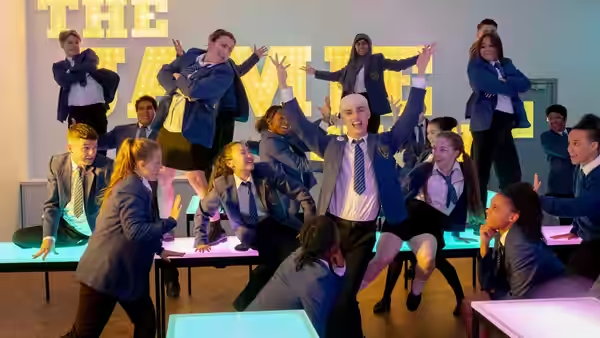
The music from Anne Dudley and Dan Gillespie Sells keeps things buoyant, but several of the pop anthems leave much the same impression. Their messages arrive clearly enough; their melodies are less likely to stay with us. Mark Everson’s editing has to negotiate between musical high spirits and family pain, and the changes of mood sometimes feel abrupt. When the second half loses pace, the less distinctive songs become harder to forgive, since they take time away from the relationships that most reward our attention.

Tom MacRae’s antagonists are the more persistent problem. Too often they are given a position on Jamie and left there, without enough curiosity about what else might make them human. A musical about acceptance can afford generosity towards the people doing the refusing, and might become more convincing for it. The cast gives us enough feeling to carry us through these thinly written conflicts, but the film makes its case a little too easy to win.

As a stage-to-screen musical, it works when the performers can make a familiar sentiment feel specific to the person singing it. There is enough of that here to make the weaker numbers tolerable, particularly if warmth matters more to you than surprise. Come for Max Harwood and Sarah Lancashire, and give the less memorable anthems a little patience.

Critical consensus AI synthesised

69
Positive
10
Mixed
8
Negative
1
Radio Times
★★★★★ · Alan Jones
100

Jones praises the adaptation as a lively, big-hearted success. He singles out Max Harwood’s impressive performance and the film’s evocative Sheffield setting.

Read the full review →
Evening Standard
17 September 2021 · ★★★★ · Charlotte O'Sullivan
80

The critic finds the adaptation bold and moving, though changes to Jamie’s family story weaken its emotional impact. She particularly praises Sharon Horgan’s lively, nuanced performance as Miss Hedge.

Read the full review →
Time Out
15 September 2021 · ★★★★ · Stephen A Russell
80

The review presents the film as a joyous, heart-filled musical. It singles out its exuberant, multicoloured celebration of pride.

Read the full review →
Los Angeles Times
10 September 2021 · Kimber Myers
75*

Myers finds the film joyful and big-hearted despite a weakening second half and some distracting filmmaking choices. She especially praises Max Harwood’s radiant performance and the musical’s contagious celebration of drag and individuality.

Read the full review →
The Hollywood Reporter
14 August 2021 · festival review · David Rooney
75*

Rooney finds the film formulaic but joyful, with an upbeat story that should resonate especially with young LGBTQ audiences. He particularly praises Max Harwood’s vivacious, vulnerable performance, while noting that the pop anthems can feel interchangeable.

Read the full review →
Screen Daily
14 August 2021 · festival review · Tim Grierson
70*

Grierson presents the film’s move from stage to screen as confident. The standfirst singles out its leap from the West End musical to Amazon.

Read the full review →

Straight answers AI written, from our review

How long is Everybody's Talking About Jamie, and what is it rated?
Everybody's Talking About Jamie runs 1h 55m and is rated 16 by the FSK in Germany. It is a drama and comedy film.
Where can I watch Everybody's Talking About Jamie in Germany?
Everybody's Talking About Jamie is streaming on Amazon Prime Video in Germany. Availability is checked daily; the links above go straight to each service.
What should I watch after Everybody's Talking About Jamie?
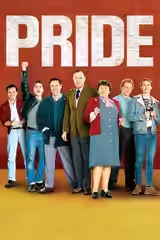
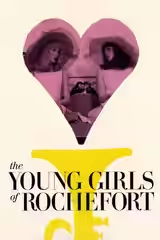
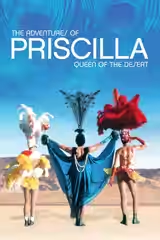
After Everybody's Talking About Jamie, try Pride (2014, Fi1m 82): A British ensemble comedy that makes queer solidarity feel practical, awkward and necessary. Then The Young Girls of Rochefort (1967, Fi1m 84): For bright colours, romantic complications and songs that remain distinct after the credits; and The Adventures of Priscilla, Queen of the Desert (1994, Fi1m 81): More room for drag performance, with friendship, loneliness and some useful bad taste.

Cast

If you liked this, try…

  1. Pride (2014, Fi1m 82)A British ensemble comedy that makes queer solidarity feel practical, awkward and necessary.

  2. The Young Girls of Rochefort (1967, Fi1m 84)For bright colours, romantic complications and songs that remain distinct after the credits.

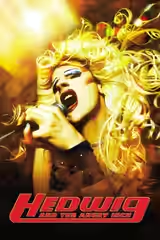
  3. Hedwig and the Angry Inch (2001) · not reviewed yetA rougher musical about performance and identity, with sharper songs and less reassurance.

  4. The Adventures of Priscilla, Queen of the Desert (1994, Fi1m 81)More room for drag performance, with friendship, loneliness and some useful bad taste.

  5. The Way He Looks (2014) · not reviewed yetThis quieter coming-of-age romance gives its young characters time to doubt and hesitate.